This is not how Democrat leaders should reacts.
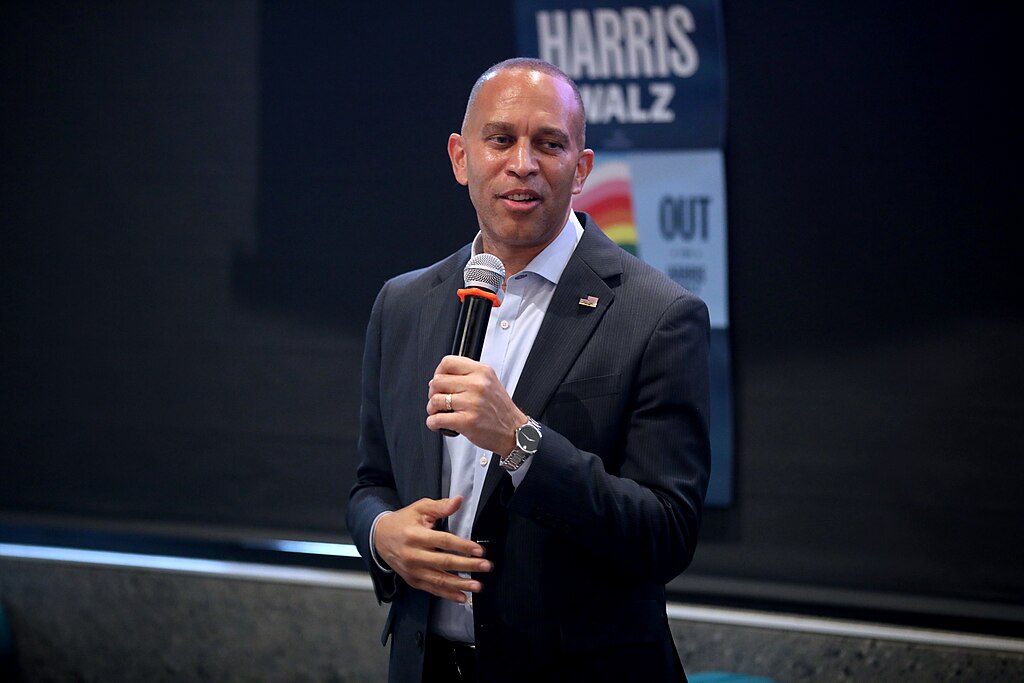
A new political firestorm erupted in Washington after a major ruling by the U.S. Supreme Court temporarily blocked part of President Donald Trump’s aggressive tariff strategy — and House Minority Leader Hakeem Jeffries wasted no time celebrating.
Jeffries described the decision as a “crushing defeat” for President Donald Trump — language that immediately ignited backlash from conservatives who see tariffs as a key pillar of America’s economic protection.
But is this really a defeat — or just another chapter in a larger legal and economic battle?
Supreme Court Blocks Key Tariff Authority
In a 6–3 decision, the Supreme Court of the United States ruled that the administration overstepped its authority under the International Emergency Economic Powers Act when imposing sweeping tariffs on global trading partners.
The ruling does not ban tariffs entirely. Instead, it limits how that specific law can be used.
That distinction matters — especially for retirees, investors, small business owners, and working Americans concerned about inflation, trade deficits, and manufacturing jobs.
Why Tariffs Matter to Older Americans
For many Americans over 50, tariffs aren’t just policy — they’re personal.
They remember:
- Factories closing
- Manufacturing jobs moving overseas
- Trade deals that reshaped local economies
- Rising dependence on foreign supply chains
Supporters argue tariffs:
- Protect U.S. jobs
- Strengthen national security
- Reduce trade deficits
- Bring leverage to negotiating tables
Critics argue tariffs:
- Can increase consumer prices
- May strain relationships with allies
- Could impact global markets
The real debate? Whether short-term economic friction creates long-term American strength.
Jeffries Pushes Congress to Roll Back Tariffs
Jeffries has led congressional Democrats in pushing to repeal tariffs on Canada and other trading partners. A recent House resolution gained support from six Republican lawmakers — a move that prompted President Trump to warn of political consequences.
Ahead of the vote, the president made clear that any Republican voting against tariffs could face serious challenges in upcoming elections.
With midterms approaching, trade policy is quickly becoming a defining issue inside the GOP as well.
Trump Turns to Alternative Trade Powers
Despite the ruling, President Trump moved swiftly.
The administration pivoted to authority under the Trade Act of 1974, which allows temporary tariffs of up to 15% for 150 days to address “large and serious” trade imbalances.
Within 24 hours:
- A 10% baseline global tariff was announced
- An additional 5% increase followed
- The White House signaled more actions could come
During a press briefing, Trump criticized the court’s interpretation but emphasized that other legal pathways remain available.
In short: The tariff strategy isn’t over — it’s evolving.
Economic Impact: What Comes Next?
Markets, manufacturers, and small businesses are now watching closely.
Key questions include:
- Will these new tariffs withstand further legal scrutiny?
- How will trading partners respond?
- Will prices rise — or will domestic production expand?
- How will this affect retirement accounts and long-term investments?
For Americans who prioritize economic sovereignty, this is about more than politics. It’s about control over supply chains, energy independence, and national resilience.
A Political Battle Heading Into Midterms
Jeffries may frame the ruling as a victory.
Trump supporters view it as a temporary legal detour.
With election season heating up, tariffs could become one of the most powerful dividing lines between the two parties — particularly among older voters concerned about economic security and America’s global standing.
One thing is certain: this issue isn’t going away.
Final Thoughts
The Supreme Court ruling reshaped the legal pathway — but it didn’t end the tariff debate.
Whether you see this as judicial oversight or political obstruction likely depends on your broader view of America’s economic future.
And with billions of dollars in trade at stake, the consequences will reach far beyond Washington.