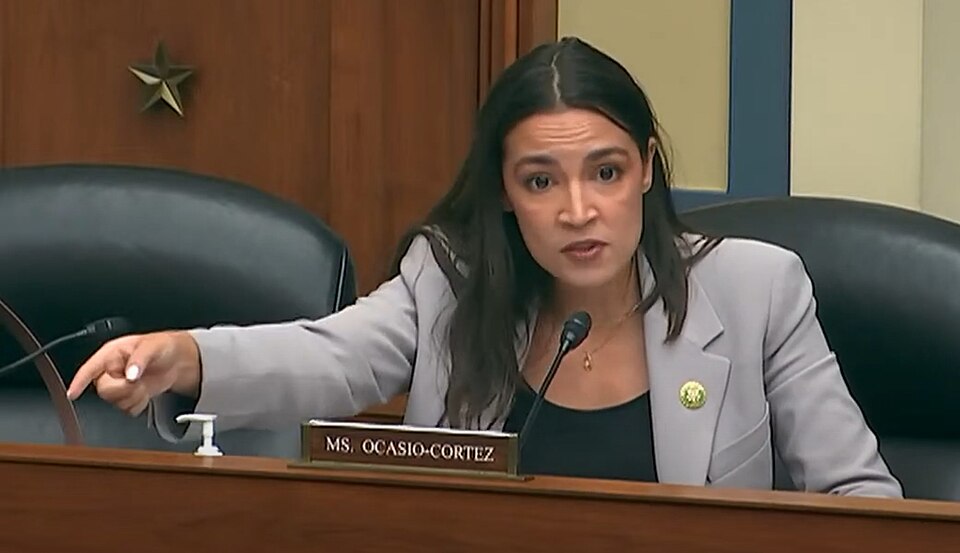
A major battle is brewing inside the Democratic Party as Rep. Alexandria Ocasio-Cortez publicly breaks with Senate Minority Leader Chuck Schumer in one of the most important Senate races of the 2026 election cycle.
On Thursday, Ocasio-Cortez endorsed progressive candidate Abdul El-Sayed in Michigan’s Democratic Senate primary, putting her squarely against party leaders who have quietly rallied behind the more moderate Rep. Haley Stevens.
The endorsement highlights the growing divide between the Democratic Party’s progressive wing and its establishment leadership as both sides compete for control of the party’s future.
El-Sayed, who would become the first Muslim elected to the U.S. Senate if he wins, has long been backed by Sen. Bernie Sanders and other progressive activists. Stevens, meanwhile, is viewed by many Democratic leaders as the stronger general election candidate in a battleground state that President Donald Trump carried in the last presidential election.
According to reports, Schumer and many Senate Democrats believe Stevens has the best chance of keeping the Michigan seat in Democratic hands. However, Ocasio-Cortez rejected that argument.
Speaking with The New York Times, she said Democrats face an extraordinary political moment and should unite behind the candidate they believe can inspire voters. In her view, that candidate is El-Sayed.
The endorsement marks Ocasio-Cortez’s first involvement in a contested Democratic Senate primary this election cycle and is expected to energize progressive activists across the country.
It also raises new concerns among establishment Democrats, who worry that nominating a candidate with a more progressive platform could make it harder to win a closely divided state.
The endorsement comes just days after several progressive and socialist-backed candidates scored upset victories in Democratic primaries, fueling renewed momentum for the party’s left wing and intensifying its battle with centrist Democrats.
El-Sayed, an epidemiologist and former public health official, has built his campaign around progressive priorities. He supports a Medicare-for-all healthcare system, has called for abolishing Immigration and Customs Enforcement (ICE), and more.
He also served as a national surrogate for Bernie Sanders during the senator’s 2020 presidential campaign and has pledged to reject political action committee (PAC) donations.
Stevens has taken a different approach, benefiting from millions of dollars in outside support from super PACs, including organizations that support Israel.
State Sen. Mallory McMorrow is also competing in the Democratic primary, positioning herself between the party’s progressive and moderate factions.
Recent polling suggests El-Sayed currently leads the Democratic field ahead of Michigan’s Aug. 4 primary.
This is not the first time Ocasio-Cortez has backed El-Sayed. She also endorsed his unsuccessful 2018 campaign for governor.
Following the endorsement, El-Sayed thanked Ocasio-Cortez for her support and said it reflected the grassroots movement behind his campaign.
He also took direct aim at Schumer, arguing that the longtime Democratic leader does not want him serving in the U.S. Senate.
The winner of the Democratic primary is expected to face former Republican Rep. Mike Rogers, who is widely viewed as the Republican frontrunner after narrowly losing Michigan’s Senate race in 2024.
Political analysts continue to rate Michigan as one of the nation’s most competitive Senate contests, with the race expected to play a major role in determining which party controls the Senate after the midterm elections.
Republicans wasted little time responding to Ocasio-Cortez’s endorsement.
The Michigan Republican Party dismissed the announcement as predictable, while senior communications adviser Greg Manz said voters would face a clear choice between what he described as the progressive agenda represented by Ocasio-Cortez and El-Sayed or policies focused on Michigan’s working families.