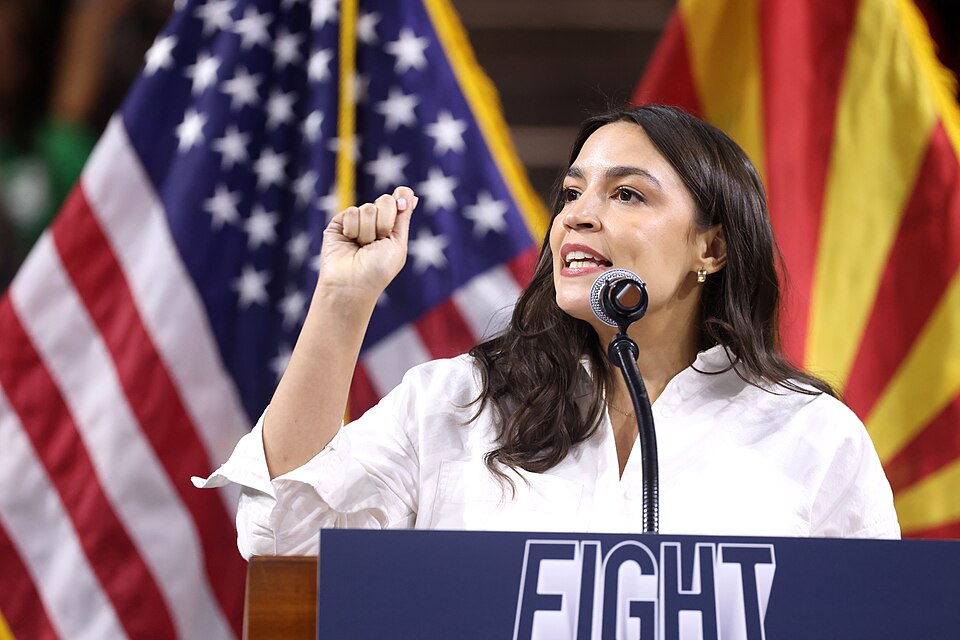
Ocasio-Cortez is pushing one major demand.
Democratic Rep. Alexandria Ocasio-Cortez is making an unexpected request of President Donald Trump, urging him to sign legislation restricting congressional stock trading and consider changes to federal healthcare policy.
The New York congresswoman, who has frequently criticized Trump and his administration, now says she is willing to work with the Republican president on issues where both parties might find common ground.
Her remarks come as Democrats prepare to take control of the House of Representatives following the 2026 midterm elections. They also arrive amid growing speculation that Ocasio-Cortez could seek the Democratic presidential nomination in 2028.
Ocasio-Cortez Makes Surprising Request Of Trump
During a recent interview with Fox News Digital, Ocasio-Cortez expressed hope that Trump would support legislation banning members of Congress from trading individual stocks.
The proposal addresses a controversial issue in Washington: whether elected officials should be allowed to participate in stock market transactions while making decisions that could affect businesses and industries.
Critics of congressional stock trading argue that lawmakers should not have opportunities to personally profit from information obtained through their government positions.
The issue has generated interest across party lines, with lawmakers from both parties supporting various proposals to tighten financial restrictions on members of Congress.
For Americans frustrated with Washington’s political establishment, the debate raises broader questions about government transparency, accountability, and public trust.
Although Ocasio-Cortez has frequently clashed with Trump over economic and political issues, she suggested that a congressional stock trading ban could provide an opportunity for cooperation.
Whether the president ultimately supports such legislation remains to be seen.
Healthcare Becomes Another Major Priority
Ocasio-Cortez also identified Medicaid as another area where she hopes the Trump administration will consider working with Democrats.
The congresswoman expressed concerns about changes to the federal healthcare program that she believes could threaten insurance coverage for millions of working Americans.
She urged the administration to reconsider certain Medicaid policies, arguing that lawmakers should prioritize maintaining access to healthcare.
Medicaid provides health coverage to eligible low-income Americans, including children, adults, seniors, and individuals with disabilities.
Changes involving eligibility, federal funding, and program requirements can have significant consequences for beneficiaries and state governments.
Republicans and Democrats have long disagreed over how to manage Medicaid spending and whether additional eligibility requirements are necessary.
Supporters of stricter program requirements argue that federal assistance should be administered responsibly and that taxpayer dollars must be protected.
Democrats, meanwhile, have raised concerns that certain restrictions could prevent eligible individuals from maintaining coverage.
Any bipartisan agreement would likely require negotiations over program costs, eligibility standards, and the federal government’s financial responsibilities.
Democrats Prepare For New Political Reality
Ocasio-Cortez’s comments follow a consequential midterm election in which Democrats gained control of the House.
The change will give Democrats greater influence over legislation, congressional committees, and oversight of the Trump administration beginning in January 2027.
However, controlling the House does not guarantee that Democrats can advance their entire legislative agenda.
Major proposals must still navigate the Senate and receive presidential approval before becoming law.
That reality could force Democratic leaders to decide whether working with Trump on selected issues offers a better opportunity for legislative progress than pursuing confrontation.
Ocasio-Cortez acknowledged that serious disagreements with the administration will continue.
Nevertheless, she indicated that political differences should not prevent lawmakers from addressing problems affecting everyday Americans.
Her comments suggest that at least some congressional Democrats may be interested in pursuing agreements on issues with bipartisan appeal.
Ocasio-Cortez Keeps 2028 Presidential Possibility Alive
Beyond her legislative priorities, Ocasio-Cortez is facing renewed questions about her political future.
The New York Democrat has emerged as a prominent figure within the progressive movement, attracting national attention for her positions on healthcare, government spending, taxation, and economic policy.
When asked whether she might seek the presidency in 2028, Ocasio-Cortez declined to rule out the possibility.
Instead, she emphasized the importance of delivering results following the midterm elections.
Her response leaves open the possibility of a White House campaign, although she has made no formal announcement.
Progressive activists have already begun encouraging her to consider running.
The New York City chapter of the Democratic Socialists of America has expressed support for a potential presidential campaign, reflecting her continued influence among the party’s progressive supporters.
Still, a presidential bid would present significant challenges.
Ocasio-Cortez would likely face competition from other prominent Democrats seeking the nomination, along with questions about whether her progressive policies could appeal to a broader national electorate.
Democratic Party Faces Internal Divisions
Ocasio-Cortez’s remarks also come as Democrats confront disagreements within their own party.
House Democratic leader Hakeem Jeffries recently secured his party’s nomination for speaker of the next Congress, although several Democrats opposed his selection.
Some opposition came from incoming lawmakers associated with democratic socialism who believe the party’s leadership has not sufficiently embraced their political priorities.
These disagreements highlight an ongoing debate about the future direction of the Democratic Party.
Moderate Democrats have emphasized the importance of appealing to independent voters and building broader electoral coalitions.
Progressive lawmakers, meanwhile, have pushed for more ambitious government programs and changes to the nation’s economic policies.
Ocasio-Cortez acknowledged that divisions between party leadership and progressive activists could continue.
However, she expressed confidence that Democrats would still be able to cooperate on shared objectives.
The outcome of those internal disagreements could influence the party’s legislative priorities and its approach to the 2028 presidential election.
Could Trump And Ocasio-Cortez Actually Work Together?
Despite their substantial political differences, the possibility of cooperation between Trump and Ocasio-Cortez presents an interesting development in Washington.
A congressional stock trading ban could attract support from Americans who believe elected officials should be held to strict financial accountability standards.
Healthcare policy, however, may prove more difficult because of disagreements over federal spending, eligibility requirements, and government oversight.
Trump has previously expressed a willingness to work with Democratic lawmakers on selected issues, but that does not mean an agreement is guaranteed.
Any successful legislation would require negotiations, congressional support, and compromises from both sides.
For now, Ocasio-Cortez appears interested in demonstrating that she can pursue her legislative goals while remaining open to cooperation with a Republican White House.
Her approach could also become part of the broader discussion surrounding her potential political ambitions.
As Washington prepares for divided government, the question is whether lawmakers can turn areas of agreement into meaningful legislation.
The coming months will reveal whether Ocasio-Cortez’s appeal to Trump produces actual cooperation or becomes another example of Washington’s ongoing political disagreements.