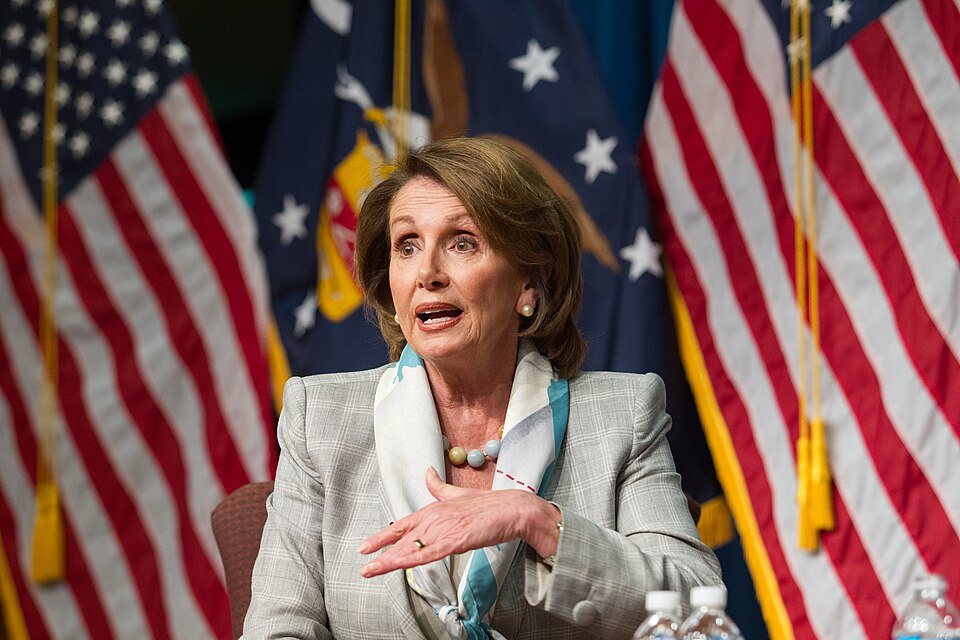
Pelosi is at it again.
Former House Speaker Nancy Pelosi is blaming President Donald Trump for what she calls a costly new agreement with Iran, arguing that American families could once again be left footing the bill.
Speaking in Chicago during events surrounding the opening of former President Barack Obama’s presidential center, Pelosi sharply criticized the Trump administration’s recent memorandum of understanding (MOU) with Iran. She claimed the agreement gives significant concessions to Tehran while offering limited benefits to the United States.
Her comments come as lawmakers from both parties continue debating whether the agreement will strengthen America’s position in the Middle East or hand a major advantage to one of Washington’s longtime adversaries.
With billions of dollars, sanctions relief, and Iran’s nuclear program at the center of the controversy, the deal is quickly becoming one of the most hotly debated foreign policy issues of the year.
Pelosi Defends Obama’s Iran Strategy
During her remarks, Pelosi praised the Obama administration’s Joint Comprehensive Plan of Action (JCPOA), the 2015 nuclear agreement designed to limit Iran’s nuclear activities in exchange for sanctions relief.
She described the Obama-era deal as a major diplomatic achievement that enhanced both American and global security.
Pelosi also argued that abandoning that agreement contributed to rising tensions and economic costs that ultimately affected American consumers. She pointed to increased military spending, higher energy prices, and the loss of American lives as examples of the consequences she associates with the administration’s approach toward Iran.
According to Pelosi, ordinary Americans have paid the price through higher costs and continued instability in the region.
New Iran Deal Sparks Growing Debate
The controversy centers on a newly announced memorandum of understanding between the United States and Iran that aims to end hostilities and reopen the strategically important Strait of Hormuz.
Reports indicate the agreement includes sanctions relief and economic measures intended to reduce tensions and create a framework for future negotiations regarding Iran’s nuclear program.
Pakistani Prime Minister Shehbaz Sharif, who helped facilitate discussions between the two sides, stated that the agreement took immediate effect earlier this week.
Supporters argue the framework could reduce the risk of future conflict and create an opportunity for long-term stability in the region.
Critics, however, say the agreement may provide Iran with substantial economic benefits before key security concerns are fully resolved.
Republicans Raise Serious Concerns
While Democrats remain divided over the agreement, several prominent Republicans have also voiced concerns.
Some lawmakers fear the deal could ultimately weaken American leverage if Iran fails to meet future commitments regarding its nuclear program.
Others have questioned reports involving a potential reconstruction and economic development fund tied to the agreement, arguing that large financial incentives could strengthen a government that has long opposed American interests and key U.S. allies.
The criticism highlights the unusual bipartisan skepticism surrounding the deal, even as supporters insist it offers the best path forward.
Ted Cruz and Other Conservatives Sound Warning
Among the most vocal critics has been Sen. Ted Cruz, who expressed concerns about provisions that could provide Iran access to significant economic resources.
Conservative lawmakers argue that any agreement with Tehran must include strict enforcement mechanisms and clear guarantees that Iran will permanently abandon efforts to develop nuclear weapons.
Many also point to decades of strained relations between Washington and Tehran as a reason for caution.
For these lawmakers, the central question remains whether the agreement delivers lasting security or simply delays future problems.
JD Vance Defends Trump’s Approach
Vice President JD Vance pushed back against criticism during a White House briefing Thursday, defending President Trump’s handling of the negotiations.
Vance argued that Trump has fundamentally reshaped America’s relationship with adversarial nations while pursuing peace through strength.
He rejected claims that the president negotiated a weak agreement and insisted that Trump’s objective remains protecting American interests while avoiding unnecessary conflict.
According to Vance, critics underestimate the administration’s ability to secure favorable terms while maintaining pressure on Iran.
The vice president is expected to play a key role in future discussions as both sides work toward a final agreement addressing Iran’s nuclear activities.
What The Deal Could Mean For American Taxpayers
One of the biggest concerns surrounding the agreement involves its potential economic impact.
Supporters believe the framework could help stabilize energy markets, reduce regional tensions, and avoid costly military engagements.
Critics counter that sanctions relief and economic incentives could ultimately benefit the Iranian government more than American taxpayers.
For many voters, the debate comes down to a simple question: Will this agreement make America safer and stronger, or will it create new risks down the road?
What Happens Next?
Under the reported framework, the United States and Iran have approximately 60 days to negotiate a more comprehensive agreement addressing nuclear restrictions, regional security concerns, and long-term enforcement measures.
Until then, lawmakers on both sides of the aisle are expected to closely scrutinize the details.
Many Americans are now wondering whether the agreement will reduce tensions in the Middle East or create new challenges in the years ahead.
With negotiations continuing and major questions still unanswered, the political battle over Iran is far from over—and could become a defining issue in Washington for months to come.