Here’s what happened.
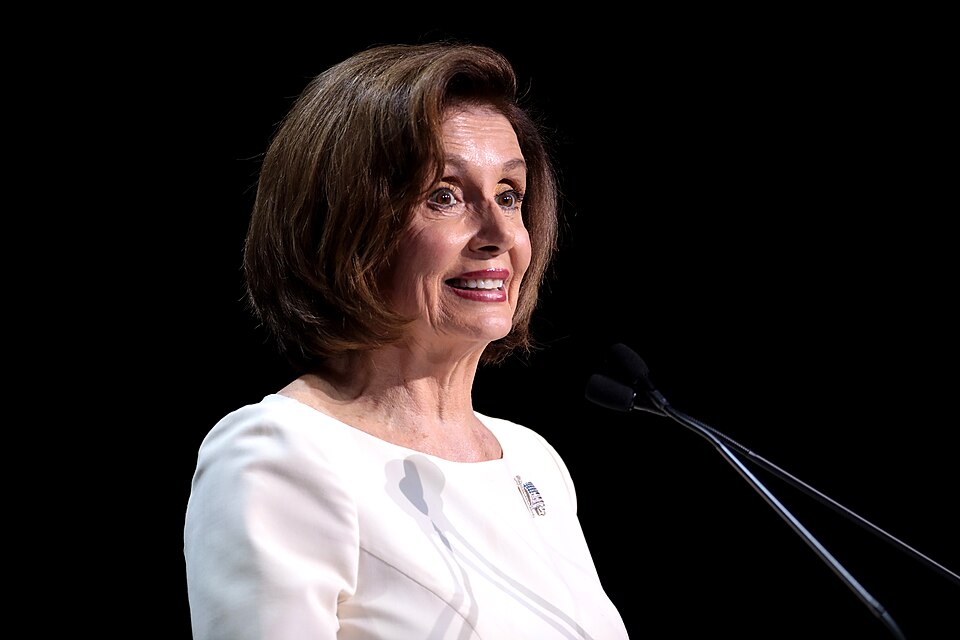
Former House Speaker Nancy Pelosi has unexpectedly handed President Donald Trump a political advantage after missing a crucial congressional vote that could have allowed an impeachment effort against Defense Secretary Pete Hegseth to move forward.
The California Democrat, one of Trump’s most prominent political opponents, was among 11 House Democrats who failed to participate in the closely contested vote Tuesday.
The final result was 211-204, allowing House Republicans to effectively block the impeachment effort for the remainder of the congressional session.
Pelosi’s absence immediately attracted attention because of her longstanding opposition to Trump and her public support for removing Hegseth from office.
The controversy has also raised questions about Democratic leadership, congressional attendance, and the consequences of missing important votes in Washington.
Republicans Score Important Victory in Congress
The political showdown began when Republican Representative Thomas Massie of Kentucky introduced eight articles of impeachment against Hegseth.
The articles accused the defense secretary of misconduct related to military operations, including the administration’s handling of the war involving Iran.
Massie also raised concerns about constitutional authority, military decisions, and the treatment of American service members.
Hegseth strongly rejected the allegations, arguing that disagreements over national security policy do not automatically justify impeachment.
President Trump publicly supported his defense secretary as the controversy unfolded.
Rather than allowing the impeachment resolution to advance, House Republicans moved to refer the articles to the House Judiciary Committee.
The motion succeeded by seven votes.
That procedural victory effectively ended the immediate effort to impeach Hegseth, although lawmakers could introduce another resolution in the future.
The narrow margin quickly shifted attention toward the Democrats who were not present.
Pelosi Misses Vote While Attending Veterans Event
Pelosi’s absence became one of the most closely examined aspects of the controversy.
According to her office, the former House speaker traveled to San Francisco to attend a Veterans Day celebration hosted by Swords to Plowshares, an organization that provides assistance and housing support to military veterans.
The event was part of a longstanding tradition in her congressional district.
Pelosi was also recognized for her years of work supporting veterans and their families.
Her spokesperson, Ian Krager, explained that she had returned to California for the scheduled event.
The spokesperson maintained that Pelosi supported impeaching Hegseth and would have opposed the Republican effort to send the impeachment resolution to committee.
However, her position did not translate into an actual vote.
For a longtime Democratic leader who has spent years battling Trump politically, the circumstances created an unusual situation.
Pelosi opposed the outcome, but her absence contributed to the opportunity Republicans had to secure it.
Eleven Democrats Fail to Cast Ballots
Pelosi was far from the only Democrat missing when the House considered the impeachment resolution.
A total of 11 Democrats failed to participate, compared with seven Republicans who also did not vote.
The absences became especially significant because Republicans prevailed by just seven votes.
If eight additional Democrats had voted against the procedural motion while the Republican tally remained unchanged, the motion would have failed.
However, that hypothetical outcome was not guaranteed. Republican leaders might have allowed additional absent Republicans to vote as well.
Several Democrats offered explanations for missing the vote.
Some lawmakers reported encountering traffic problems and security-related delays while attempting to reach the Capitol.
Others cited medical or personal circumstances.
Representative Melanie Stansbury of New Mexico said traffic complications and a police escort interfered with her ability to reach the House chamber before voting ended.
Representative Lou Correa of California reported that a medical procedure prevented him from traveling to Washington.
The explanations did not completely settle the controversy.
For lawmakers seeking to hold a senior administration official accountable, missing a major procedural vote created an uncomfortable political situation.
Democrats Face Questions About Leadership
The missed votes also created a problem for Democratic leaders preparing to take greater control of Congress in January.
House Democratic Whip Katherine Clark expressed disappointment over the absences, emphasizing the importance of lawmakers being present for significant votes.
The controversy illustrates the challenges congressional leaders face when attempting to maintain party unity.
Even when members broadly agree on a political objective, their absence during a critical vote can affect the outcome.
That was particularly evident in this case.
Nearly every Republican who participated supported sending the impeachment articles to committee.
Massie, who introduced the resolution, was the only Republican to oppose that procedural move.
Democrats who participated also voted against referring the articles.
Despite that alignment, Republicans still secured the victory.
The result demonstrated how congressional procedures and attendance can sometimes determine the fate of major political initiatives before lawmakers ever reach a final decision on the underlying issue.
Trump and Hegseth Avoid Immediate Impeachment Battle
For the Trump administration, the outcome represented a welcome development amid continuing disagreements over American military policy.
Hegseth has faced criticism from some lawmakers over his handling of military operations and the administration’s approach to conflicts overseas.
Supporters of the defense secretary, meanwhile, argue that the Pentagon must retain the authority necessary to carry out national security objectives.
Trump has repeatedly defended Hegseth’s leadership.
Following the House vote, the president celebrated the result as a vindication of his defense secretary.
However, the congressional action did not amount to a formal determination that every allegation against Hegseth was unfounded.
Instead, it prevented the impeachment resolution from moving forward through the House at that time.
The distinction matters because impeachment is a constitutional process involving separate stages.
The House has the authority to approve articles of impeachment, while the Senate determines whether an impeached official should be convicted and removed.
In this case, lawmakers did not reach a final House vote on impeaching Hegseth.
Republicans instead succeeded in sending the resolution to committee, where it is unlikely to advance before the current Congress ends.
What Happens Next for Hegseth?
Although Republicans prevailed in the immediate confrontation, the broader political dispute surrounding Hegseth is far from settled.
Democrats are preparing to assume control of Congress in January 2027, potentially opening the door to renewed investigations and additional impeachment proposals.
Some Democratic lawmakers have already indicated that they intend to revisit the issue.
However, any renewed effort would face considerable political and constitutional obstacles.
Impeachment by the House would not automatically remove Hegseth from office.
A Senate conviction would require support from two-thirds of senators present, an exceptionally high threshold.
That requirement makes removing a Cabinet secretary difficult without substantial bipartisan agreement.
For now, Hegseth remains in office, and the latest impeachment attempt has been halted.
The episode also underscores the importance of congressional oversight, particularly when disputes involve military operations, presidential authority, and national security.
Those questions are likely to remain part of the political debate regardless of what happens to the impeachment resolution.
Pelosi’s Absence Creates Unexpected Political Outcome
Few Democrats have been more closely associated with opposition to Donald Trump than Nancy Pelosi.
During her years as House speaker, she played a central role in some of Washington’s most consequential political confrontations.
That history makes her absence from the Hegseth vote particularly striking.
Pelosi’s office maintains that she supported impeachment and missed the vote because of her commitment to honoring military veterans.
There is no indication that she intended to assist Trump or protect his defense secretary.
Nevertheless, the outcome benefited the administration.
Republicans successfully prevented the impeachment effort from advancing, while Democrats faced criticism over their inability to assemble enough members for a potentially consequential vote.
The controversy provides another reminder that congressional politics often turns on more than speeches, political promises, or public disagreements.
Attendance, timing, and procedural decisions can make an enormous difference.
For Trump, the immediate result was a political win. For Pelosi and her fellow Democrats, it was a reminder that sometimes the most consequential votes are the ones lawmakers never cast.