She needs to calm down.
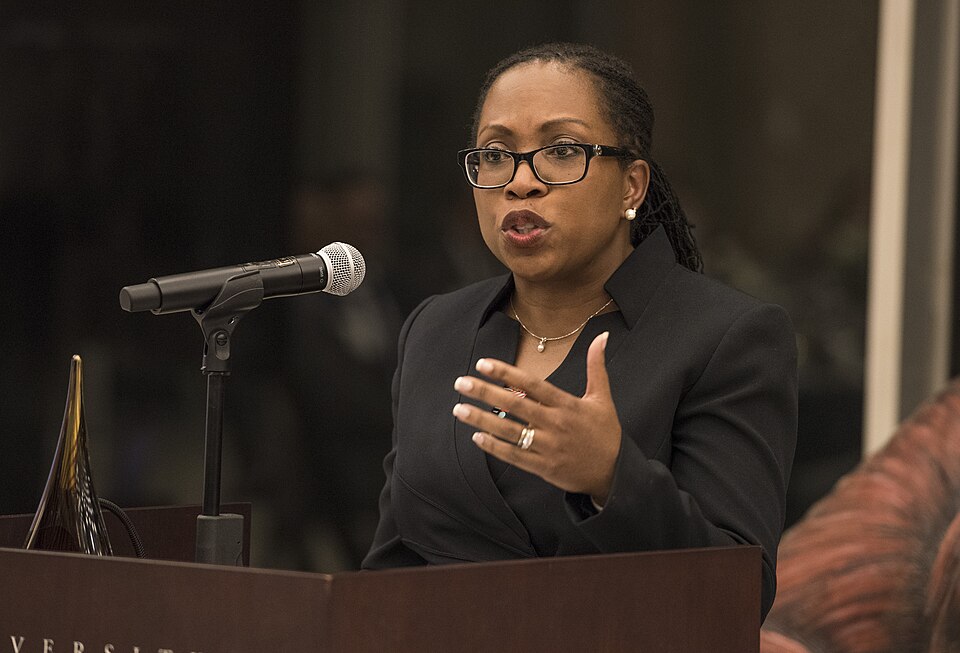
Supreme Court Justice Ketanji Brown Jackson unleashed a blistering dissent after President Donald Trump scored a major legal victory involving his administration’s election policies and mail-in voting ahead of the 2026 midterm elections.
The Supreme Court on Monday lifted a lower-court injunction that had prevented the Trump administration from moving forward with portions of the president’s executive order dealing with election integrity and mail voting.
Jackson strongly objected.
The liberal justice accused the Supreme Court majority of creating additional uncertainty ahead of the November elections, warning that the decision “needlessly injects chaos” into the process.
Her unusually forceful 23-page dissent exposed the growing divide inside the nation’s highest court over Trump, presidential authority and the role federal judges should play in election disputes.
Jackson Blasts Supreme Court After Trump Victory
Jackson did not hold back in describing her concerns about the ruling.
She argued that the decision adds another layer to what she called a “Kafkaesque nightmare” facing states attempting to challenge federal election policies.
Jackson also accused her Supreme Court colleagues of lacking “situational awareness” and criticized what she described as a “catch-me-if-you-can” approach to election litigation.
At the center of the disagreement is a fundamental legal question: When should states be allowed to sue over a federal election policy they believe is unconstitutional?
The Supreme Court majority concluded that the states challenging portions of Trump’s executive order had moved too soon because the disputed federal actions had not yet created the concrete injury necessary for their lawsuit to proceed.
Jackson vehemently disagreed.
Jackson Says States Should Not Have to Wait
According to Jackson, forcing states to wait until federal agencies take additional steps could leave them scrambling to respond as the November midterms approach.
She argued that states are placed in a difficult position under the Court’s reasoning.
Challenge an election policy too close to Election Day, and courts may conclude it is too late to make changes without causing confusion.
Challenge the policy before it has been fully implemented, however, and courts may conclude the lawsuit came too early.
Jackson believes Monday’s Supreme Court decision creates precisely that problem.
Her dissent argued that states should be able to challenge what they consider unlawful federal interference before disputed election policies are fully implemented.
What Did Trump Actually Win?
Despite the political significance of the ruling, the Supreme Court did not determine that Trump’s executive order is constitutional or otherwise lawful.
That distinction is important.
The decision instead allows the Trump administration to proceed with certain implementation efforts while litigation continues.
The majority concluded that the states had not demonstrated the type of concrete and imminent injury necessary to justify the lower court’s injunction at this stage.
In its ruling, the Supreme Court specifically noted that its decision does not mean every future action taken to implement Trump’s order will necessarily be legal.
In other words, Trump won an important battle — but the larger legal war is not over.
Trump’s Election Order Takes Center Stage
Trump signed the executive order in March as part of his broader push to strengthen what his administration describes as election integrity.
Among the provisions at issue are directives involving federal citizenship lists, enforcement priorities surrounding ballots issued to ineligible voters and proposed changes involving the U.S. Postal Service.
The Supreme Court majority characterized the executive order as an internal presidential directive instructing executive branch agencies to pursue certain policies.
That distinction became crucial to the Court’s reasoning.
Because some of those federal policies have not been fully implemented, the majority concluded that the challenging states were relying too heavily on predictions about what federal agencies might eventually do.
Jackson rejected that reasoning.
Jackson Issues Scathing Warning
Jackson argued that the states were already dealing with consequences from the administration’s actions, including election-planning expenses and uncertainty surrounding voting procedures.
She also delivered one of the sharpest accusations contained in the dispute.
Jackson claimed the majority had taken its “eye off the ball” and failed to recognize what she believes is the administration’s larger objective.
Her dissent portrayed Trump’s executive order as an improper attempt to interfere with authority traditionally exercised by the states.
The Supreme Court majority reached a much narrower conclusion.
Rather than deciding the ultimate legality of Trump’s policies, the Court focused on whether the states had established a sufficiently immediate injury to bring their challenge at this point.
Liberal Justices Unite Against Decision
Jackson was not alone in opposing the outcome.
Justice Sonia Sotomayor wrote a separate dissent that was joined by Justice Elena Kagan.
Jackson chose not to join that opinion and instead wrote 23 pages laying out her own objections.
The three liberal justices ultimately agreed that the Supreme Court should not have granted the Trump administration the relief it requested.
Their disagreement with the majority highlights the continuing ideological divide on the Court, particularly when disputes involving the Trump administration arrive on the emergency docket.
Mail-In Voting Returns to National Spotlight
Mail-in voting remains one of America’s most fiercely debated election issues.
Trump and many Republicans have pushed for tighter election safeguards, stronger eligibility verification and clearer rules governing absentee and mail ballots.
Democrats and voting-rights organizations have generally argued that mail voting provides an important option for eligible Americans and have opposed policies they believe could unnecessarily restrict access.
The latest Supreme Court battle brings those disagreements back into focus just months before voters head to the polls for the 2026 midterm elections.
For millions of Americans, the larger concern goes beyond one executive order.
The dispute raises questions about who controls election procedures, how voter eligibility should be verified and how much authority a president has over federal election-related operations.
Supreme Court Hands Trump an Important Win
For the Trump administration, Monday’s decision represents a meaningful victory.
A lower court had blocked portions of the president’s executive order from being implemented against the states challenging it during the upcoming midterms.
The Supreme Court has now put that injunction on hold.
But Americans following the case should understand what the ruling does — and does not — accomplish.
The justices have not settled the constitutionality of Trump’s election policies.
Future government actions implementing the executive order could still face legal challenges.
That means the fight over mail-in voting, election integrity and presidential authority could return to the courts.
Jackson’s Dissent Reveals Deeper Supreme Court Battle
Jackson’s reaction is particularly noteworthy because it follows a series of strongly worded disagreements involving Trump administration policies.
The justice has repeatedly expressed concern about how the Supreme Court handles emergency disputes and the consequences those decisions could have for the judiciary.
Her latest dissent demonstrates just how intense those disagreements have become.
For conservatives, the case raises an equally important concern about judges blocking actions by an elected president before federal agencies have even finalized how those policies will operate.
For Trump’s opponents, the concern runs in the opposite direction: They argue states should not be forced to wait until potentially unlawful federal policies begin affecting elections before challenging them.
That constitutional tug-of-war is unlikely to disappear anytime soon.
What Happens Next?
The litigation surrounding Trump’s executive order can continue, and future implementation measures could produce additional lawsuits.
That makes Monday’s Supreme Court ruling an important victory for Trump rather than the final word on his election agenda.
For now, the administration has gained additional freedom to move ahead with portions of its plan while the broader court battle continues.
Jackson made clear she believes that is a serious mistake.
The Supreme Court majority disagreed.
And with the November midterms rapidly approaching, the clash over mail-in voting, election integrity and presidential power could become one of the most closely watched legal battles of the election season.