A surprising divide is emerging inside the Republican Party—and it’s raising serious questions among conservative voters.
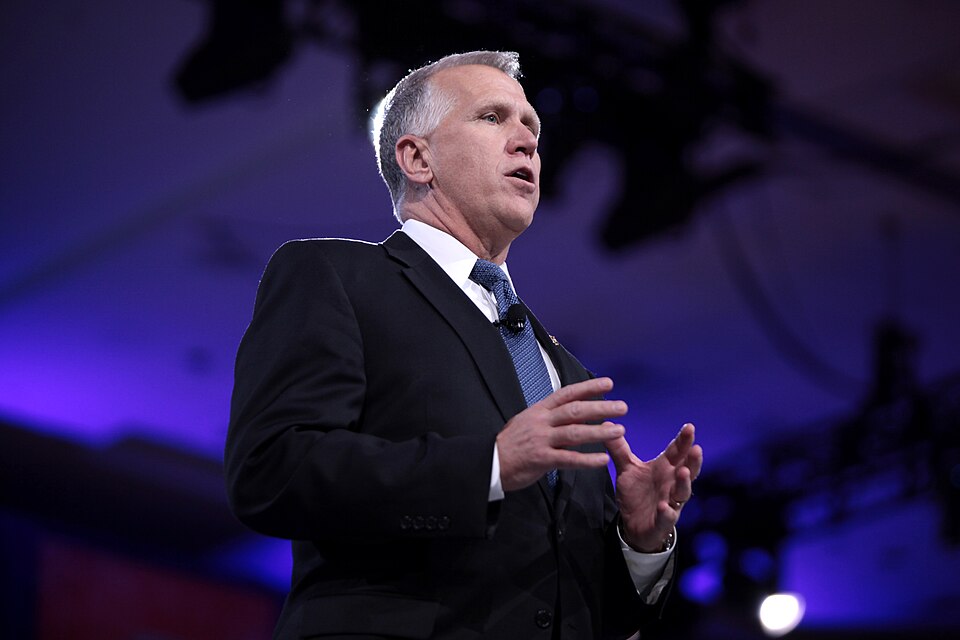
Senator Thom Tillis is now under fire after appearing to side against President Donald Trump in a growing legal controversy involving former FBI Director James Comey.
For many on the right, the moment feels like a betrayal.
Tillis Questions Case Against Comey
During a Sunday interview on CNN, Tillis openly cast doubt on the prosecution of Comey—despite the serious nature of the allegations.
“If this whole case is based on a picture in the sand,” Tillis said, “it doesn’t make sense.”
That statement immediately sparked backlash from conservatives who believe the case deserves far more scrutiny—not less.
The “86 47” Message That Sparked Outrage
At the center of the controversy is a now-deleted Instagram post by Comey showing seashells arranged to form the numbers “86 47.”
President Trump and his supporters argue the message is anything but innocent.
Trump pointed out that “86” has long been used in certain circles as slang for eliminating someone—raising concerns about whether the post carried a deeper meaning targeting the 47th president.
Tillis Pushes Back—Cites Restaurant Slang
But Tillis isn’t convinced.
Drawing on his own background in the restaurant industry, he claimed the phrase “86” is commonly used to mean removing an item or refusing service—not violence.
Even Merriam-Webster defines the term as “to get rid of” or “to refuse service,” tracing its origins back decades.
Still, many conservatives argue that context matters—and in today’s political climate, symbolism can’t be ignored.
Comey Denies Any Threat
Comey has maintained his innocence, saying he never intended the post to be interpreted as violent.
He later removed the image and claimed he was unaware that some people associate the numbers with harm.
But critics say that explanation raises more questions than answers—especially given Comey’s long and controversial history with Trump.
Tillis Admits Regret—But Draws a Line
Interestingly, Tillis didn’t defend Comey’s past behavior.
In fact, he admitted that supporting Comey during the Russia investigation was one of the biggest mistakes of his Senate career, even calling him a “political hack.”
Yet despite that, Tillis still argued the current prosecution appears excessive—something many Trump supporters strongly disagree with.
A Growing Crack Inside the GOP?
This moment highlights a deeper issue within the Republican Party.
Should GOP leaders stand firmly behind Trump when controversies arise—or take a more cautious, independent approach?
For millions of conservative voters—especially those who value strength and loyalty in leadership—the answer is clear.
What Happens Next Could Be Critical
As this case moves forward, it could have major implications not just for Comey—but for how political messaging, intent, and accountability are handled in the future.
And for many Americans watching closely, one thing is certain:
They’ll be paying attention to who stands with Trump—and who doesn’t.