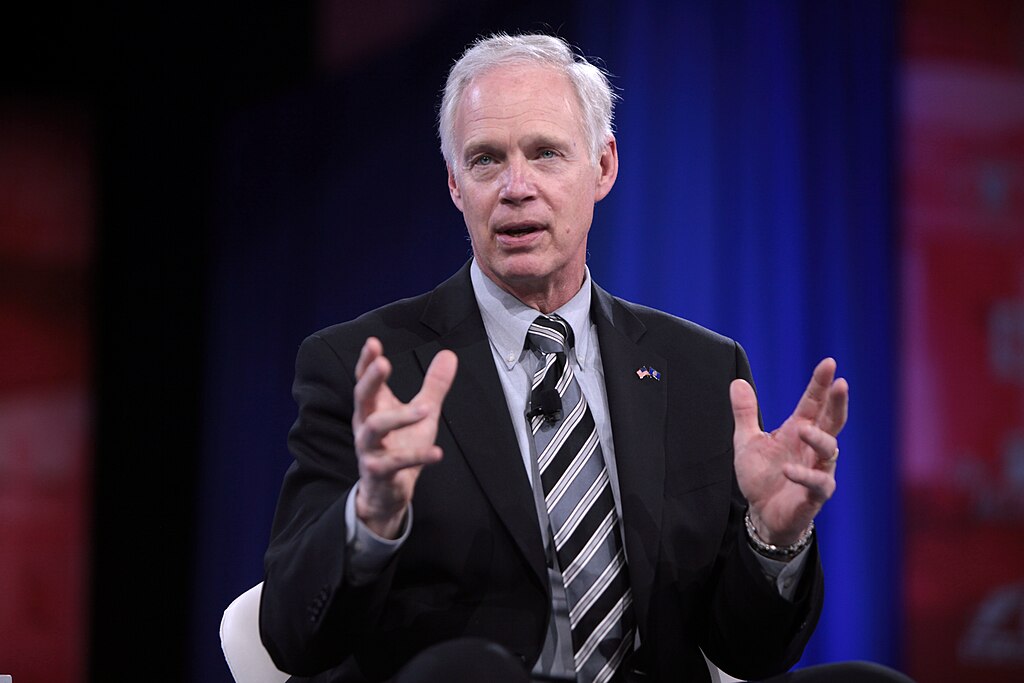
A growing divide inside the GOP is taking center stage as Sen. Ron Johnson (R-Wis.) is openly rejecting President Trump’s plan to deliver $2,000 tariff dividend checks to hardworking American families.
While millions of middle-class households are still recovering from years of crippling inflation and higher living costs, one of the Senate’s top fiscal hawks says he believes the nation “can’t afford” to return this money to taxpayers.
Speaking with Fox Business host Maria Bartiromo, Johnson warned that Washington is staring down a historic spending crisis.
“Look, we can’t afford it. I wish we were in a position to return the American public their money, but we’re not,” Johnson said, pointing to what he estimates will be a $2 trillion deficit in 2025.
Johnson vs. Trump: The GOP’s New Economic Fault Line
Johnson compared today’s out-of-control spending to the more responsible fiscal environment under previous administrations.
- Under President Trump’s first term, deficits averaged about $800 billion.
- Under President Obama’s final years, deficits ran around $550 billion.
- Now, Johnson says, the federal deficit is surging to $2 trillion — more than double Trump’s numbers.
He called the situation “completely unacceptable” and insisted Republicans must immediately prioritize cutting spending.
Trump’s Plan: Relief Checks Paid for by Tariffs, Not Taxes
President Trump’s proposal aims to send $2,000 checks to Americans earning moderate incomes. Unlike the massive spending bills passed under Biden, Trump’s plan relies on tariff revenue, not tax increases.
The Treasury Department projects $300 billion in tariff income this year, and the Congressional Budget Office estimates tariffs could generate $2.8 trillion over the next decade. These funds, Trump argues, should go directly to the people who have carried the burden of rising costs.
Treasury Secretary Scott Bessent has already confirmed the payments would be income-tested to prioritize working-class and middle-class families.
Trump himself has said the checks would likely start “in the middle of next year” if Congress approves the program.
Budget Experts and GOP Leaders Raise Concerns
Some budget analysts say tariff revenue alone may not fully cover the program. Nonpartisan projections show the checks could cost about $600 billion per year, or $6 trillion over ten years if issued annually.
That has led to resistance from several GOP leaders. Senate Majority Leader John Thune (R-S.D.) prefers using the tariff windfall to reduce the national debt instead of sending direct payments.
“The amount of revenue coming in from the tariffs is substantial,” Thune said. “Hopefully it can be put to a useful purpose — one of which would be repaying the debt.”
The Next Big Showdown: Congress Must Decide
Congress would need to authorize the payments before any checks are mailed. With the Congressional Budget Office forecasting a $1.8 trillion deficit for 2025, Republicans are now facing a major internal debate:
Should the tariff revenue go toward:
✔ Debt reduction?
✔ Cutting Washington spending?
✔ Or helping middle-class Americans directly through Trump’s $2,000 checks?
President Trump insists the money belongs to the American people. Some in Congress disagree. The battle over this decision is setting up one of the most important economic fights of Trump’s second term.