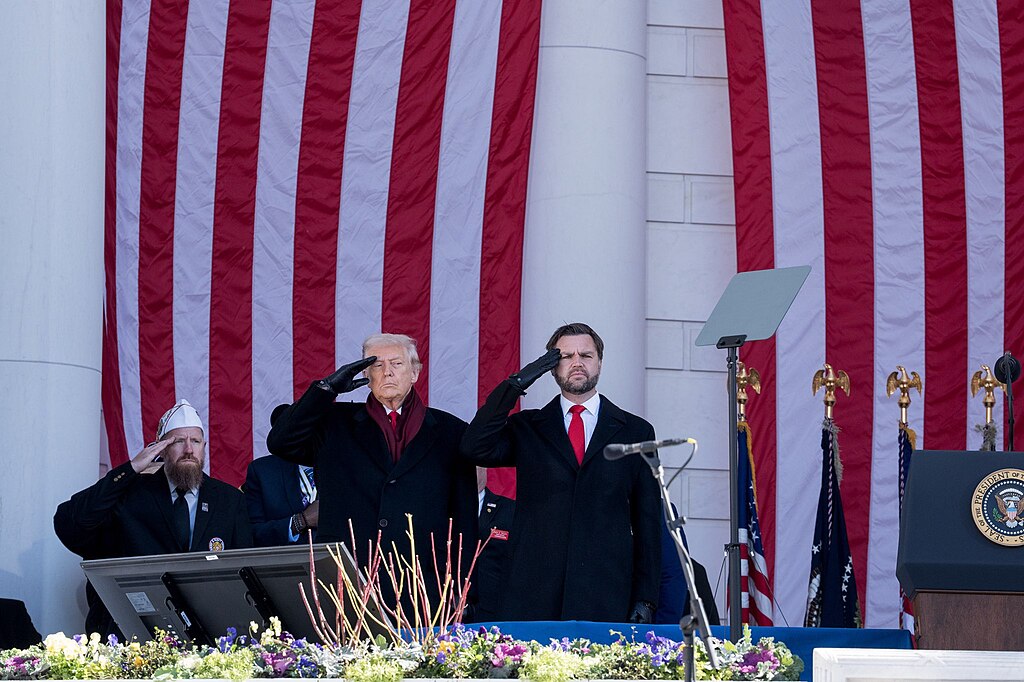
McConnell started it and JD Vance finished it.
The Trump administration is pushing back hard after former Senate Republican Leader Mitch McConnell warned President Trump’s team not to “appease” Russian President Vladimir Putin during ongoing Ukraine peace negotiations. And this time, Vice President J.D. Vance is leading the charge.
In a sharply worded response on X, Vance defended the administration’s foreign-policy effort and accused McConnell of enabling years of costly and ineffective global interventions.
“This attack on the president’s team is ridiculous,” Vance wrote. “We’re working around the clock to clean up the disaster in Ukraine—the same disaster Mitch helped create by giving Biden blank checks with zero accountability.”
Vance also questioned whether the Republican candidates running to replace McConnell in Kentucky share the outgoing senator’s position.
McConnell Accuses Trump Team of Giving Up Too Much
McConnell, who stepped down from leadership in late 2024 and is set to retire in 2027, issued a statement claiming Putin is trying to manipulate President Trump. He suggested the Trump administration may be offering concessions that could benefit Russia.
“Putin has spent the entire year trying to play President Trump for a fool,” McConnell said Friday. “If officials in the administration are focused on appeasing Putin instead of securing real peace, then the President needs new advisors.”
He warned that “rewarding Russian butchery” would be dangerous for America’s long-term interests—a comment that inflamed tensions inside the GOP.
Multiple members of Congress from both parties have criticized the draft peace plan, saying it places too many restrictions on Ukraine while allowing Russia to maintain gains on the battlefield.
The Early Peace Deal Framework
A leaked version of the initial agreement shows dramatic shifts in territorial control and security policy:
Under the draft plan, Russia would:
- Keep control of Donetsk and Luhansk
- Retain Crimea, annexed in 2014
- Hold areas of Kherson and Zaporizhzhia currently occupied
Ukraine would:
- Reduce the size of its military
- Block NATO troops from entering the country
- Halt deeper integration with NATO
On Tuesday, negotiators confirmed that Ukraine had accepted the “core terms,” though key provisions may change.
Officials from the U.S., Ukraine, and Europe said Sunday that they were cautiously optimistic that progress was being made toward ending the conflict.
McConnell Doubles Down: ‘Appeasing the Aggressor Never Works’
Despite the progress, McConnell again warned on social media that giving in to Russia’s demands “is not peace—it’s surrender.”
He acknowledged that President Trump is correct in noting that Biden’s weakness emboldened adversaries like Putin. But McConnell argued that the new peace proposal pressures Ukraine far more than Russia.
“What concessions are we demanding from Russia?” he asked. “And how does limiting Ukraine’s defenses make future peace more likely?”
McConnell: ‘A Peace Deal That Leaves Ukraine Exposed Won’t End the Killing’
Late Monday, McConnell posted additional criticism, claiming that a deal that mirrors Russia’s preferred outcome is unacceptable.
He cited polling showing that over 75% of Ukrainians say they would continue fighting even without U.S. assistance.
“That means a deal that doesn’t secure Ukraine won’t stop the killing,” McConnell said.
He also pointed to surveys showing that Americans do not support forcing Ukraine to surrender territory to Moscow.
“The price of peace matters to Americans, too,” McConnell argued. “A deal that rewards aggression isn’t worth the paper it’s written on. America isn’t a neutral observer—we shouldn’t pretend to be.”
Final Takeaway for Conservative Readers
The public disagreement between McConnell and the Trump administration highlights a major shift inside the Republican Party: a move away from endless foreign entanglements and toward a negotiated, America-First approach to global conflicts.
Vice President Vance made it clear that the Trump administration is focused on a peace agreement that protects American interests, reduces foreign spending, and avoids repeating the failures of the Biden years.