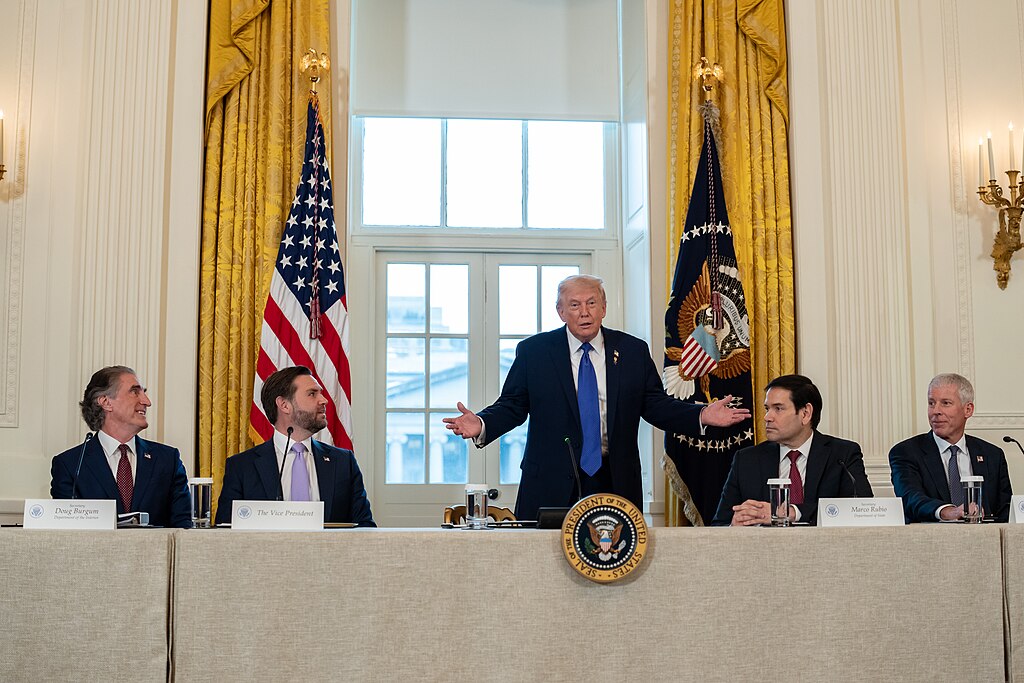
Tuesday marks one year since Donald Trump returned to the White House, completing one of the most remarkable political comebacks in modern American history.
After reclaiming the presidency in 2024, Trump began his second term with strong backing from voters who believed he would restore economic stability, strengthen border enforcement, and reassert American leadership abroad.
However, as the anniversary arrives, several newly released national polls suggest the president is facing growing skepticism from portions of the public—particularly among younger voters and independents.
New Polls Show Slippage in Approval
Multiple surveys conducted earlier this month indicate Trump’s overall approval rating has declined since his reelection.
A Marist Poll conducted January 12–13 found 38 percent of adults approving of Trump’s job performance, while 56 percent disapproved. That places his net approval rating at minus 18 points. Six percent of respondents said they were undecided.
A separate Economist/YouGov poll conducted January 9–12 showed similar results, with 40 percent approving and 54 percent disapproving, resulting in a net rating of minus 14 points.
While these figures represent Trump’s weakest numbers of his second term so far, they remain comparable to approval levels seen during periods of intense political division in his first administration.
White House Pushes Back on Polling Narrative
Responding to the polling, White House spokesman Davis R. Ingle emphasized that Trump was decisively elected and continues to advance what the administration describes as a “commonsense agenda.”
“President Trump was overwhelmingly elected by nearly 80 million Americans,” Ingle said. “He has already made historic progress both domestically and internationally. It is not surprising that he remains the most dominant figure in American politics.”
Trump has also been openly skeptical of polling throughout his political career, repeatedly arguing that surveys fail to accurately capture support among working-class and nontraditional voters.
Research organizations such as the Pew Research Center have previously noted that frequent poll respondents tend to lean more Democratic, a dynamic that has often resulted in Trump outperforming expectations on Election Day.
Concerns Emerge on Key Issues
More troubling for the administration is polling that suggests weakening confidence on issues central to Trump’s political brand.
An Associated Press–NORC survey conducted January 8–11 found that 38 percent of adults approved of Trump’s handling of immigration, while 61 percent disapproved. Republican voters remain largely supportive, with 76 percent approving, though that figure is down from earlier in the term.
On foreign policy, the same survey showed 37 percent approval overall, compared to 61 percent disapproval. Among Republicans, approval remained strong but showed signs of softening compared to previous polling.
Younger Voters Shift Sharply
Trump made unexpected gains with younger voters during the 2024 election, particularly among men aged 18 to 29. Those gains now appear to be fading.
According to a CBS News/YouGov survey conducted January 5–7, Trump’s net approval rating among younger voters has fallen to minus 32 points. Just weeks into his second term, that same demographic gave him a positive net rating.
Analysts note that younger voters tend to be more reactive to short-term economic pressures and media narratives, which can cause rapid opinion swings.
Cost-of-Living Remains a Major Concern
Economic anxiety continues to weigh heavily on public opinion.
In the AP-NORC January survey, about 60 percent of respondents said Trump has made the cost of living worse during his second term. Roughly 20 percent said he has helped lower costs, while others said he has had little impact.
The administration strongly disputes that characterization.
White House spokesman Kush Desai argued that the president inherited significant economic damage from the Biden administration and has focused on reversing those trends.
“Americans are still feeling the effects of Joe Biden’s generational economic crisis,” Desai said. “From expanding American energy production to lowering gas prices and securing historic drug pricing agreements, every action has been aimed at restoring economic stability.”
Looking Ahead
As Trump enters the second year of his presidency, the polling suggests a challenging political environment—one shaped by economic pressures, demographic shifts, and persistent media scrutiny.
Whether these numbers represent a temporary dip or a longer-term trend could play a key role in shaping legislative battles and political momentum heading into the 2026 midterm elections.