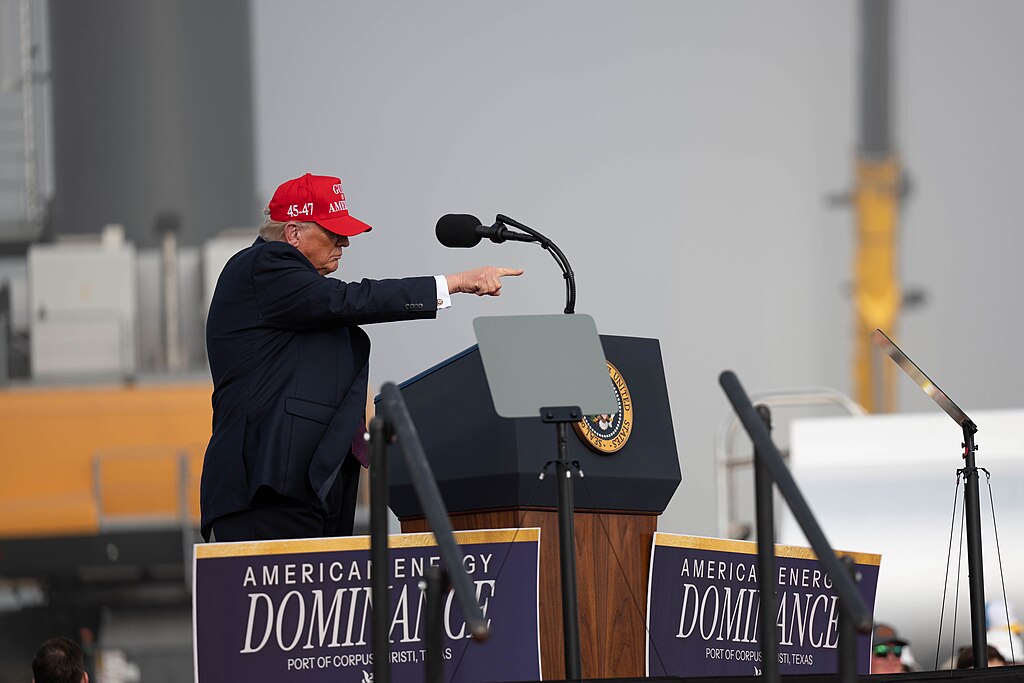
The Trump administration is launching a new effort to recruit young professionals and recent college graduates into the federal workforce as part of a broader plan to reshape how the government operates.
Officials say the hiring push will focus heavily on areas such as healthcare, technology, and program management—fields where specialized skills are needed to help modernize government services while keeping overall bureaucracy smaller.
According to Office of Personnel Management Director Scott Kupor, the administration is entering a new phase of its plan to reform the federal government while still ensuring agencies have the talent required to carry out President Donald Trump’s priorities.
Kupor acknowledged in an interview with The Washington Post that some expertise may need to be brought back into the workforce after the restructuring efforts. “To be honest, there are certain skill sets we now realize we may need to hire again,” he said, noting that major organizational changes can sometimes require course corrections.
Trump’s Plan to Reshape the Federal Workforce
Since returning to office, President Trump has made reducing the size of the federal bureaucracy one of the central pillars of his government reform agenda.
Administration officials argue that Washington had grown too large, too expensive, and too disconnected from everyday Americans.
Over the past year, the White House has worked with reform advocates and private-sector partners to identify wasteful programs and reduce the number of federal positions that officials say were no longer necessary.
One of the most notable efforts involved collaboration with entrepreneur Elon Musk through an initiative known as the Department of Government Efficiency (DOGE).
The goal of the initiative has been simple: streamline federal agencies, eliminate duplication, and make government more accountable to taxpayers.
White House spokesman Davis Ingle said those efforts reflect the mandate voters gave President Trump.
“President Trump was elected with a clear mission to eliminate waste, fraud, and abuse in Washington,” Ingle said.
“In just one year, this administration has made significant progress toward building a more efficient government that works for the American taxpayer.”
Hundreds of Thousands of Federal Jobs Cut
According to data from the Office of Personnel Management, the Trump administration has reduced the federal workforce by roughly 387,000 positions since taking office.
During the same period, about 123,000 new federal employees have been hired to fill critical roles.
Officials say this approach allows the administration to shrink government overall while still ensuring essential functions continue to operate smoothly.
Rather than maintaining a large bureaucracy across every agency, the strategy focuses on targeted hiring in areas where modern expertise is needed.
Supporters say the result could be a smaller but more effective federal government.
A Push to Attract Younger Workers
Another major concern for federal agencies has been the aging workforce.
Currently, only about 7 percent of federal employees are under the age of 30, according to OPM data.
Administration officials say that number is far too low for a government that must adapt to rapidly changing technology and global challenges.
Kupor said the administration hopes to encourage more young Americans to view government service as an opportunity rather than a long-term career commitment.
“We want to demonstrate that public service can be a launchpad for talented young professionals,” Kupor explained.
In other words, the administration hopes to attract highly skilled young workers who can contribute their expertise before potentially moving into private-sector careers later on.
New “Tech Force” Program Announced
A key part of the new recruitment strategy is a program called Tech Force.
The initiative will place software engineers, cybersecurity experts, and data analysts inside federal agencies for two-year assignments.
The program will also partner with private-sector technology companies to ensure participants receive training that keeps pace with rapidly evolving digital tools.
Supporters believe the program could help address one of the federal government’s biggest challenges: outdated technology systems.
By bringing in younger engineers and programmers, agencies could modernize everything from data systems to cybersecurity protections.
That effort comes at a time when foreign adversaries—including China, Russia, and Iran—continue to increase cyber threats against U.S. infrastructure.
Officials say improving cybersecurity and digital capabilities has become a national security priority.
Aligning the Federal Workforce With Voters’ Priorities
Another part of the administration’s reform effort involves changing how federal employees are hired and managed.
Officials say hiring authority is being centralized and the role of political appointees expanded.
The goal is to ensure new hires understand and support the policy direction chosen by voters when they elected President Trump.
Kupor said critics sometimes label this approach as “political,” but he argued it reflects the constitutional structure of the executive branch.
Kupor said the president sets specific policy goals, and the administration’s job is to carry them out. He added that while critics may label that approach as political, it is consistent with how the executive branch was intended to operate.
Supporters of the reform say aligning government employees with elected leadership could make federal agencies more responsive and efficient.
Building a Smaller, Smarter Government
Despite the new hiring push, officials say the Trump administration has no intention of returning the federal government to its previous size.
Instead, the goal is a workforce that is smaller, more specialized, and more focused on delivering results for the American public.
Administration officials argue that targeted hiring combined with major workforce reductions could create a federal government that costs less, operates more efficiently, and responds more directly to the priorities of American voters.
For supporters of the administration’s reforms, the message is clear: Washington doesn’t need to be bigger—it needs to be smarter.