The rise of the Democratic Party’s socialist wing may have just handed President Donald Trump and Republicans an unexpected political advantage in Florida.
State Rep. Angie Nixon stunned the Democratic establishment Tuesday by defeating Alexander Vindman in Florida’s Democratic primary for U.S. Senate, overcoming a massive fundraising disadvantage to capture the nomination.
Vindman became a national political figure during Trump’s first impeachment after serving on the National Security Council. But his national profile and millions of dollars in campaign funding were not enough to stop Nixon, a democratic socialist whose victory represents another sign of the growing influence of the Democratic Party’s progressive wing.
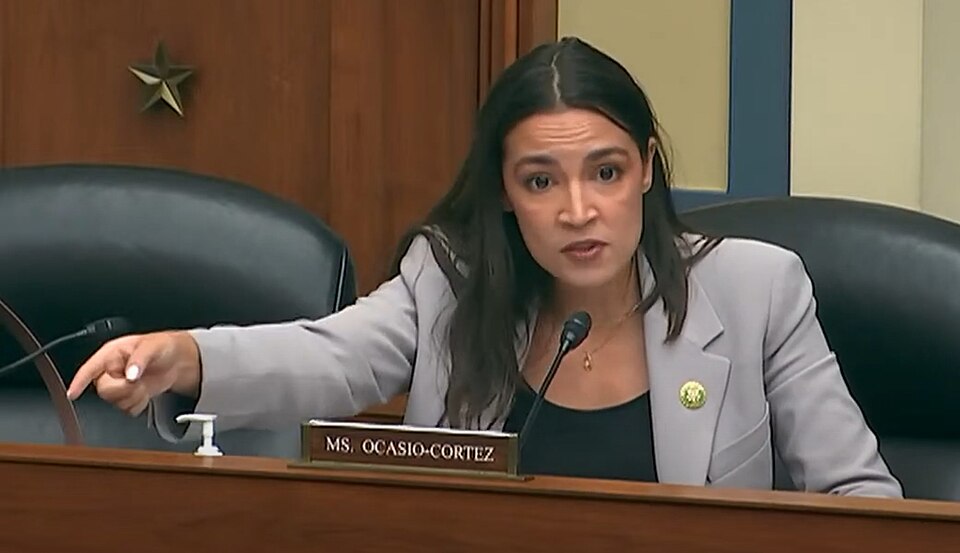
That movement gained national attention following the political rise of Rep. Alexandria Ocasio-Cortez of New York and other progressive lawmakers.
Now Republicans believe Democrats may have nominated exactly the kind of candidate they wanted to face in November.
Republicans See Major Opportunity in Florida
Nixon will face Republican Sen. Ashley Moody in the November general election, and political analysts already considered Florida difficult territory for Democrats.
Following Nixon’s surprise victory, those expectations became even more favorable for Republicans.
Larry Sabato’s Crystal Ball at the University of Virginia Center for Politics moved the Florida Senate contest from “Likely Republican” to “Safe Republican” after the primary.
Veteran Democratic strategist Adam Bozzi acknowledged that Nixon faces an uphill battle.
“Florida was already a stretch,” Bozzi told the New York Post, adding that Nixon could have difficulty attracting national Democratic resources that might instead flow toward more competitive Senate races.
Democrats are targeting several other states as they fight for control of the Senate, meaning party leaders will have to decide whether pouring millions of dollars into increasingly Republican Florida is worth the investment.
Socialist Label Could Become Major Campaign Issue
Republicans are expected to make Nixon’s democratic socialist politics a central issue in the general election.
That could be particularly significant in Florida, where generations of Cuban Americans and other Hispanic voters have personal or family experiences with socialist and communist governments.
The Democratic Socialists of America recently generated additional controversy after publishing a statement commemorating what would have been Cuban communist leader Fidel Castro’s 100th birthday.
Florida is home to approximately 1.6 million people of Cuban origin, including families who fled Castro’s government.
Republicans will almost certainly attempt to connect Nixon to the broader socialist movement as they compete for those voters.
Nixon, meanwhile, has focused much of her campaign on economic issues affecting working families, including housing costs, health care and wages.
Nixon Defied a Stunning Fundraising Gap
Nixon’s primary victory becomes even more remarkable when the financial numbers are considered.
She raised approximately $975,000 during the campaign.
Vindman raised roughly $16.3 million.
Despite being dramatically outspent, Nixon managed to defeat a candidate with national name recognition and powerful connections inside Democratic politics.
Her victory demonstrated that money alone could not overcome the grassroots support Nixon developed among Democratic primary voters.
Nixon received endorsements from progressive “Squad” members including Reps. Ilhan Omar of Minnesota, Rashida Tlaib of Michigan and Ayanna Pressley of Massachusetts.
Ocasio-Cortez did not endorse Nixon during the primary, nor did Vermont Sen. Bernie Sanders or Massachusetts Sen. Elizabeth Warren.
After Nixon’s victory, however, Sanders endorsed her Senate campaign, further strengthening her connections to the national progressive movement.
Ashley Moody Enters General Election as Favorite
The November contest presents a much different challenge.
Nixon no longer needs to win over Democratic primary voters. She must now appeal to Florida’s broader electorate in a state that has shifted significantly toward Republicans in recent years.
Recent polling has given Moody a substantial advantage.
A University of North Florida survey showed Moody receiving 50% support among likely voters compared with 42% for Nixon.
That eight-point advantage helps explain why Republicans reacted so enthusiastically to the Democratic primary result.
For the GOP, the race offers an opportunity to turn the election into a statewide referendum on socialism, government spending and the ideological direction of the Democratic Party.
For Nixon, the challenge will be convincing voters that her economic agenda addresses concerns about affordability rather than allowing Republicans to define her primarily through the socialist label.
Trump Celebrates Vindman’s Defeat
President Trump wasted little time reacting to the results.
The president celebrated Vindman’s defeat on Truth Social while sharply criticizing both Democratic candidates.
Trump attacked Vindman over his history dating back to the first impeachment proceedings and portrayed Nixon as a far-left candidate who would be defeated by Moody in November.
He also offered enthusiastic praise for Moody, signaling that the White House is likely to become heavily involved in the Florida Senate contest.
Vindman’s loss carries additional political significance because of his history with Trump.
The former National Security Council official testified during the 2019 impeachment investigation involving Trump’s dealings with Ukraine. The Democratic-controlled House ultimately impeached Trump in December 2019, but the Republican-controlled Senate acquitted him in February 2020.
Years later, Vindman’s attempt to enter the U.S. Senate has now ended at the hands of a candidate running to his political left.
Republicans Say Democrats Are Moving Toward Socialism
Republican candidates and party officials quickly seized on Nixon’s victory as evidence of a broader transformation taking place inside the Democratic Party.
Ryan Elijah, the Republican nominee in Florida’s 7th Congressional District, said he was surprised by Nixon’s victory and argued that Democrats increasingly appear to be embracing socialist candidates.
Elijah said Republicans should remain focused on their own agenda while allowing voters to compare conservative policies with the increasingly progressive positions being promoted by Democratic candidates.
The National Republican Senatorial Committee delivered a similar message.
NRSC spokesperson Bernadette Breslin argued that Senate Democratic leader Chuck Schumer is losing control of his party to its socialist wing, pointing to Nixon and other progressive candidates around the country.
The Republican strategy heading into November is becoming clear: make socialism itself one of the central issues of the Florida Senate election.
AOC Helped Transform Democratic Politics
Ocasio-Cortez was not directly involved in Nixon’s primary victory, but her political rise helped transform democratic socialism from a relatively obscure movement into a powerful force within Democratic politics.
When Ocasio-Cortez defeated longtime Democratic Rep. Joe Crowley in 2018, her victory shocked Washington.
She quickly became one of the most recognizable progressive politicians in America and helped bring policies once confined to the Democratic Party’s left flank into the national debate.
Other progressive candidates followed.
Now Nixon has accomplished something that would have seemed highly unlikely just a few election cycles ago: a democratic socialist has captured a major-party nomination for U.S. Senate in Florida.
But winning a Democratic primary and winning statewide in Florida are two very different challenges.
Florida Could Put Democratic Socialism to the Test
Nixon’s victory gives progressive activists reason to celebrate. It also gives Republicans an opportunity they clearly intend to exploit.
Florida has become increasingly favorable territory for the GOP, while Trump and other Republicans have made opposition to socialism an especially important part of their appeal to Cuban-American and other Hispanic voters.
Nixon will attempt to counter that argument by emphasizing affordability, wages, health care and other economic concerns that helped propel her through the primary.
That sets up a sharp ideological contrast with Moody.
The Florida contest could therefore become about much more than one Senate seat. It may offer voters a direct choice between two dramatically different visions of government and the economy.
For Democrats, Nixon’s upset demonstrates the growing strength of the party’s progressive movement.
For Republicans, it may represent something else entirely: a political gift.
Ocasio-Cortez and the socialist movement helped reshape Democratic politics. In Florida this November, Trump and the GOP will find out whether that transformation ultimately helps Republicans win.