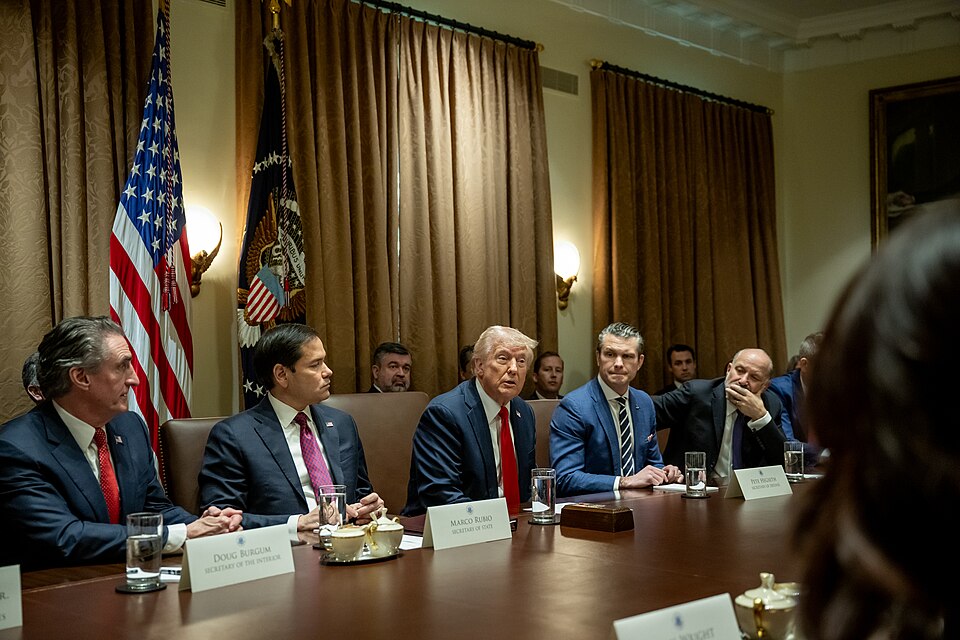
President Donald Trump is taking an unexpected diplomatic step in Washington, D.C., as his administration works to resolve the ongoing conflict with Iran and protect American national security interests.
Trump met with Qatar’s prime minister, Sheikh Mohammed bin Abdulrahman Al-Thani, at the White House on Monday, November 9, for discussions focused on possible negotiations with Tehran.
Vice President JD Vance also met separately with the Qatari leader, highlighting the administration’s continued efforts to find a diplomatic solution to one of the most serious foreign policy challenges facing the United States.
The high-level discussions come as tensions remain elevated throughout the Middle East, raising concerns about military involvement, international oil supplies, and the economic consequences of a prolonged conflict.
While the meeting represents another opportunity for diplomacy, significant disagreements between Washington and Tehran remain unresolved.
Trump Pushes Forward With High-Stakes Iran Negotiations
Qatar has become an important intermediary in diplomatic discussions between the United States and Iran.
The small Middle Eastern nation has maintained communication with both governments, placing its leadership in a position to deliver proposals and help negotiate potential agreements.
Qatar’s prime minister recently traveled to Tehran before arriving in Washington, underscoring the importance of his role in the ongoing negotiations.
The Trump administration is exploring whether an agreement could reduce hostilities while addressing longstanding concerns about Iran’s nuclear activities and regional influence.
However, American officials have repeatedly indicated that any agreement must include meaningful commitments from Tehran.
The White House has shown little willingness to accept a proposal that fails to satisfy the administration’s security objectives.
For Trump, the challenge involves pursuing diplomatic progress without surrendering the leverage Washington currently holds.
Marco Rubio Issues Warning About Iran’s Demands
Secretary of State Marco Rubio has expressed serious reservations about the possibility of reaching an agreement in the immediate future.
Speaking Sunday, Rubio indicated that negotiations had produced limited results and that Iranian officials continued to advance demands the United States considers unacceptable.
Among the major disagreements is a proposal that would require Washington to lift its naval blockade of Iranian ports, ease certain economic restrictions, and halt military operations.
In exchange, Tehran would agree to reopen the Strait of Hormuz, an essential shipping route for international oil supplies.
Additional discussions would then address Iran’s nuclear program and other outstanding sanctions.
American officials have rejected the current proposal, arguing that its conditions are insufficient to produce an acceptable settlement.
Rubio emphasized that Trump would prefer to resolve the conflict through negotiations whenever possible.
Nevertheless, the secretary of state made clear that diplomacy cannot succeed unless Iran demonstrates a willingness to make reasonable concessions.
His comments serve as a reminder that the administration remains cautious about Tehran’s intentions, even while participating in diplomatic discussions.
JD Vance Takes Important Role In Diplomatic Efforts
Vice President JD Vance has emerged as a central figure in the administration’s efforts to reach an agreement with Iran.
According to reporting from Axios, Vance has maintained frequent communication with Qatari and Pakistani intermediaries as officials work to establish a possible framework for renewed negotiations.
Those discussions have included potential arrangements for direct technical meetings between representatives of Washington and Tehran.
Vance’s involvement reflects the White House’s interest in finding a diplomatic path forward while maintaining pressure on Iranian leaders.
The vice president has previously expressed reservations about prolonged American military involvement overseas, making his participation particularly significant.
His discussions with Qatar’s prime minister could help determine whether the two sides can overcome some of the obstacles preventing an agreement.
However, officials have cautioned that no major breakthrough is guaranteed.
The administration continues to face difficult questions about Iran’s nuclear capabilities, international security commitments, and the conditions necessary to end the conflict.
Iran Conflict Raises Concerns About American Energy Prices
The ongoing confrontation has implications far beyond the Middle East.
The Strait of Hormuz remains a major concern because of its importance to global energy transportation.
Any disruption involving this waterway can create uncertainty in international oil markets, potentially affecting gasoline and transportation costs in the United States.
For Americans living on fixed incomes, including retirees, higher energy prices can place additional pressure on household budgets.
Small businesses, farmers, and transportation companies can also face increased expenses when fuel costs rise.
Those costs can eventually influence prices throughout the broader economy.
The conflict has continued for more than eight months, following the beginning of American and Israeli military operations against Iran on February 28.
Despite diplomatic activity, reports of additional military incidents have underscored the fragile security situation.
Iranian state media reported American strikes on Qeshm Island, while attacks involving commercial shipping have continued to raise concerns about regional stability.
The situation illustrates why restoring reliable shipping access and preventing further escalation remain important objectives for Washington.
A lasting agreement could help reduce uncertainty, although the economic benefits would depend on the terms of any settlement and developments in international markets.
Trump Keeps Military Options Available
Although Trump has signaled a preference for negotiating an agreement, the president has not ruled out additional military action.
He has suggested that renewed large-scale strikes may not be necessary if diplomatic discussions produce a satisfactory outcome.
At the same time, the administration has indicated that American forces remain prepared to respond if negotiations fail or security conditions deteriorate.
That combination of diplomatic engagement and military readiness has become an important feature of the White House’s approach.
Trump must weigh the potential advantages of an agreement against the risks of accepting terms that leave major security concerns unresolved.
The president also faces growing domestic pressure following the recent midterm elections, which delivered significant political setbacks for Republicans.
The conflict with Iran has become part of the broader national debate over foreign policy priorities, government spending, and America’s military commitments abroad.
For many Americans, the central question is whether Washington can secure a lasting agreement without placing additional burdens on American troops, taxpayers, and families.
White House Meeting Could Shape America’s Next Move
The discussions with Qatar’s leadership represent an important opportunity for the Trump administration to evaluate the prospects for a negotiated settlement.
Qatar has been working with other regional governments to develop proposals that could establish confidence-building measures between Washington and Tehran.
Those efforts reportedly include possible arrangements involving shipping access, sanctions relief, and international inspections of Iranian nuclear facilities.
Nevertheless, substantial differences remain over the conditions required for a broader agreement.
Rubio has warned that a diplomatic breakthrough does not appear imminent, even as the administration continues exploring possible solutions.
The president must now determine whether Iran is prepared to offer concessions that satisfy American security concerns.
The outcome could influence future military decisions, international energy markets, and the United States’ relationships with key Middle Eastern allies.
For now, Trump’s meeting with Qatar’s prime minister signals that diplomatic efforts remain active, but Washington is not yet prepared to accept Iran’s proposed terms.
Whether those negotiations eventually produce a lasting agreement remains one of the most consequential questions facing the administration.