Things are heating up.
Texas is suddenly drawing major national attention as Republicans and Democrats prepare for the final weeks of the 2026 midterm campaign.
A new statewide poll shows the U.S. Senate race between Democratic state Rep. James Talarico and Republican Attorney General Ken Paxton virtually tied, raising the stakes for both parties in a state that has long played an important role in Republican national politics.
The Emerson College Polling/Nexstar Media survey found Talarico receiving 47% support among likely Texas voters, while Paxton received 46%.
Libertarian candidate Ted Brown received 2%, and another 4% of voters remained undecided.
Because the one-point difference falls within the poll’s approximately three-point credibility interval, the contest is best viewed as a statistical dead heat rather than a clear lead for either candidate.
Texas Senate Race Tightens Before Election Day
The latest results reinforce what several recent surveys have suggested: Texas could see an unusually competitive Senate contest this November.
In Emerson College’s previous August survey, Paxton received 47% support while Talarico stood at 46%.
The latest poll essentially reversed those numbers, putting Talarico at 47% and Paxton at 46%.
Emerson College noted that the movement between the two surveys was not statistically significant, meaning the overall picture remains one of a very close race.
That leaves both campaigns facing intense pressure to turn out supporters during the closing stretch.
For Republicans, Texas remains an especially important political battleground because the party has enjoyed statewide success there for decades.
Democrats, meanwhile, are hoping the close polling signals an opportunity to become more competitive in a state that has gradually attracted greater national attention.
Trump And Republicans Focus On Turnout
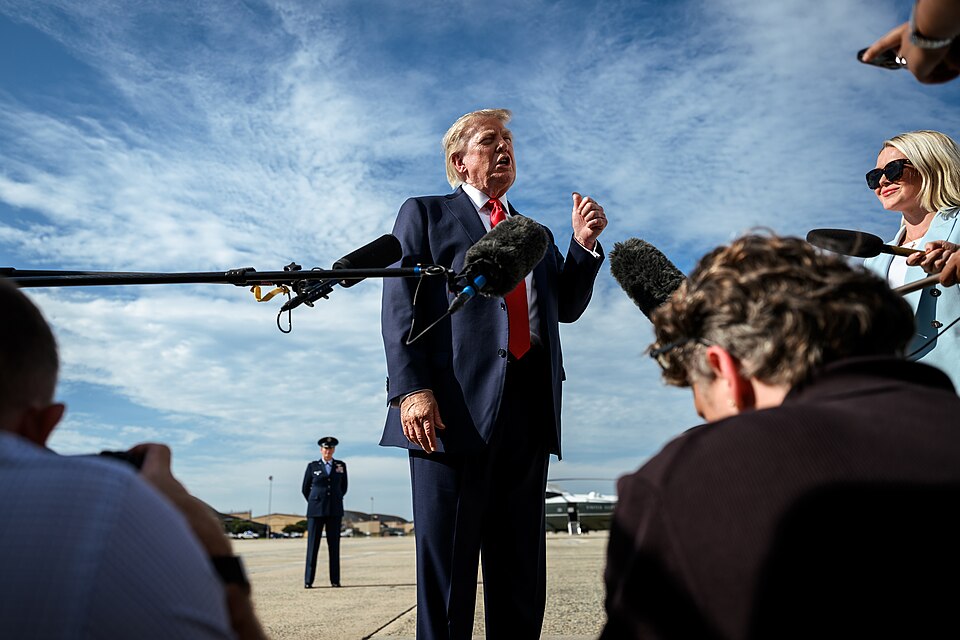
President Donald Trump and other Republican leaders recently traveled to Dallas for the GOP’s midterm convention, where they urged supporters to vote in November.
The Emerson survey suggests the event generated enthusiasm among voters from both major parties.
Among respondents who had heard about the convention, 59% of Republicans said it made them more excited to vote.
Interestingly, 53% of Democrats said the gathering also increased their enthusiasm about participating in the election.
Independent voters were less affected.
Sixty-eight percent said the convention had no impact on their excitement about voting.
Those numbers highlight one of the biggest challenges facing both parties: motivating their core supporters while also competing for voters who do not consistently identify with either party.
Independent Voters Could Receive More Attention
With the Senate contest separated by only a single percentage point in the latest poll, independent and undecided voters are likely to remain an important focus during the campaign’s final weeks.
Candidates frequently concentrate on their most reliable supporters early in an election cycle.
As Election Day approaches, however, campaigns also devote increasing attention to voters who have not firmly made up their minds.
The latest Texas survey found 4% of likely voters still undecided in the Senate race.
In an election this close, even a relatively small group of undecided voters could become an important part of each campaign’s strategy.
Abbott Leads In Texas Governor’s Race
The same poll also examined the race for Texas governor.
Republican Gov. Greg Abbott received 49% support among likely voters, compared with 46% for Democratic challenger Gina Hinojosa.
Libertarian Pat Dixon received 2%, while 4% remained undecided.
The results represented little movement from Emerson College’s August survey.
Abbott also received 49% in that poll, while Hinojosa stood at 45%.
The latest results therefore show another competitive statewide contest as Texans prepare to vote.
Economy Remains Texas Voters’ Biggest Concern
While political campaigns often generate attention around personalities and party battles, Texas voters appear especially focused on economic conditions.
Thirty-six percent of respondents identified the economy as the most important issue facing the state.
That placed economic concerns well ahead of several other major issues.
Immigration was identified by 14% of respondents, while education received 12%.
Healthcare and threats to democracy were each selected by 11%.
Economic concerns were also prominent among voters from both major political parties.
Thirty-eight percent of Republicans identified the economy as the state’s most important issue, compared with 37% of Democrats.
Among independent voters, 30% selected the economy.
Those findings suggest issues such as household expenses, jobs, wages and the broader cost of living could remain central to political debate in Texas through Election Day.
Why Texas Matters Nationally
Texas has long been one of the country’s most politically influential states.
It has a large congressional delegation, a rapidly growing population and a significant role in presidential and congressional elections.
Republicans have controlled statewide elected offices for years, but Democrats have repeatedly invested resources in hopes of becoming more competitive.
That history makes the latest Senate polling particularly notable.
A close contest does not necessarily mean Texas is permanently shifting toward either political party, and individual polls should never be treated as predictions.
Polling represents a snapshot of voter opinion at a specific moment.
Turnout, late-breaking events, campaign spending and undecided voters can all affect the final result.
Both Parties Face A Turnout Test
The latest numbers make voter participation one of the central questions heading toward November.
Republicans will be working to ensure their traditional supporters show up at the polls.
Democrats will be attempting to build on the support reflected in recent surveys.
Independent voters could also receive increasing attention as both campaigns compete for every available vote.
Trump’s appearances on behalf of Republican candidates are expected to remain part of the GOP’s broader effort to energize its base, while Democrats are likely to continue emphasizing economic and statewide issues in their campaign messaging.
Ultimately, the result will be determined by Texas voters.
A Race Worth Watching
The Emerson College Polling/Nexstar Media survey was conducted September 12 through September 14, 2026, among 1,000 likely Texas voters.
The survey reported an approximate credibility interval of plus or minus three percentage points.
With Talarico at 47% and Paxton at 46%, the poll shows a race with no statistically meaningful leader.
The Texas governor’s contest is also relatively close, while economic concerns continue to dominate voters’ priorities.
With Election Day approaching, Texas is likely to remain one of the closely watched states of the 2026 midterm campaign.