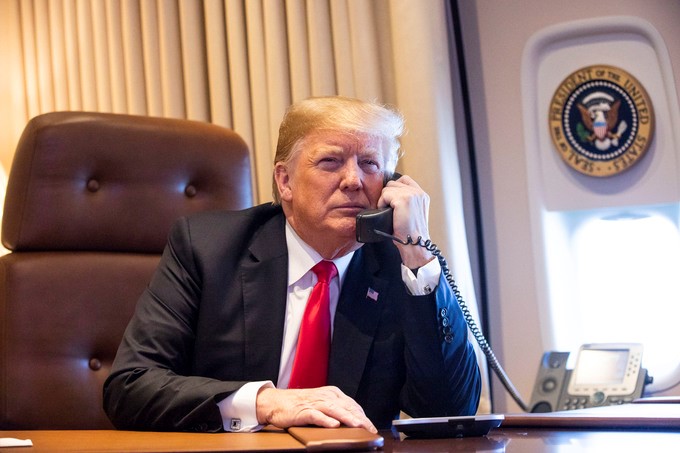
Here’s what Trump is doing to prevent a bigger disaster.
President Donald Trump has declared a new national emergency involving America’s electric grid, giving his administration broader authority to block certain foreign-made equipment that officials believe could threaten the nation’s power supply.
The sweeping executive order could affect transformers, substations, generators, turbines, battery storage systems and even software connected to America’s bulk-power infrastructure.
For millions of Americans who depend on electricity for everything from air conditioning and medical equipment to banking and communications, the issue reaches far beyond Washington politics.
Trump says it is a matter of national security.
Trump Takes Action To Protect America’s Power Grid
Trump signed the executive order Wednesday, declaring that foreign dependence involving critical electric-grid equipment represents an “unusual and extraordinary threat” to the national security, foreign policy and economy of the United States.
The order restricts certain purchases, imports, transfers and installations of foreign-produced equipment when federal officials determine that the transaction creates an unacceptable security risk.
Energy Secretary Chris Wright will have significant authority in carrying out the policy, working with other federal officials to identify equipment that could threaten the reliability or security of the electric grid.
The administration’s concern is straightforward: equipment connected to America’s power system could potentially become a vulnerability if it is controlled, compromised or manipulated by a foreign adversary.
Could Foreign Equipment Put The Grid At Risk?
Modern electrical infrastructure is much more technologically advanced than the power systems Americans grew up with decades ago.
Transformers and generators remain essential, but today’s grid also relies heavily on computers, communications equipment, digital controls and sophisticated software.
That creates new opportunities—and new vulnerabilities.
The White House warned that some foreign-made equipment could potentially contain digital backdoors or other weaknesses capable of allowing unauthorized remote access.
Supply-chain dependence creates another concern.
If the United States becomes heavily dependent on foreign manufacturers for essential grid components, an international conflict, trade disruption or other crisis could make replacement equipment difficult to obtain when Americans need it most.
China’s Role Raises Bigger Questions
Trump’s executive order does not specifically name China or impose a blanket prohibition on Chinese electrical equipment.
However, China’s enormous role in global energy manufacturing makes the country an unavoidable part of the broader discussion.
China has developed a commanding position in the manufacturing of batteries, solar technology and other components increasingly connected to modern power systems.
That dependence has created a dilemma for Washington.
America needs enormous amounts of new electricity and electrical equipment to support manufacturing, artificial intelligence, data centers, military installations and a growing economy. At the same time, relying heavily on overseas suppliers for critical infrastructure can create national security concerns.
Trump’s latest order attempts to address that problem by giving the federal government greater power to intervene when foreign equipment is considered dangerous.
What Equipment Could Be Affected?
The policy potentially reaches a broad range of infrastructure used to generate and transmit electricity across the United States.
That can include large transformers, generators, turbines, substations, circuit breakers, battery energy storage systems and grid-connected power electronics.
Software and digital systems associated with critical equipment may also come under scrutiny.
This is important because a modern electric grid is no longer made up simply of power plants, poles and wires. Computerized systems increasingly help operators control the movement of electricity across vast portions of the country.
A cybersecurity weakness inside those systems could potentially create consequences far beyond a single power plant or utility.
Why America’s Electric Grid Matters To National Security
Virtually every part of American life depends on reliable electricity.
Hospitals need power to operate life-saving equipment. Police and fire departments depend on electricity and communications networks. Banks, grocery stores, gas stations, factories and airports cannot function normally without it.
The military also relies on a dependable power supply.
A major disruption could therefore affect far more than whether Americans can turn on their lights.
It could interfere with emergency services, communications, transportation, manufacturing and national defense.
That is one reason Washington increasingly treats the electric grid as critical national security infrastructure.
AI Is Creating Another Electricity Challenge
The emergency order also arrives as the United States faces rapidly growing electricity demand.
Artificial intelligence and massive data centers require enormous amounts of power. American manufacturing and defense production are adding additional demand.
That creates two challenges at once.
The country needs to produce more electricity while also expanding and protecting the infrastructure required to deliver it.
The Department of Energy recently said U.S. electricity demand has been increasing at close to 3 percent annually since 2023 after nearly two decades of relatively flat demand.
Critical grid equipment is already facing supply-chain problems.
Transformers, circuit breakers and other components can face lengthy production delays, while dependence on imported materials and equipment can make expansion more difficult.
That makes securing the supply chain particularly important as America enters a period of greater electricity demand.
Could This Affect Electricity Prices?
For consumers, one of the biggest questions will be whether the new restrictions eventually affect electric bills.
The executive order does not directly raise or lower household electricity rates.
However, restricting foreign equipment could have competing effects.
Utilities could face higher short-term costs if inexpensive foreign equipment becomes unavailable and replacement products are more expensive or take longer to manufacture.
On the other hand, expanding American manufacturing could reduce long-term dependence on vulnerable overseas supply chains and make essential equipment more readily available during future disruptions.
The Department of Energy has acknowledged that supply-chain shortages already contribute to higher costs.
Some transformer prices, according to the department, have increased dramatically in recent years, with those expenses potentially making their way to businesses and consumers.
That means the administration will face a balancing act: improving national security without creating unnecessary costs or shortages for utilities and their customers.
Trump Wants More Grid Equipment Made In America
The policy also fits into Trump’s broader push to rebuild domestic manufacturing and reduce American dependence on foreign suppliers.
Earlier this year, Trump directed federal action aimed at expanding domestic production of transformers, transmission components, substations, circuit breakers and other critical grid equipment.
The administration has argued that America currently lacks sufficient domestic manufacturing capacity for some components essential to national defense and the electric system.
Increasing production inside the United States could create a more secure supply chain while potentially generating additional manufacturing investment and jobs.
But rebuilding domestic capacity will not happen overnight.
Some major electrical components require specialized factories, materials and skilled workers. Expanding production could take years.
Cybersecurity Threats Put Infrastructure In The Spotlight
Cybersecurity is another major reason the administration says action is necessary.
America’s power system is increasingly connected to digital technology, creating opportunities for efficiency but also potential entry points for hostile actors.
A compromised component does not necessarily have to physically fail to become dangerous.
Malicious software or hidden communications capabilities could potentially allow an outside actor to interfere with equipment remotely.
The White House specifically cited concerns that foreign-made systems could contain vulnerabilities capable of being exploited by outside governments or other hostile actors.
That possibility has made supply-chain security a growing concern for governments around the world.
Trump Has Targeted Grid Security Before
The president’s latest action is not his first attempt to protect America’s power infrastructure from foreign threats.
During his first administration, Trump issued a similar order targeting certain foreign equipment used in the bulk-power system.
His administration has now returned to the issue as electricity demand rises and competition with foreign technological powers intensifies.
Trump also declared a broader national energy emergency immediately after returning to the White House in January 2025.
That declaration focused heavily on increasing America’s energy capacity and ensuring the country has enough reliable and affordable energy to support households, businesses, manufacturing and national defense.
The new order focuses on a different question: whether America can trust the equipment used to keep that energy flowing.
What Happens Next?
The Energy Department will now play a major role in implementing Trump’s order.
Officials will have to determine which foreign equipment, manufacturers or transactions create unacceptable risks.
That means the full impact will become clearer as the administration develops and enforces the rules.
Utilities, grid operators and manufacturers will be watching closely.
So will consumers.
If the restrictions encourage more transformers and other critical components to be manufactured domestically, the policy could strengthen America’s electrical supply chain over time.
If replacement equipment becomes significantly more expensive or difficult to obtain, however, utilities could face additional challenges.
The details of implementation will therefore matter enormously.
What This Means For American Households
Most Americans should not expect their electricity service to suddenly change because of the emergency declaration.
There is no order telling households to replace appliances, solar panels or batteries in their homes.
Instead, the policy primarily concerns major equipment connected to the nation’s bulk-power system.
The effects Americans eventually notice are more likely to involve electricity reliability, infrastructure investment, domestic manufacturing and potentially utility costs.
Those consequences could take months or years to become clear.
The Bottom Line
Trump’s national emergency declaration puts America’s electric grid at the center of the growing battle over national security, cybersecurity and dependence on foreign manufacturing.
The administration argues that the United States cannot afford to build critical infrastructure around equipment that could potentially be compromised by hostile foreign actors.
At the same time, Washington faces another challenge: America needs more electricity and more grid equipment as artificial intelligence, data centers and domestic manufacturing drive demand higher.
The question now is whether Trump’s policy can accomplish both goals—protecting the power grid from foreign threats while keeping electricity reliable and affordable for American families.
For older Americans especially, reliable electricity is not an abstract political issue. It powers medical devices, heating and cooling systems, communications and countless necessities of everyday life.
And when it comes to the nation’s power supply, Americans may increasingly ask a basic question: Who made the equipment keeping the lights on—and can it be trusted?