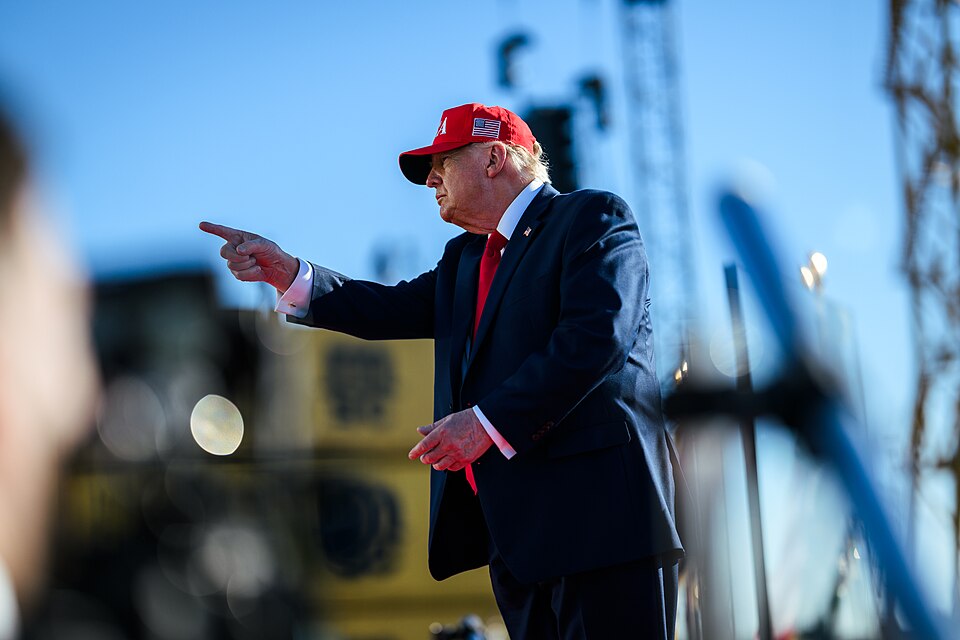
President Donald Trump is sending a strong message to his political opponents, revealing that he believes he has the constitutional authority to protect himself and members of his administration from future federal prosecutions.
During an October 15 interview with Newsmax, Trump discussed the possibility of issuing presidential pardons before leaving office, including a potential pardon for himself.
The president’s remarks have renewed a major debate in Washington over presidential powers, political investigations, and whether government officials should face legal consequences for actions taken during their time in office.
For Trump, the issue carries personal significance after years of criminal investigations and legal battles following his first term.
Trump Makes Bold Declaration About Presidential Pardons
Speaking with Newsmax host Rob Finnerty, Trump was asked whether he was seriously considering granting himself a pardon before his presidency ends.
The president responded by emphasizing that he believed he had committed no wrongdoing.
However, he also made a striking declaration about the authority of the presidency.
“I’m allowed to do a pardon, a self-pardon,” Trump said.
The president went on to describe the pardon power as one of the strongest constitutional authorities available to the commander in chief.
Although Trump stopped short of announcing an official plan, his comments made clear that he considers presidential clemency an option worth keeping available.
His remarks also suggest that the experience of facing criminal prosecutions after his first presidency continues to influence his decisions.
Trump Warns About Future Investigations of His Administration
One of Trump’s biggest concerns involves the possibility that officials serving in his administration could become targets of federal investigations after leaving office.
The president argued that members of his team should not have to spend years fighting expensive legal battles simply because they served in his government.
He expressed particular concern about the financial and personal burden that investigations can place on public officials.
Trump said he does not want members of his administration to endure prolonged legal proceedings, hire expensive attorneys, and face years of uncertainty.
His remarks come amid ongoing disagreements between Republicans and Democrats over the use of federal law enforcement authority.
Trump has repeatedly accused political opponents of weaponizing the justice system against him, while Democrats have maintained that criminal investigations should proceed independently of political considerations.
The possibility of presidential pardons adds another dimension to that debate.
Biden’s Controversial Pardons Return to the Spotlight
Trump also pointed to former President Joe Biden’s use of executive clemency during the final weeks of his administration.
Before leaving the White House in January 2025, Biden issued pardons for several members of his family, including his son Hunter Biden.
The former president also granted preemptive pardons to certain public figures who had faced threats of investigation or prosecution.
Biden argued that those decisions were necessary to protect individuals from potentially politically motivated legal actions.
However, the pardons sparked criticism from Republicans who questioned whether presidential clemency was being used too broadly.
Trump suggested that Biden’s actions demonstrated just how powerful the presidential pardon authority can be.
The comparison raises an important question: If one president uses pardons to protect individuals from future federal prosecutions, should a successor be able to exercise similar authority?
That question could become increasingly significant as the Trump administration considers its options ahead of the next presidential transition.
Can President Trump Legally Pardon Himself?
The United States Constitution gives presidents broad authority to grant pardons for federal criminal offenses.
However, the question of whether a sitting president can legally pardon himself remains unresolved.
No federal court has definitively ruled on the constitutionality of a presidential self-pardon.
In 1974, during the Watergate scandal, the Justice Department’s Office of Legal Counsel concluded that presidents could not pardon themselves because no individual should act as a judge in their own case.
Other constitutional scholars have argued that the wording of the Constitution leaves room for a different interpretation.
There are also important restrictions on presidential pardon authority.
A presidential pardon generally applies to federal offenses. It cannot erase state criminal charges, eliminate civil lawsuits, or prevent impeachment proceedings.
That means any attempt by Trump to pardon himself could trigger a major constitutional dispute.
Nevertheless, the president possesses well-established authority to issue federal pardons to other individuals, including members of his administration.
Why Trump’s Decision Could Have Major Consequences
The president’s latest comments raise questions about how future administrations might handle investigations involving former government officials.
Supporters of broad presidential pardon powers argue that the Constitution provides an important safeguard against unfair or politically motivated prosecutions.
They believe executive clemency can help prevent the justice system from becoming a tool for political retaliation.
Critics, however, warn that preemptive pardons could reduce accountability by protecting government officials from prosecution for potential wrongdoing.
The debate ultimately centers on the balance between presidential authority and the principle that public officials must remain accountable under federal law.
For Trump, the issue is particularly significant because of the investigations and court proceedings he faced after leaving the White House in 2021.
Those experiences appear to have strengthened his determination to prevent members of his administration from facing similar challenges.
What Happens Next for Trump and His Administration?
Trump has not announced that he will issue a self-pardon or identified specific administration officials who might receive preemptive pardons.
His comments therefore represent a discussion of possible future actions rather than a finalized presidential decision.
Still, the president’s willingness to address the issue publicly has brought renewed attention to one of the most consequential powers granted to the executive branch.
Any future pardon decisions could have lasting implications for the presidency, federal law enforcement, and the relationship between political accountability and constitutional authority.
As Trump continues his second term, the possibility of additional presidential pardons could become an increasingly prominent issue in Washington.
The central question is whether Trump will ultimately use his constitutional powers to protect members of his administration from future federal prosecutions.
For now, the president has made one thing clear: He believes presidential pardons provide significant legal protections, and he is keeping his options open.