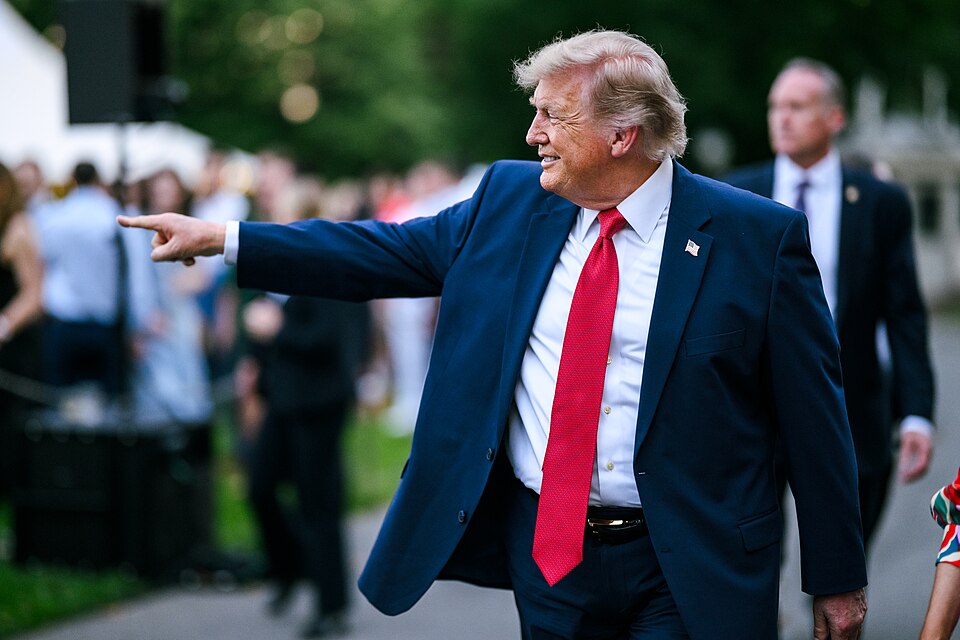
Here’s who Trump pardoned.
President Donald Trump has once again sparked national debate after issuing a full presidential pardon to a former Republican congressman who supporters say was unfairly targeted by the federal government.
The pardon, announced through a White House proclamation, grants former Indiana Rep. Stephen Buyer a complete and unconditional pardon, wiping away a conviction that many Republicans have long argued was the result of political persecution.
The move immediately drew attention because Buyer is not only a former member of Congress, but also a decorated Army veteran who spent years serving his country before entering public office.
According to the White House, Trump’s decision came after dozens of current and former lawmakers urged him to intervene. More than 50 members of Congress reportedly supported the effort, arguing that Buyer deserved clemency after what they viewed as an unjust legal battle.
The White House proclamation highlighted Buyer’s military service as a Judge Advocate General officer in the U.S. Army, along with his years representing Indiana in Congress.
The case against Buyer dates back several years. Federal prosecutors accused him of using nonpublic information obtained through business relationships after leaving Congress to make stock trades that generated significant profits.
In 2023, Buyer was convicted on securities fraud charges and sentenced to nearly two years in federal prison.
However, Buyer consistently maintained his innocence throughout the legal process.
Following his release from prison in 2025, he argued that the prosecution was politically motivated and that he had been unfairly targeted by government officials.
That argument gained support among many Republicans.
In letters sent directly to President Trump, former lawmakers described Buyer as another example of what they believe has become a troubling pattern of politically motivated investigations and prosecutions.
Several supporters pointed to Buyer’s role during former President Bill Clinton’s impeachment proceedings in the late 1990s and suggested that his political profile may have made him a target.
One letter urged Trump to correct what supporters called a miscarriage of justice and restore Buyer’s reputation through presidential clemency.
Trump has not publicly commented on the pardon itself. However, he previously shared letters supporting Buyer on Truth Social, signaling his interest in the case before the pardon was officially announced.
The decision also highlights the broad constitutional authority presidents possess when it comes to granting pardons.
Under Article II of the Constitution, presidents have the power to issue pardons and commute sentences, a tool that has been used by administrations from both political parties throughout American history.
Supporters of Trump’s decision argue that the pardon represents a necessary check on what they see as government overreach and politically driven prosecutions.
Critics, meanwhile, contend that the conviction was upheld through the court system and should have remained in place.
The pardon is likely to reignite an ongoing national conversation about justice, accountability, and whether federal law enforcement agencies have become too involved in political battles.
For many Americans, the case raises a larger question: When does the justice system protect the public, and when does it become a political weapon?
That debate is unlikely to end anytime soon.