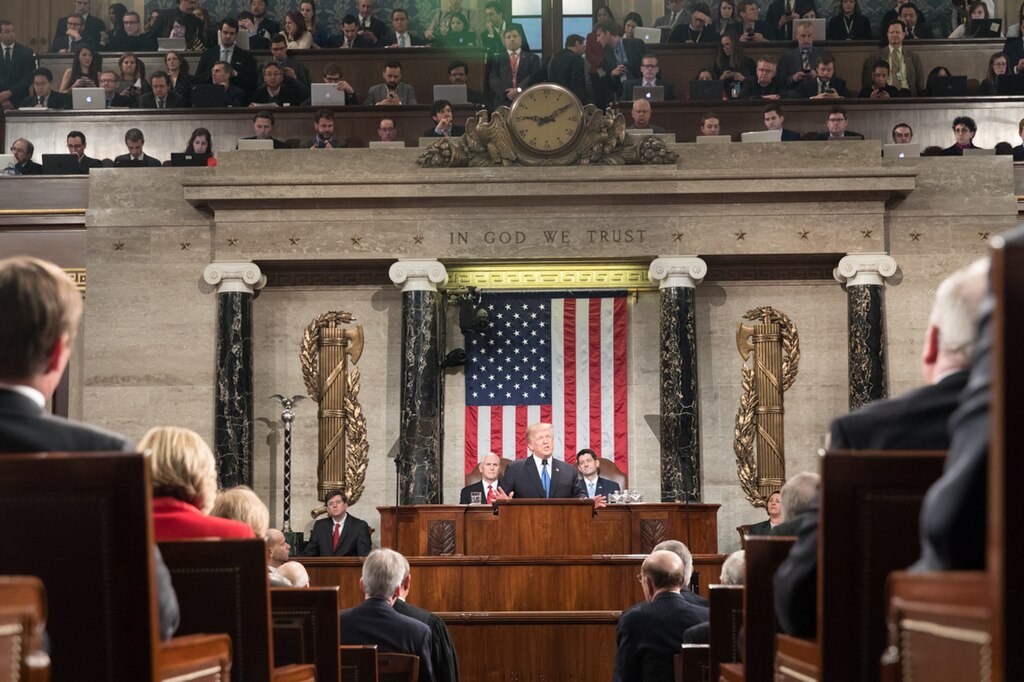
During his latest State of the Union address, President Donald Trump delivered a confident message: America is “bigger, better, richer, and stronger than ever before.”
But buried inside the applause lines was something that should matter deeply to Americans over 50.
Trump promised:
“We will always protect Social Security, Medicare, and Medicaid.”
For retirees and near-retirees living on fixed incomes, that’s not just a talking point. That’s financial security.
However, new federal projections are raising serious questions about how long those promises can realistically hold.
If you are counting on Social Security benefits or Medicare coverage in the next decade, this is information you cannot afford to ignore.
Medicare’s Financial Warning Sign
According to updated projections from the Congressional Budget Office (CBO), the Medicare Hospital Insurance Trust Fund — which pays for Medicare Part A — is now expected to be depleted by 2040.
That’s 12 years sooner than previously estimated.
Medicare Part A covers:
- Inpatient hospital stays
- Skilled nursing facilities
- Hospice care
- Home health services
For millions of seniors, this is core retirement healthcare coverage.
If the trust fund runs dry in 2040, Medicare would legally only be allowed to pay benefits from incoming payroll taxes. That could trigger automatic benefit reductions starting around 8 percent and potentially rising toward 10 percent in later years.
For seniors managing rising healthcare costs and inflation, even an 8 percent reduction would be significant.
Social Security Faces an Even Sooner Deadline
The outlook for Social Security benefits is even more urgent.
The CBO estimates the Social Security trust fund could be exhausted by fiscal year 2032 — just six years from now.
If Congress does not act before then, benefits would automatically be limited to what payroll taxes bring in.
Independent analysts estimate that a typical couple approaching retirement today could face thousands of dollars per year in reduced benefits if reforms are not enacted.
For Americans over 50 who have paid into the system for decades, this possibility is understandably alarming.
The Tax Cuts at the Center of the Debate
President Trump has strongly defended the One Big Beautiful Bill Act (OBBBA), highlighting provisions that eliminated taxes on:
- Social Security income
- Overtime pay
- Tips
For retirees and working seniors, eliminating taxes on Social Security benefits was widely popular.
But here’s the financial reality: Social Security and Medicare are partially funded through taxes on benefits and payroll revenue. When tax inflows decrease, long-term trust fund solvency shortens.
That doesn’t mean the programs disappear — but it does mean lawmakers will eventually face difficult choices.
What Happens If the Trust Funds Run Out?
If Congress does nothing, three primary options remain:
- Raise payroll taxes
- Reduce future benefits
- Fund the programs using general federal revenue (increasing national debt)
Some economists warn that heavily relying on debt could increase inflation or interest rates — something retirees living on fixed income already feel every time they visit the grocery store.
In simple terms: delaying reform does not eliminate reform. It often makes the adjustments more painful later.
Why This Matters to Americans 50+
If you are 50 or older, you are in the Social Security and Medicare “impact zone.”
This isn’t about partisan politics — it’s about retirement planning, healthcare costs, and income security.
Key questions seniors should be asking:
- Will my full Social Security benefit be there when I retire?
- Could Medicare premiums rise?
- Will benefits be reduced across the board?
- How should I adjust my retirement savings strategy?
Financial advisors are increasingly encouraging near-retirees to stress-test their retirement plans against possible benefit reductions.
That’s not panic — that’s preparation.
The Political Reality Ahead
No politician wants to campaign on cutting Social Security or Medicare.
But math eventually forces action.
Whether through gradual retirement age increases, payroll tax adjustments, means testing, or structural reforms, changes are almost inevitable.
The real debate is not whether reform will happen — but when, and how severe it will be.
The Bottom Line for Seniors
President Trump continues to argue that economic growth and tax relief strengthen America and will ultimately support entitlement programs.
Critics argue that reduced tax revenue accelerates long-term funding shortfalls.
For Americans over 50, the only thing that truly matters is this:
Will Social Security and Medicare remain stable when you need them most?
This debate is no longer theoretical. The projected deadlines are within striking distance of today’s retirees.
And as Washington continues to argue, millions of Americans are watching closely — because their retirement security depends on it.