Here’s what happened.
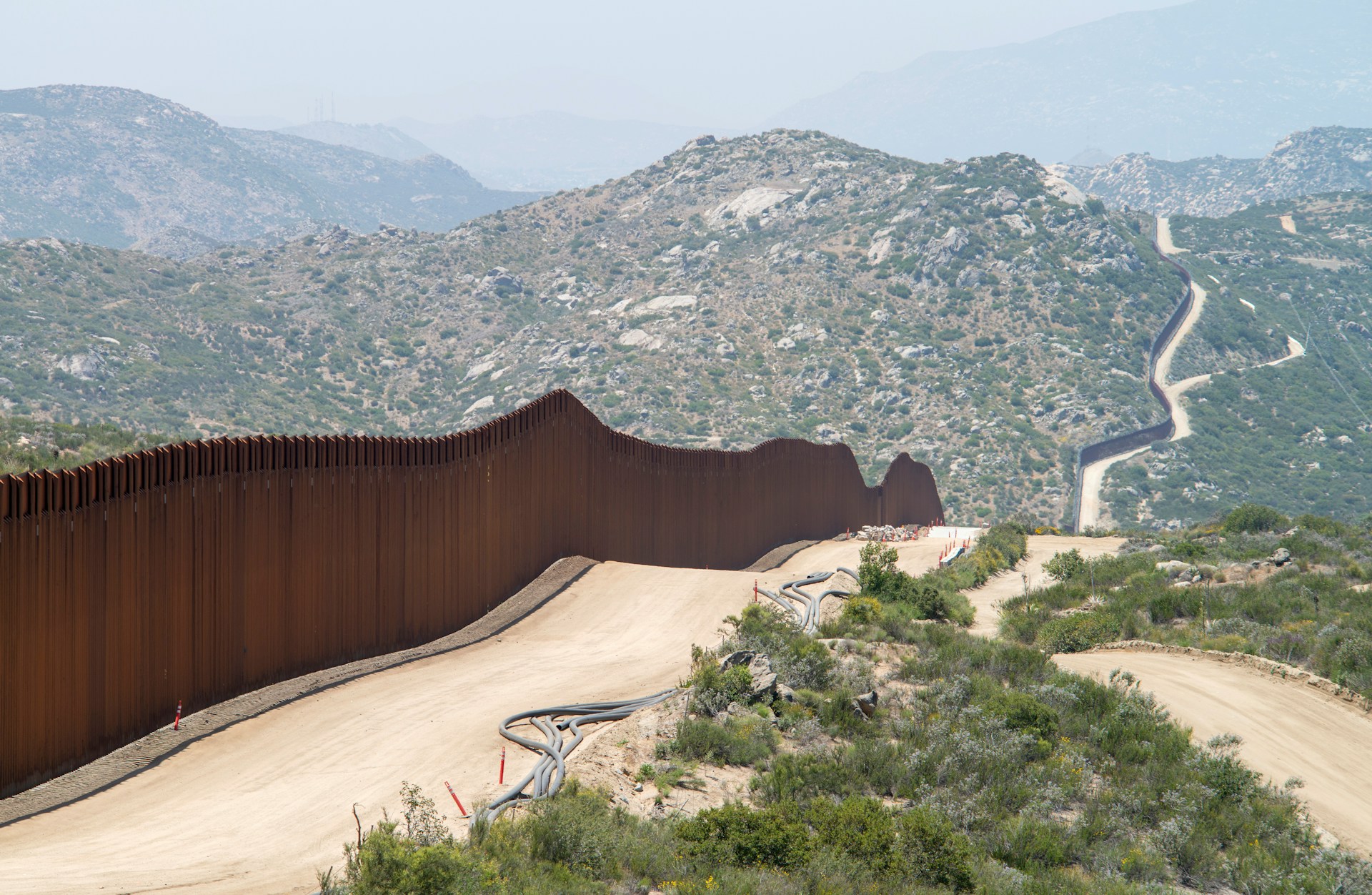
President Donald Trump’s border security agenda is running into resistance in Texas, where a prominent Republican senator is raising concerns about plans for new construction along one of the most rugged sections of the U.S.-Mexico border.
Sen. John Cornyn, R-Texas, is asking the Trump administration to address concerns surrounding border barriers and related construction in the Big Bend region, including Big Bend National Park and Big Bend Ranch State Park.
Cornyn emphasized that he continues to support securing America’s southern border. His concern is whether additional physical barriers are necessary in locations where towering cliffs, deep canyons and harsh desert terrain already make illegal crossings extremely difficult.
The dispute puts two priorities important to many conservatives — strong border security and responsible use of federal resources — at the center of an increasingly complicated debate.
Cornyn Raises Concerns About Trump’s Border Wall Plans
Cornyn announced that he had sent a letter to Homeland Security Secretary Markwayne Mullin after hearing concerns from Texas officials and other stakeholders.
“I will always support securing our border,” Cornyn wrote on X.
But the Texas senator said officials from both political parties have questioned the potential consequences of construction in sections of Big Bend where the landscape itself provides a substantial natural barrier.
Some areas feature riverbank cliffs reaching roughly 1,000 feet, along with enormous canyons and isolated stretches of desert.
Cornyn wants the Department of Homeland Security to coordinate with Texas stakeholders before moving forward with physical barriers in those locations.
His position is significant because he is not challenging Trump’s overall push for tougher border enforcement.
Instead, Cornyn is questioning how the federal government intends to carry out that mission in an unusually difficult and environmentally sensitive part of Texas.
Border Construction Is Reportedly Already Underway
The debate may be more urgent than Cornyn’s letter initially suggests.
The Washington Post reported that construction activity has already started inside Big Bend National Park, with crews clearing land for a new Border Patrol road near Santa Elena Canyon.
The project is connected to the Trump administration’s broader $46.5 billion effort to expand border barriers and other security infrastructure along the U.S.-Mexico border.
Trump has made border security and immigration enforcement central priorities of his administration, arguing that the federal government must regain control of the southern border and give law enforcement the infrastructure necessary to protect the country.
For millions of conservative voters, stronger border enforcement remains a major priority.
The question emerging in Texas is not necessarily whether the border should be secured, but whether every section requires the same solution.
Big Bend Creates a Unique Border Security Challenge
Big Bend is dramatically different from many other sections of the southern border.
Rather than relatively open terrain where fencing can create a significant additional obstacle, portions of the region contain enormous natural barriers.
Steep cliffs rise above the Rio Grande. Deep canyons cut through the landscape. Remote desert stretches for miles.
That has led some Texas officials to question whether expensive physical barriers would provide enough additional security in certain locations to justify the cost and disruption.
For fiscal conservatives, that could become an important part of the debate.
With billions of taxpayer dollars devoted to border security, supporters of Trump’s immigration policies may still want federal officials to concentrate resources where they can provide the greatest benefit.
Border Patrol roads, surveillance equipment, personnel, technology and physical barriers can all play different roles depending on the terrain.
Cornyn appears to be asking the administration to make those distinctions before construction advances further.
Environmental Groups Raise Another Concern
Environmental concerns are adding another layer to the controversy.
Construction is occurring near Santa Elena Canyon, an area associated with critical habitat for the threatened yellow-billed cuckoo.
The Department of Homeland Security has waived numerous federal requirements affecting the project, including provisions connected to the Endangered Species Act and National Environmental Policy Act.
Such waivers can allow border projects to move forward faster without becoming tied up in lengthy regulatory reviews.
Supporters of expedited construction argue that immigration enforcement and national security projects should not be stalled indefinitely by federal bureaucracy.
Environmental organizations counter that accelerating construction can have lasting consequences when projects enter sensitive habitats and protected public lands.
That disagreement is likely to become increasingly important as the Trump administration moves ahead with additional border infrastructure.
Trump Has Already Targeted Environmental Regulations
The Big Bend controversy also comes as the Trump administration has pursued broader changes to federal environmental regulations.
The administration has revised endangered-species policies as part of an effort to reduce regulations that officials argue can unnecessarily interfere with development and economic activity.
Among the changes have been revisions affecting habitat protections for endangered and threatened species and how regulators consider economic factors when making certain decisions.
Supporters view the changes as an effort to restore balance between environmental protection, private development, energy production and economic growth.
Critics contend the revisions could weaken protections for vulnerable wildlife and environmentally sensitive areas.
Now those competing arguments are colliding directly with Trump’s border security program.
Cornyn Isn’t Abandoning Trump’s Border Agenda
One important distinction could easily get lost in the political headlines: Cornyn is not calling for Trump to abandon border enforcement.
Quite the opposite.
The Texas Republican explicitly reaffirmed his support for securing the border while asking the administration to reconsider how physical barriers are deployed in this particular region.
That separates his position from politicians who oppose Trump’s border wall policies more broadly.
Cornyn’s argument is essentially about strategy.
If a massive cliff or canyon already prevents most illegal crossings in a particular location, federal officials must determine whether constructing another barrier there provides enough additional security to justify the expense.
That is a considerably different argument from opposing border barriers altogether.
Taxpayer Spending Could Become Part of the Fight
The financial component could also attract attention from older conservative voters concerned about federal spending.
The Trump administration’s border security initiative involves tens of billions of dollars, making decisions about where that money is spent especially important.
A physical border barrier can be extremely valuable in locations where it slows illegal crossings and gives Border Patrol agents additional time to respond.
But geography varies dramatically across the nearly 2,000-mile U.S.-Mexico border.
A strategy that makes sense in one area may not necessarily provide the same return in another.
Cornyn’s request gives the administration an opportunity to argue that its border strategy is not merely about building more barriers, but about deploying taxpayer-funded resources where they can produce the greatest security benefit.
A Delicate Decision for the Trump Administration
The White House now faces a potentially delicate balancing act.
Trump has repeatedly promised aggressive action to secure America’s borders, and slowing construction could generate criticism from supporters who want the administration to move as quickly as possible.
Ignoring concerns from Texas Republicans and local stakeholders, however, could create a different political problem.
Big Bend is not an ordinary stretch of the southern border. It is a distinctive part of Texas with unusual geography, protected lands and communities that have dealt with border issues for generations.
Cornyn is asking Washington to take those realities into account.
The disagreement therefore may become an important test of how the Trump administration balances border security, taxpayer spending, local concerns and environmental regulations.
What Happens Next?
The central question is whether the Department of Homeland Security will modify its construction plans after hearing concerns from Cornyn and other Texas stakeholders.
Construction activity has reportedly already begun, meaning the issue could move quickly.
Trump’s commitment to stronger border security does not appear to be changing. The larger question is exactly what that security should look like in a region where nature has already created some of the most formidable barriers found anywhere along the southern border.
For conservatives who support Trump’s immigration crackdown, the debate may ultimately come down to effectiveness: secure the border, enforce the law and make sure taxpayer dollars are being used where they can do the most good.
Cornyn’s warning suggests that even among Republicans, there may be disagreement over whether building additional physical barriers through Big Bend is the best way to accomplish that goal.