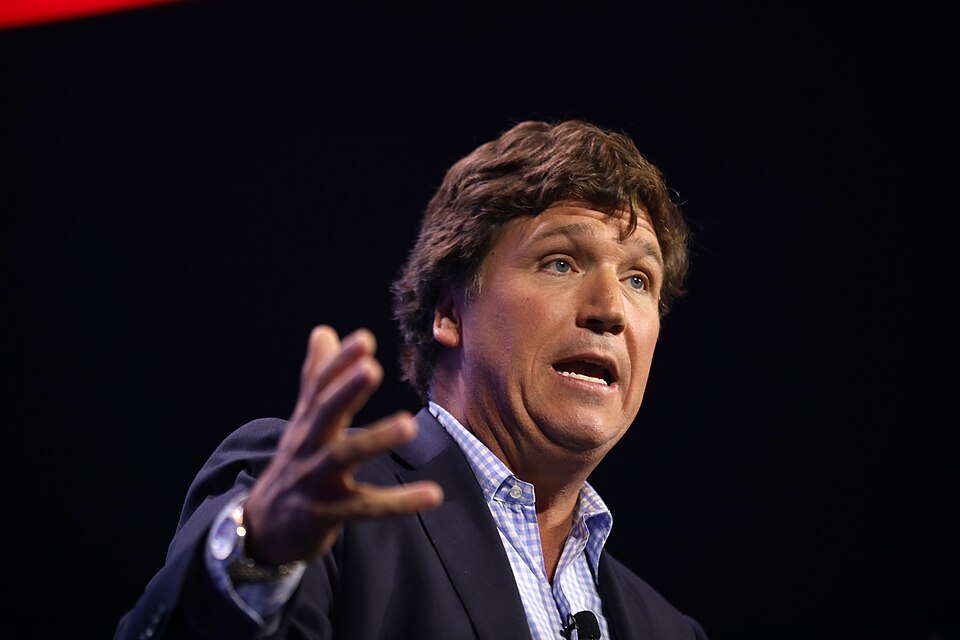
Carlson’s comments raised eyebrows.
Former Fox News host Tucker Carlson is raising eyebrows after making an explosive accusation against President Donald Trump, claiming the White House could be preparing to launch a nuclear attack against Iran within days.
But a series of resurfaced recordings is now casting fresh scrutiny on Carlson’s warnings, revealing that the conservative commentator has repeatedly raised similar concerns for months.
The controversy comes as tensions surrounding Iran continue to expose disagreements among prominent conservative figures over American foreign policy and the possibility of further military escalation.
Carlson Makes Stunning Claim About Trump
In a lengthy social media post published around November 2, Carlson alleged that Israeli Prime Minister Benjamin Netanyahu was pressuring Trump to authorize a nuclear strike against an underground Iranian facility known as Pickax Mountain.
According to Carlson, the facility is believed to be associated with Iran’s nuclear program and is protected by extensive underground defenses.
Carlson suggested that conventional American weapons might not be powerful enough to destroy the installation, leading him to claim that nuclear weapons were being considered.
He went even further by predicting that Trump could make a decision on the matter by November 7.
The allegations immediately attracted attention because of the serious consequences that would accompany such a military decision.
However, Carlson has not publicly presented independently verified evidence proving that Trump is preparing to authorize a nuclear attack against Iran.
That distinction is especially important given the president’s previous statements about nuclear weapons.
Old Tucker Carlson Videos Resurface
Shortly after Carlson’s latest warning began circulating, filmmaker Nathan Livingstone shared a collection of previously recorded comments showing that Carlson had repeatedly raised the possibility of nuclear conflict.
The recordings stretch back to April 2026 and demonstrate that the former television host has been discussing potential nuclear escalation for several months.
On April 1, Carlson warned that the conflict involving Iran could move toward the use of weapons capable of causing widespread destruction.
By August 6, he was accusing Trump of threatening the use of nuclear weapons.
Later that month, Carlson claimed that discussions had taken place involving smaller nuclear weapons and potential Iranian targets.
Additional statements in September and October continued the same theme, with Carlson suggesting that the possibility of nuclear warfare was becoming increasingly serious.
The newly circulated recordings have prompted questions about whether Carlson’s latest warning reflects new information or another prediction similar to those he has made previously.
Although the recordings do not establish that his newest allegations are false, they provide important context for evaluating their credibility.
Trump Previously Rejected Nuclear Attack
One of the most significant details surrounding the controversy is that President Trump has publicly rejected the idea of launching a nuclear strike against Iran.
During an exchange with reporters in April, Trump dismissed a question about whether he would consider using nuclear weapons.
The president explained that American conventional military capabilities were sufficient to accomplish military objectives without resorting to nuclear arms.
Trump also expressed opposition to the use of nuclear weapons more broadly.
During an October interview with Newsmax, the president again indicated that nuclear weapons were unnecessary when discussing possible military action against Iran’s underground facilities.
Those comments directly contrast with Carlson’s warnings about an approaching nuclear decision.
While Trump has discussed potential military operations against Iranian targets, there is a major difference between considering conventional strikes and approving a nuclear attack.
As of November 2, Carlson’s prediction remains unverified, and Trump has publicly maintained that nuclear weapons are not necessary.
Growing Rift Between Trump And Carlson
The dispute also highlights the increasingly strained relationship between Trump and Carlson.
For years, Carlson was one of the most recognizable voices in conservative media, frequently supporting Trump’s political agenda and criticizing his opponents.
However, disagreements over American involvement in the Middle East have created a significant divide between the two men.
Carlson has become increasingly outspoken against expanded military operations involving Iran, arguing that another major confrontation could expose the United States to dangerous international consequences.
Trump, meanwhile, has emphasized preventing Iran from developing nuclear weapons while maintaining America’s ability to defend its interests.
The disagreement reflects a broader debate over the direction of Republican foreign policy.
Some conservatives support a strong military response to threats from hostile governments, while others believe the United States should avoid becoming involved in additional overseas conflicts.
That divide has become particularly visible as questions surrounding Iran continue to dominate national security discussions.
Why Carlson’s Latest Warning Matters
The controversy is about more than another disagreement between two prominent conservative figures.
Carlson’s allegations concern one of the most serious decisions any American president could face: whether to authorize the use of nuclear weapons.
Such a decision would carry enormous diplomatic, military, and international consequences.
That is why distinguishing confirmed government policy from speculation is essential.
Carlson has cited unnamed observers to support his assertions, but the publicly available evidence does not establish that the White House has approved or scheduled the nuclear operation he described.
Meanwhile, Trump’s previous comments provide a different picture of the administration’s publicly stated position.
The president has emphasized conventional military strength rather than nuclear escalation.
The resurfaced Carlson recordings also demonstrate why his claims are receiving additional scrutiny.
Repeated predictions can generate attention, but they do not become established facts without supporting evidence.
What Happens Next?
Carlson’s prediction that Trump could make a nuclear decision by November 7 has placed renewed attention on the administration’s approach to Iran.
Whether that deadline produces any development remains uncertain.
For now, the controversy presents two sharply contrasting positions.
Carlson is warning that nuclear escalation may be approaching, while Trump has publicly rejected the need for nuclear weapons in dealing with Iran.
The resurfaced recordings have further complicated Carlson’s argument by showing that his latest warning is part of a longer pattern of similar claims.
Ultimately, the situation highlights the growing disagreement between Trump and one of his former conservative media allies, while raising broader questions about America’s military strategy and the importance of reliable information during international disputes.
Until credible evidence emerges supporting Carlson’s allegations, his claims remain speculation rather than confirmed White House policy.