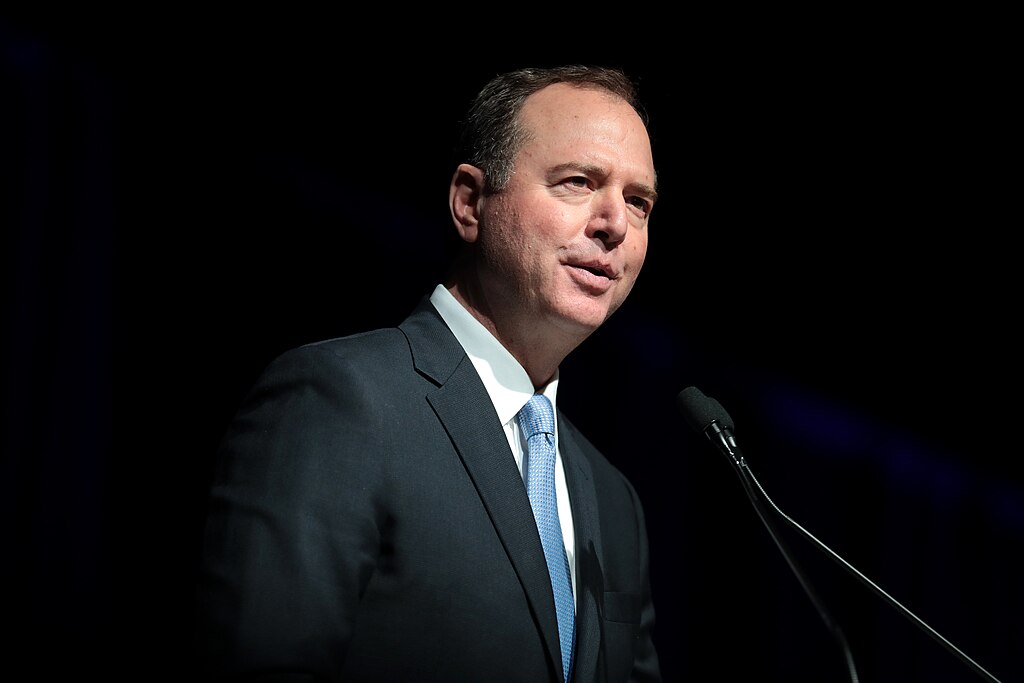
Schiff got exposed and embarrassed.
Sen. Adam Schiff found himself in an uncomfortable moment on television Friday when a criticism he made about presidential war powers suddenly turned back on the administration he once supported.
During an appearance on HBO’s Real Time with Bill Maher, the California Democrat reacted strongly to a quote defending a president’s authority to launch military action overseas.
Maher read the statement aloud:
“The president has the constitutional power to authorize military action if he determines that doing so serves the national interest.”
Maher then asked Schiff whether that justification sounded too vague.
Schiff didn’t hesitate.
“Totally vague,” the senator replied, appearing to criticize what he assumed was a defense of President Donald Trump’s recent military actions involving Iran.
But before Schiff could finish his point, Maher interrupted him with a revealing detail.
“That quote,” Maher said, “is from Obama about Libya.”
An Awkward Moment on Live TV
The statement Maher read was not from the Trump administration at all. It came from a 2011 legal opinion issued during former President Barack Obama’s intervention in Libya.
At the time, the Obama administration argued that the president had the constitutional authority to launch military action because he believed it served America’s national interests.
The moment created an awkward exchange on the show, highlighting the ongoing debate in Washington over how much military authority presidents should have without direct approval from Congress.
Schiff Shifts the Conversation
After the revelation, Schiff quickly pivoted the conversation to another foreign policy issue from the Obama years — Syria.
He explained that Obama once considered launching strikes against Syrian leader Bashar al-Assad without congressional authorization but eventually decided against it.
Schiff argued that Obama ultimately chose not to move forward because he feared Congress might reject the action.
According to Schiff, that decision demonstrated respect for the constitutional role of Congress in authorizing military force.
War Powers Debate Intensifies
The discussion then turned toward the current conflict involving Iran and the broader debate over presidential war powers.
Schiff argued that the United States is now effectively involved in a military conflict and warned that Congress must play a larger role in determining when America enters war.
He cited concerns from the nation’s Founding Fathers, including Alexander Hamilton, who warned that presidents could become “too fond of making war” if left unchecked.
Schiff claimed recent military operations—from Venezuela to the Middle East—show the dangers of giving too much power to the executive branch.
House Vote Keeps Trump’s Iran Operation Alive
Meanwhile, Congress recently weighed in on the issue directly.
The House of Representatives voted on a bipartisan resolution that would have blocked President Trump from continuing Operation Epic Fury, the joint U.S.–Israeli military campaign targeting Iran.
The measure ultimately failed in a narrow vote of 219 to 212.
The resolution had been introduced by Republican Rep. Thomas Massie of Kentucky and Democratic Rep. Ro Khanna of California.
If the legislation had passed, it could have forced the military operation to stop.
Instead, several Democrats joined Republicans to defeat the measure, allowing the mission to continue.
Administration Defends Trump’s Authority
Officials in the Trump administration and many Republican lawmakers argue that the president is acting well within his constitutional authority as commander-in-chief.
Supporters say the strikes are necessary to counter threats and protect American interests abroad.
Critics, however, continue to argue that Congress should have a greater say before military action expands.
As the debate continues in Washington, Schiff’s television moment served as a reminder that arguments about presidential war powers often stretch across administrations — sometimes in ways that can unexpectedly circle back on those making them.