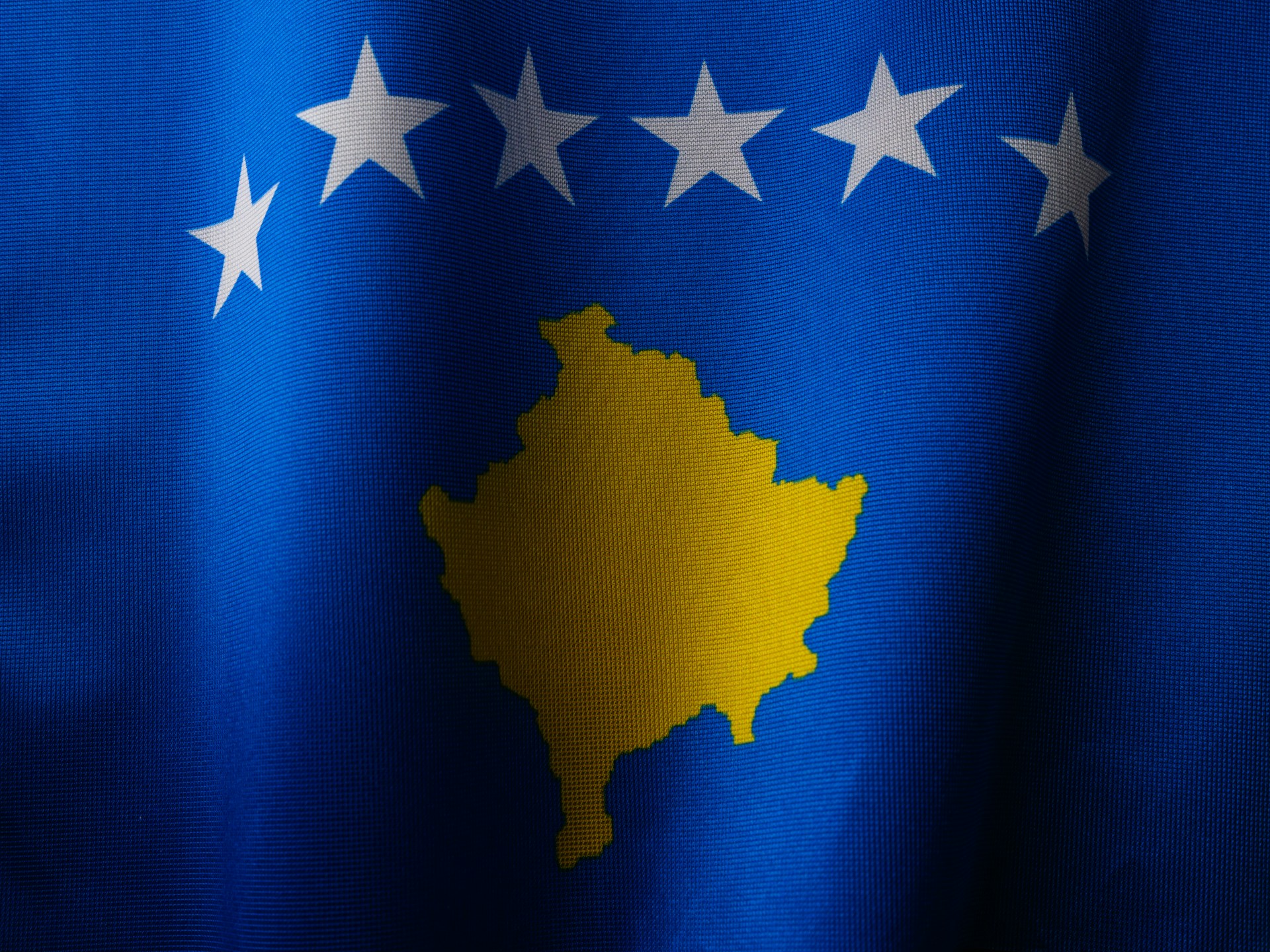
A new political crisis is unfolding overseas, and it could quickly become another challenge for President Donald Trump’s administration.
The Balkan nation of Kosovo is now facing a constitutional showdown after lawmakers failed to elect a new head of state before a key deadline. In response, Kosovo President Vjosa Osmani dissolved the country’s parliament and called for snap elections, throwing the young European democracy into political uncertainty.
The development comes at a time when global tensions are already running high, making stability in the region even more important.
Kosovo President Warns Situation Is “Complex”
Osmani told reporters that the political gridlock could not continue, especially given the growing geopolitical pressures around the world.
She emphasized that finishing the electoral process is critical because the international situation remains complicated and unpredictable. According to Osmani, the current environment makes it difficult to know what could happen next if the crisis drags on.
Kosovo remains strategically important because NATO peacekeeping forces are still stationed there to maintain stability in the Western Balkans.
Trump Previously Praised Kosovo Leadership
President Donald Trump has previously spoken positively about Osmani and her leadership.
During a speech earlier this year, Trump praised the Kosovo president for doing what he called a “great job” leading the country during a challenging time.
Osmani has also strengthened ties with the United States in recent months. In January, she accepted an invitation from Trump to join the Board of Peace initiative and pledged additional resources to support international stabilization efforts related to Gaza.
Those moves have further aligned Kosovo with the United States on key international security issues.
NATO Presence Still Critical
Another major issue surrounding the crisis is the future of NATO’s peacekeeping mission in Kosovo.
The mission, known as KFOR, has been stationed in the country since 1999 following the Balkan wars. Its role has been to maintain peace and prevent renewed conflict in the region.
Some analysts have raised questions about whether the mission could eventually be reorganized or reduced.
However, KFOR commander Maj. Gen. Özkan Ulutaş said earlier this year that the United States currently has no plans to reduce its troop presence in Kosovo. Roughly 600 American troops remain deployed as part of the mission.
Kosovo Still Faces Tensions With Serbia
Kosovo declared independence from Serbia in 2008, but tensions between the two countries have never fully disappeared.
Disagreements over sovereignty and regional security continue to create friction, which is one reason NATO peacekeepers remain stationed in the country more than two decades after the conflict ended.
Parliament Deadlock Triggers Crisis
Kosovo’s parliament has struggled with political gridlock for more than a year.
A national vote in early 2025 failed to produce a governing coalition capable of forming a stable government.
Later elections in December resulted in a victory for the Vetevendosje party led by Prime Minister Albin Kurti. However, Kurti’s party has not been able to secure enough support from opposition parties to elect a president.
The most recent vote collapsed after opposition lawmakers boycotted the session. The vote failed because the chamber fell 14 members short of the quorum required to proceed.
Opposition leaders objected to Kurti’s nominee, Foreign Minister Glauk Konjufca.
Calls For Constitutional Court Intervention
President Osmani attempted to break the political stalemate by meeting with opposition leaders to find a compromise.
Prime Minister Kurti did not attend the meeting and argued that parliament must first fail three rounds of presidential voting before dissolving the legislature and calling new elections.
Kurti’s party has now asked the Constitutional Court to review whether the election process followed the country’s constitution.
Meanwhile, opposition leader Ramush Haradinaj indicated that fresh elections could potentially be held as soon as April 5.
Political Experts Warn Of “Exhausting” Crisis
Former Albanian Prime Minister Pandeli Majko warned that Kosovo urgently needs stable governance.
Majko said he hopes the Constitutional Court can help provide a clear path forward. He also warned that repeated elections could create an exhausting political cycle without solving the underlying problems.
For now, Kosovo remains locked in political uncertainty — a situation that could test stability in the Balkans at a time when the world is already facing multiple geopolitical conflicts.