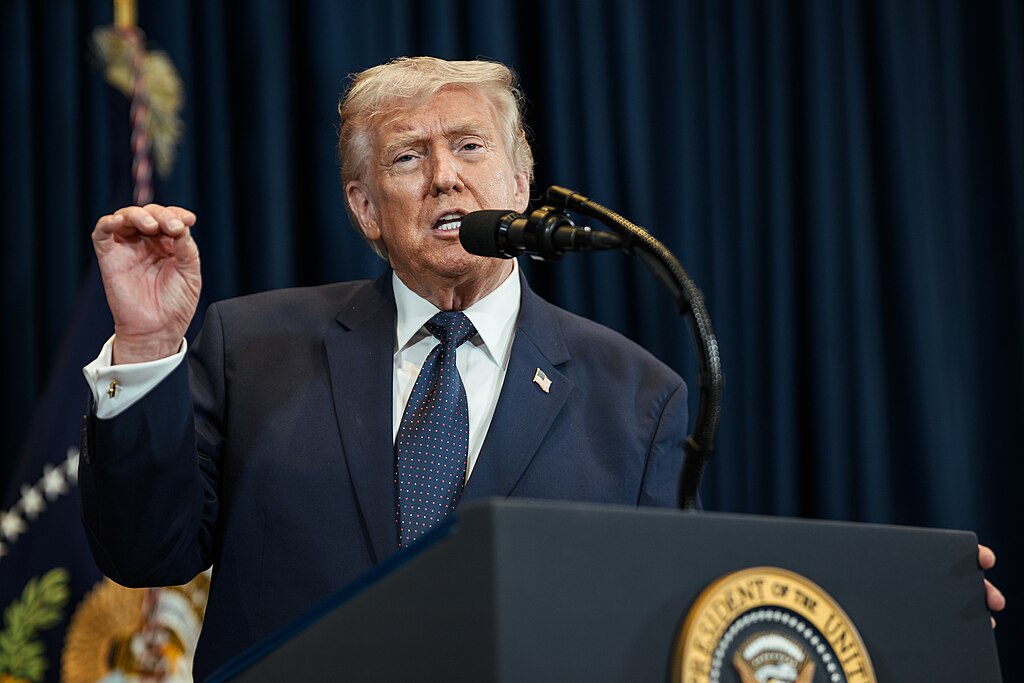
As global energy markets face growing turmoil, President Donald Trump is taking action to strengthen America’s energy supply and reduce reliance on foreign oil.
On Friday, the Trump administration directed Sable Offshore to resume operations at the Santa Ynez Unit and the Santa Ynez Pipeline System located off California’s coast.
The move comes after Iran’s closure of the Strait of Hormuz, one of the most important oil shipping routes in the world. The disruption has pushed global oil prices higher and raised concerns about supply shortages.
Officials say the president’s emergency energy action is designed to protect American energy security, stabilize supply, and support U.S. military readiness on the West Coast.
Trump Administration Moves to Boost Domestic Oil Production
The order was issued by Energy Secretary Chris Wright following a new executive order signed by President Trump earlier in the day.
According to the Department of Energy, the directive is meant to address supply risks created by California’s heavy reliance on imported oil.
“The Trump Administration remains committed to putting the American people and our national energy security first,” Wright said in a statement.
He warned that policies limiting domestic energy production have made the region more vulnerable to global disruptions.
“Some state leaders have pursued policies that weaken reliable energy supply,” Wright said. “That has consequences not only for residents but also for our national security.”
Offshore Project Could Add 50,000 Barrels of Oil Per Day
Federal officials estimate the Santa Ynez facility could produce about 50,000 barrels of oil per day once fully operational.
That would represent roughly a 15 percent increase in California’s in-state oil production, according to the Department of Energy.
Officials say the additional output could replace nearly 1.5 million barrels of imported crude oil every month, helping reduce the state’s reliance on foreign energy.
The administration also plans to prioritize pipeline transportation capacity, ensuring oil produced offshore can move efficiently through interstate pipelines to refineries and military facilities.
California’s Dependence on Foreign Oil Raises Security Concerns
Energy officials say California has become increasingly dependent on foreign oil imports.
According to federal data, more than 60 percent of the oil refined in California now comes from overseas sources.
A significant portion of that oil passes through the Strait of Hormuz, the same strategic chokepoint currently affected by the escalating conflict involving Iran.
Officials argue this creates a serious vulnerability for both civilian energy supplies and military installations on the West Coast.
By expanding domestic production, the Trump administration hopes to reduce exposure to geopolitical disruptions and strengthen U.S. energy independence.
California Officials Push Back
California Attorney General Rob Bonta criticized the administration’s move and signaled the state could pursue legal action.
Bonta called the order an overreach and said officials are reviewing possible challenges.
“We will not stand by as this administration continues actions that threaten California’s coastline,” he wrote in a statement on social media platform X.
California previously filed a lawsuit earlier this year after federal regulators approved pipeline operations tied to the offshore project.
State leaders argued expanded drilling could increase environmental risks along the coast.
Strait of Hormuz Crisis Driving Global Oil Prices Higher
The Trump administration’s energy decision comes as tensions in the Middle East continue to affect global oil markets.
Iran’s closure of the Strait of Hormuz has halted the flow of roughly 20 percent of the world’s oil and natural gas shipments.
The disruption has already pushed oil prices upward and sparked concerns about long-term supply instability.
President Trump addressed the situation earlier in the week, noting that higher prices can also benefit American energy producers.
Temporary Sanctions Adjustment to Stabilize Markets
To help ease pressure on global energy supplies, the administration has also implemented a temporary measure involving Russian oil shipments that were stranded at sea.
Treasury Secretary Scott Bessent said the administration approved a limited and temporary adjustment to sanctions allowing certain shipments to move through global markets.
Officials emphasized the measure is narrowly tailored and will not significantly benefit the Russian government.
The policy is scheduled to remain in effect until April 11.
Renewed Focus on American Energy Independence
Administration officials say the latest actions reflect a broader strategy to strengthen American energy independence during a time of global uncertainty.
By boosting domestic production and restoring critical energy infrastructure, the White House believes the United States can better protect itself from foreign supply shocks.
For millions of Americans watching fuel prices closely, the coming weeks will show whether these moves help stabilize energy markets — and reinforce the country’s long-term energy security.