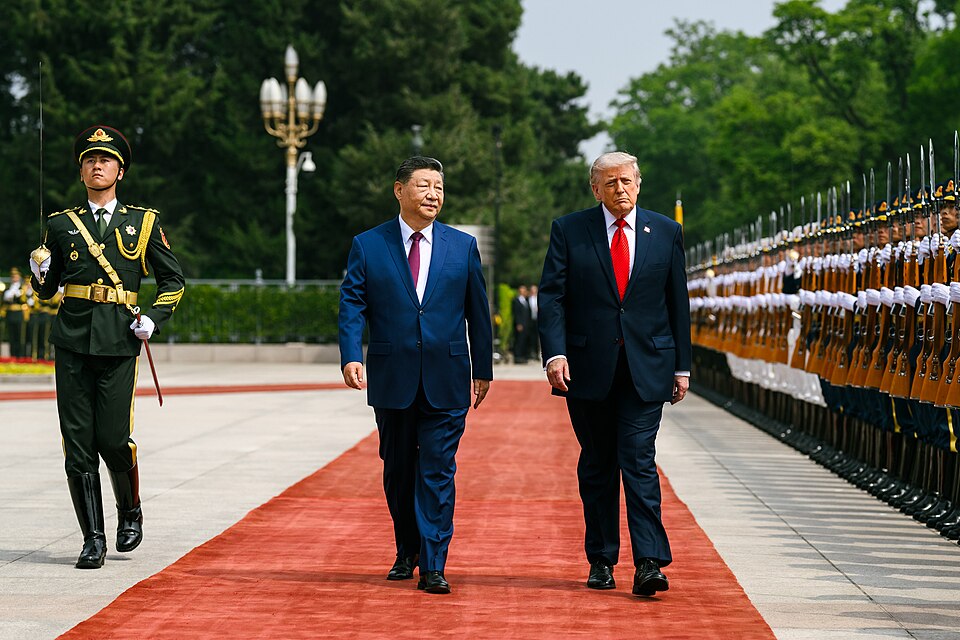
President Donald Trump’s high-stakes trip to China was expected to focus on trade, national security, and America’s position on the world stage.
Instead, the visit was overshadowed by a series of dramatic confrontations involving Chinese officials, the U.S. Secret Service, White House staff, and American reporters.
What should have been a carefully organized diplomatic summit quickly turned into a tense and chaotic day that exposed the Chinese government’s strict control over media access and security.
Diplomatic Summit Descends Into Disorder
Several serious incidents disrupted the visit and left members of the U.S. delegation frustrated:
- A White House staff member was knocked down and stepped on by a rush of Chinese reporters.
- A Secret Service agent was denied entry to an official event because he was carrying his service weapon.
- American journalists were blocked from rejoining President Trump’s motorcade.
- White House officials were forced into heated arguments with Chinese authorities.
One U.S. official reportedly described the unfolding events as a complete “disaster.”
China Tightens Control Over the American Press
Throughout the visit, Chinese authorities imposed unusually strict restrictions on U.S. journalists.
Reporters were closely monitored, had water bottles taken away, and were given limited access to restrooms despite warm temperatures and long hours outdoors.
These measures reflected Beijing’s determination to control every image and every headline generated during President Trump’s visit.
White House Staffer Injured During Media Surge
The first major confrontation occurred during President Trump’s private meeting with Chinese President Xi Jinping.
As Chinese media rushed into the room, one White House advance staff member was knocked to the ground and stepped on.
Although she was bruised and visibly shaken, she did not suffer serious injuries.
The incident triggered immediate outrage from U.S. officials, who condemned the aggressive behavior.
Secret Service Agent Denied Access
Later in the day, tensions escalated at the historic Temple of Heaven in Beijing.
Chinese officials refused to allow a Secret Service agent into the secure area because he was carrying a firearm, even though armed protection is standard procedure for every U.S. president.
American officials insisted the press would not move forward without the agent.
After a tense 30-minute standoff, another Secret Service officer who had already been cleared was assigned to escort reporters, while the original agent was left behind.
Reporters Locked in Holding Room
Following a photo opportunity with Presidents Trump and Xi, the American press pool was escorted to a separate room and prevented from following the leaders.
When President Trump prepared to depart, Chinese officials once again blocked reporters from joining the motorcade.
White House staff objected strongly, arguing that the United States would never treat Chinese journalists in such a restrictive manner.
U.S. Officials Push Through
With the president waiting, White House personnel instructed reporters to move immediately.
The American press and staff pushed past Chinese officials and rushed across the temple grounds to reach the presidential convoy.
Additional Chinese personnel attempted to block their path, but the group continued forward and made it to the waiting vehicles.
A Hollywood Twist Adds to the Unusual Scene
Adding another unexpected element to the trip, filmmaker Brett Ratner traveled with President Trump.
A cameraman accompanying Ratner was reportedly scouting locations for the long-anticipated film “Rush Hour 4.”
The unusual presence added to an already surreal diplomatic visit.
Heightened Security and Cyber Warnings
Because of cybersecurity concerns, President Trump, administration officials, and reporters were advised to use temporary phones and email accounts while in China.
Surveillance cameras were visible throughout Beijing, underscoring the Chinese government’s intense focus on security and information control.
What This Means for America
President Trump’s visit highlighted both the importance of U.S.-China relations and the challenges of dealing with an authoritarian government that tightly controls access and messaging.
Despite repeated obstacles, the American delegation stood firm and defended the principles of transparency, security, and a free press.
For many conservatives, the incident served as a reminder that strong leadership is essential when confronting foreign governments that seek to dominate the narrative and restrict open access.
Final Thoughts
What began as a major diplomatic mission quickly became a revealing example of the difficulties American officials face when engaging with China.
From injured staff members to Secret Service disputes and blocked reporters, the day underscored the importance of protecting U.S. interests and standing up for American values on the global stage.
President Trump’s team refused to back down, demonstrating the determination many supporters believe is necessary to put America first, no matter where the negotiations take place.