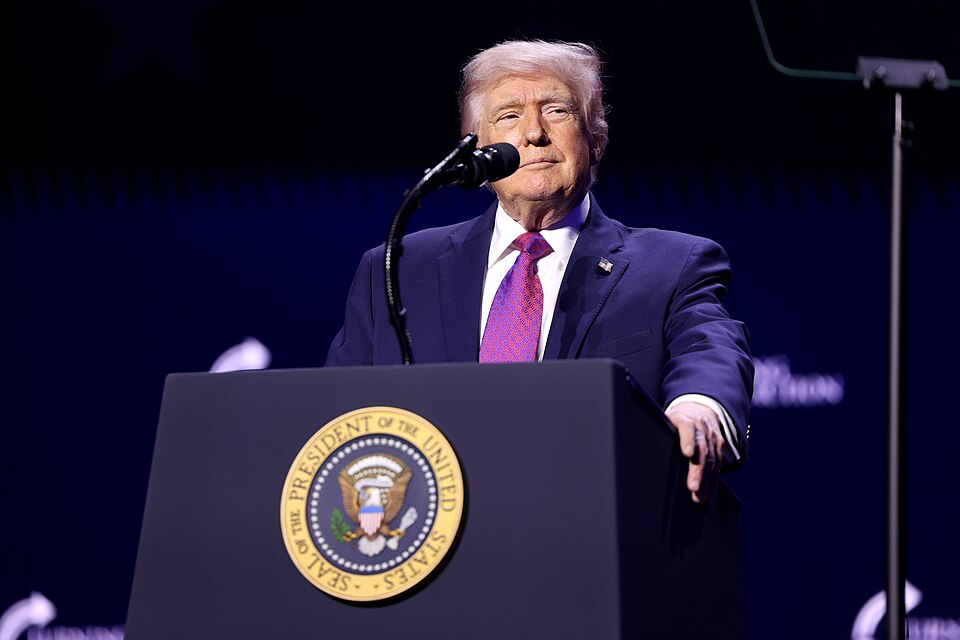
Canada is making some interesting moves and President Trump is watching.
Tensions between the United States and Canada may be entering a new phase after Canada announced a major defense decision that moves the country further away from American military manufacturers.
On Wednesday, Prime Minister Mark Carney’s government confirmed it is moving ahead with plans to purchase advanced surveillance aircraft from Swedish defense company Saab instead of choosing American-made alternatives.
The move is being viewed by many analysts as another sign that Canada is attempting to reduce its dependence on U.S. defense systems following recent trade disputes and political disagreements with President Donald Trump’s administration.
Canada has officially entered negotiations to acquire Saab’s GlobalEye surveillance aircraft, a high-tech airborne warning and control platform designed to monitor threats across land, sea, and air.
The aircraft are based on Bombardier Global 6500 jets, which are manufactured in Canada, and officials say the agreement could help support roughly 3,000 Canadian aerospace and defense jobs.
The decision is notable because Canada passed over Boeing’s E-7 Wedgetail aircraft, a U.S.-linked option that has faced criticism over rising costs and development delays. Another possible option included the Aeris X platform developed by L3Harris.
Carney defended the decision by arguing that Canada must strengthen both its national security and domestic economy at the same time.
According to the Canadian government, the GlobalEye system will help improve surveillance capabilities in the Arctic, a region becoming increasingly important due to growing international competition and military activity.
The aircraft use advanced radar and sensor technology capable of detecting and tracking activity across massive distances. Defense experts believe the system could significantly expand Canada’s ability to monitor its northern territory and support NATO operations.
Swedish Prime Minister Ulf Kristersson praised the agreement and said the aircraft would strengthen NATO’s collective defense capabilities while helping Canada protect its sovereignty in the Arctic region.
The announcement comes as pressure continues to mount on Canada to increase military spending. For years, the United States and other NATO allies have criticized Ottawa for failing to meet defense spending expectations.
Last year, Canada announced plans to boost military investments while also strengthening defense partnerships with European countries. Ottawa later joined the European Union’s Security Action for Europe initiative, signaling a broader shift toward closer cooperation with Europe’s defense industry.
The latest decision could also affect Canada’s future fighter jet purchases.
Saab is reportedly hoping Canada may reconsider its planned purchase of 88 American-made F-35 fighter jets. Carney’s government launched a review of that agreement shortly after President Donald Trump imposed tariffs on Canadian imports earlier this year.
Those tariffs increased tensions between Washington and Ottawa and sparked renewed debate inside Canada about relying too heavily on American military equipment.
In another sign of growing strain between the longtime allies, the Pentagon recently announced it would suspend participation in the Permanent Joint Board on Defense, a key military coordination group shared by the United States and Canada.
The decision followed comments made by Carney earlier this year at the World Economic Forum, which reportedly frustrated U.S. officials.
For many conservatives, Canada’s latest defense move raises serious questions about the future of America’s relationship with one of its closest allies and whether economic disputes are beginning to reshape long-standing military partnerships.
As global tensions continue rising, the battle over defense spending, trade, and national sovereignty may only become more important in the months ahead.