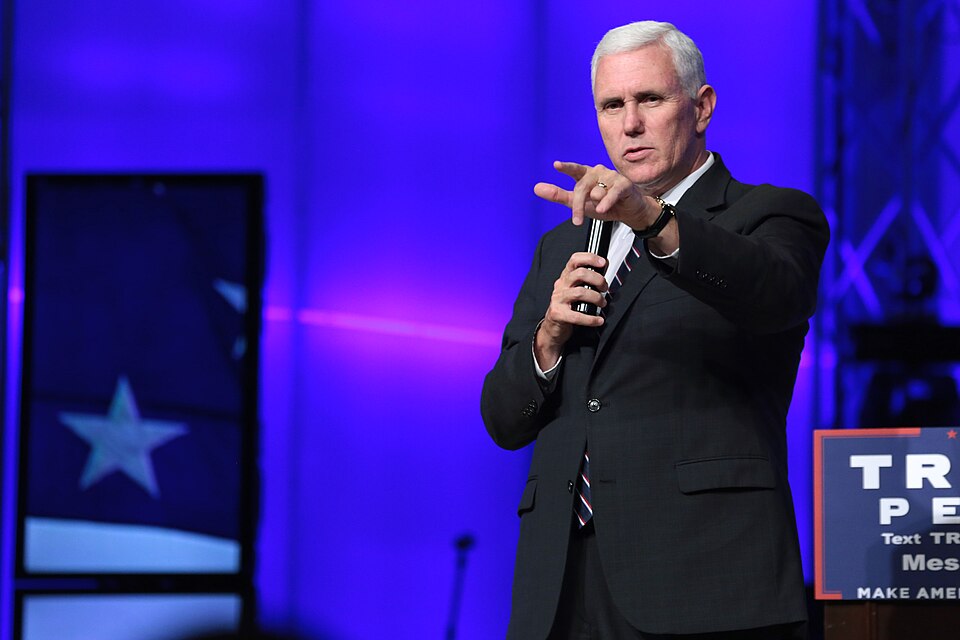
Pence is criticizing Trump yet again.
Former Vice President Mike Pence is breaking ranks with President Donald Trump over the administration’s emerging Iran agreement, delivering one of his sharpest criticisms of the president since leaving office.
As details continue to leak from the proposed U.S.-Iran deal, Pence is warning that the agreement could hand major concessions to one of America’s longtime adversaries and potentially undermine years of pressure on the Iranian regime.
The comments place Pence among a growing group of Republicans demanding answers about the deal before Congress is asked to weigh in.
Pence Sounds Alarm Over Iran Agreement
During a television interview Tuesday, Pence argued that the reported framework agreement raises serious concerns about American national security and stability in the Middle East.
According to Pence, the deal appears to offer Iran significant benefits while leaving important questions unanswered about enforcement and long-term accountability.
He warned that the agreement could become a major victory for Tehran at a time when many conservatives believe the regime should remain under maximum pressure.
Pence also suggested that easing restrictions too quickly could weaken America’s leverage and reduce the effectiveness of previous sanctions.
For many Republicans, those concerns strike at the heart of a debate that has divided Washington for years: whether Iran can be trusted to honor major international agreements.
Growing Republican Skepticism
While President Trump has praised the agreement and argued it could help prevent Iran from obtaining nuclear weapons, several Republican lawmakers remain cautious.
Many members of Congress say they have not yet seen the full text of the agreement and want complete transparency before offering support.
North Carolina Senator Thom Tillis questioned how lawmakers can properly evaluate an agreement that remains largely out of public view.
Other Republicans echoed similar concerns, arguing that Congress and the American people deserve a full explanation before any final commitments are made.
Senator Lindsey Graham, one of Trump’s closest allies in Washington, said he wants to review the actual language of the agreement before reaching a conclusion.
That growing skepticism has created an unusual situation in which some of Trump’s strongest supporters are asking for additional details before backing one of the administration’s most significant foreign policy initiatives.
What Is Actually In The Deal?
Although administration officials have described the agreement as a framework rather than a final peace treaty, several reported provisions have already sparked controversy.
Among the items reportedly under discussion are:
- Sanctions relief for Iran
- Future nuclear negotiations
- Reopening key Middle East shipping routes
- International investment opportunities inside Iran
- Long-term regional security commitments
Administration officials have cautioned that negotiations are ongoing and that portions of the agreement could still change.
President Trump has repeatedly emphasized that preventing Iran from obtaining a nuclear weapon remains the central objective.
Supporters argue that if the agreement permanently blocks Iran’s path to a nuclear bomb, it could represent a major diplomatic victory.
Critics counter that enforcement mechanisms will ultimately determine whether the agreement succeeds or fails.
The Nuclear Question Remains Front And Center
The largest unanswered question involves Iran’s nuclear program.
International observers have long monitored Iran’s uranium enrichment activities, which remain a major source of concern for the United States, Israel, and other Western allies.
Conservatives who opposed the Obama-era nuclear agreement argue that any new deal must contain strict verification requirements and meaningful consequences for violations.
Without those safeguards, critics fear Iran could gain economic benefits while continuing activities that threaten regional security.
Those concerns have fueled calls for Congress to closely scrutinize every aspect of the agreement before it moves forward.
Why The Strait Of Hormuz Matters To Americans
One of the most important economic issues tied to the agreement involves the Strait of Hormuz.
The narrow waterway serves as one of the world’s most critical energy corridors, with massive amounts of oil and natural gas passing through it every day.
Any disruption in that region can affect fuel prices, inflation, supply chains, retirement portfolios, and the broader U.S. economy.
Supporters of the agreement argue that restoring stability in the region could help reduce market uncertainty and improve global trade conditions.
For many American families already dealing with higher costs, that remains a significant consideration.
Questions Surround Massive Investment Proposals
Another controversial aspect of the agreement involves reports of a potential $300 billion investment fund connected to Iran’s reconstruction efforts.
The Trump administration has strongly pushed back against claims that American taxpayer dollars would be used for such projects.
Vice President JD Vance has stated that no U.S. taxpayer money would be transferred directly to Iran under any circumstances.
Still, the reports have generated significant debate among conservatives who want clear answers about where the funding would come from and how it would be managed.
Given Iran’s history and America’s long-standing tensions with the regime, many voters are likely to remain skeptical until more information becomes public.
What Happens Next?
The political battle over the Iran agreement is likely just beginning.
Administration officials say additional details could be released soon, and lawmakers from both parties are expected to closely examine the final terms.
President Trump has indicated that Congress will ultimately have an opportunity to review the agreement.
Until then, questions from Pence, Graham, Tillis, and other Republicans are likely to intensify.
For supporters, the agreement could become a major foreign policy achievement.
For critics, it risks becoming another example of Washington offering concessions to a hostile regime.
Either way, the debate is far from over.