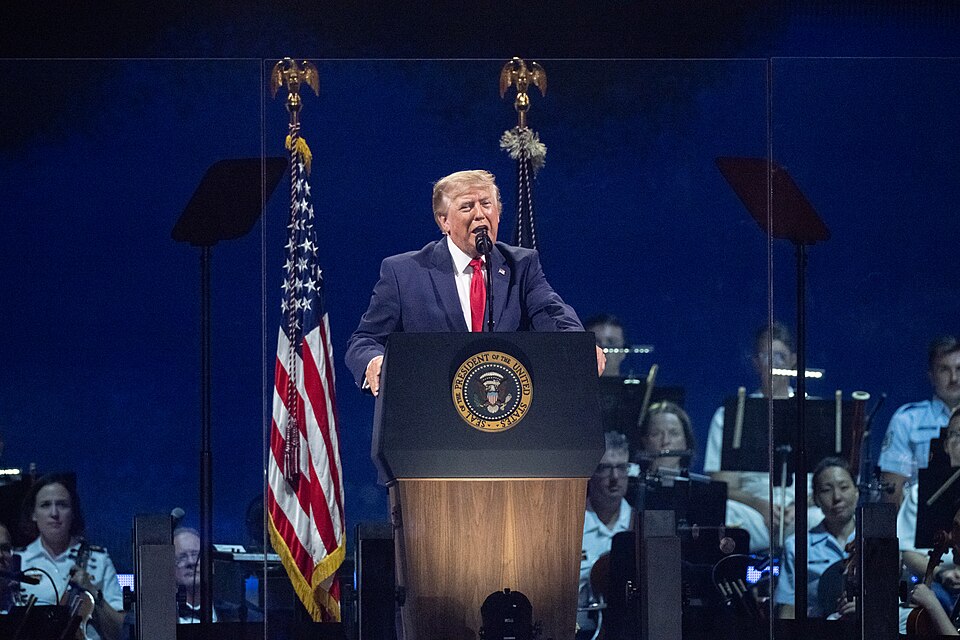
Here’s what Trump will talk about.
President Donald Trump announced Monday that he will deliver a nationally televised address later this week as tensions with Iran continue to escalate and the situation in the strategically important Strait of Hormuz grows increasingly serious.
Trump revealed on Truth Social that he will speak to the nation on Thursday at 9:00 p.m. EDT, though he did not disclose the specific topic of his remarks. The announcement comes as military activity between the United States and Iran has intensified following weeks of uncertainty over whether recent diplomatic efforts would ease the conflict.
The upcoming address is expected to draw widespread attention from Americans, lawmakers, U.S. allies, and financial markets as the administration responds to one of the most significant foreign policy challenges of Trump’s presidency.
Middle East Tensions Continue to Rise
Trump’s announcement follows several major developments involving the Strait of Hormuz, one of the world’s most important shipping lanes.
Earlier Monday, the president said the United States would restore a naval blockade targeting Iranian vessels operating in the area while taking a more active role in protecting commercial shipping through the vital waterway.
“All other countries will have fair and open use of the Strait,” Trump said, adding that the United States will become the “Guardian of the Hormuz Strait.”
Trump also argued that America should be compensated for providing security in the region. He said the United States would seek reimbursement equal to 20 percent of cargo shipped through the strait, describing the proposal as a matter of fairness for protecting one of the world’s busiest maritime trade routes.
The announcement marks a significant shift in U.S. policy as the administration increases its military presence in response to growing regional instability.
Why the Strait of Hormuz Matters
The Strait of Hormuz is regarded as one of the world’s most vital maritime corridors due to its strategic importance.
Located between Iran and Oman, the narrow passage connects the Persian Gulf to the Gulf of Oman and the Arabian Sea. A substantial share of the world’s oil exports passes through the strait each day, making it critical to global energy markets.
Any disruption to shipping in the region can have far-reaching consequences, including higher fuel prices, increased transportation costs, and added pressure on the global economy.
Because of its importance, the waterway has long been viewed as a flashpoint whenever tensions rise between Iran and the United States or its allies.
Military Operations Expand
The administration’s latest announcement comes after renewed military action over the weekend.
According to U.S. Central Command (CENTCOM), American forces launched a new wave of offensive strikes against Iran on Sunday, targeting dozens of sites as part of ongoing military operations.
CENTCOM also announced that the renewed naval blockade is scheduled to take effect on July 14 at 4:00 p.m. EDT.
While military officials have released limited details about the operations, the developments indicate that the conflict remains active despite earlier expectations that negotiations could reduce hostilities.
Iran Pushes Back
Iranian officials sharply criticized the U.S. announcement, accusing Washington of unlawfully interfering in the Strait of Hormuz.
According to Iranian officials, the country will not accept what it describes as foreign control over the strategic waterway. Iran also condemned the latest U.S. military operations and vowed to continue defending its interests in the region.
The exchange of statements highlights the growing divide between the two governments as both sides continue to increase military and diplomatic pressure.
What Americans May Hear Thursday
Although Trump has not revealed the focus of Thursday night’s speech, many observers expect the president to address the rapidly evolving situation in the Middle East, America’s military strategy, and the administration’s plans for protecting international shipping and U.S. interests abroad.
The president could also discuss the economic implications of the conflict, including the potential impact on energy markets, fuel prices, and global trade if instability in the Strait of Hormuz continues.
With Americans closely watching developments overseas, the address may also provide additional details about the administration’s broader national security strategy and its objectives moving forward.
A Closely Watched Address
Thursday night’s speech is shaping up to be one of the most closely watched addresses of Trump’s second term.
As military operations continue and tensions between the United States and Iran remain elevated, millions of Americans will be looking for answers about what comes next and how the administration plans to respond.
With global energy markets, international shipping, and U.S. national security all at stake, Trump’s remarks could provide the clearest picture yet of the administration’s strategy as events continue to unfold in one of the world’s most strategically important regions.