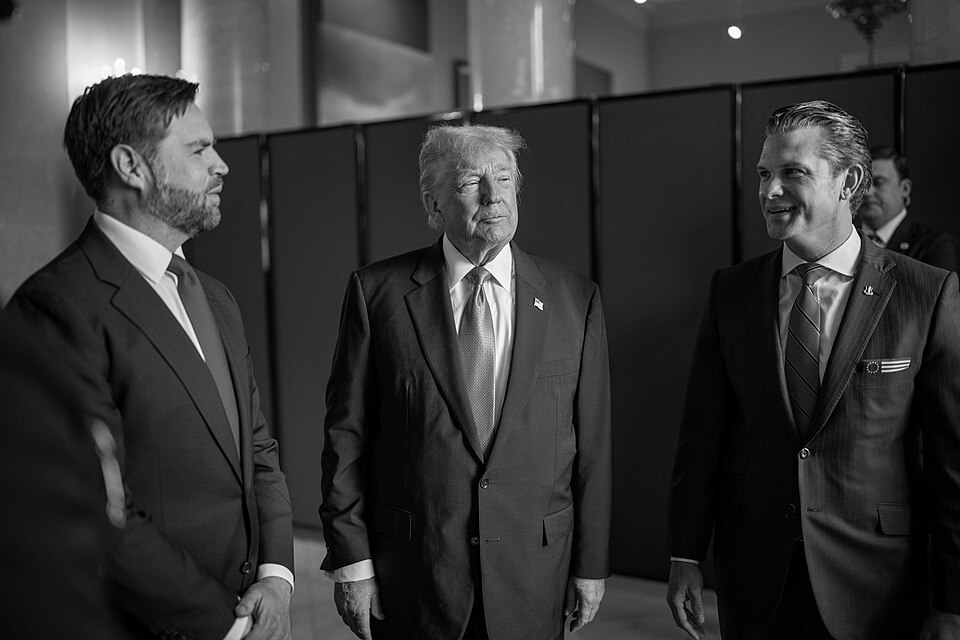
President Trump made some surprising comments.
President Donald Trump acknowledged Monday that one of his top legislative priorities may not become law, pointing to resistance from several Republican senators as the biggest obstacle.
Speaking from the Oval Office, Trump said Congress should focus on passing the SAVE America Act instead of a bipartisan housing package, arguing that election integrity remains one of the nation’s most pressing issues.
Trump told reporters that he considers the housing legislation insignificant compared to the SAVE America Act. He said the housing measure is simply another piece of legislation, while he views the SAVE America Act as legislation that he believes is essential to protecting the country’s future.
Trump added that, compared to his election bill, “just about everything is a big yawn.”
Despite his confidence in the proposal, the president acknowledged that the legislation faces an uphill battle in the Senate.
Trump said he does not expect the legislation to pass because four or possibly five Republican senators are unwilling to support it. He described the situation as “crazy.”
The comments marked a rare admission from Trump that opposition within his own party could prevent one of his signature legislative priorities from reaching his desk.
Trump Puts Election Integrity Ahead Of Housing Bill
Last week, Trump surprised many in Washington by delaying action on the bipartisan 21st Century ROAD to Housing Act, even after it cleared both the House and Senate with overwhelming bipartisan support.
The legislation includes several housing reforms, including measures intended to limit large institutional investors from purchasing single-family homes, expand access to mortgages under $100,000, and improve fairness in the home appraisal process.
House Speaker Mike Johnson said the legislation would be sent to the White House on Monday. However, Trump told reporters he had not yet decided whether he would sign it.
Under the Constitution, legislation can still become law if a president neither signs nor vetoes a bill within ten days while Congress remains in session.
SAVE America Act Remains Trump’s Top Priority
Trump has made passage of the SAVE America Act one of his administration’s top legislative goals.
The proposal would require individuals registering to vote in federal elections to provide proof of U.S. citizenship and would require voters to present photo identification when casting a ballot.
Supporters argue the legislation would strengthen election security, reduce opportunities for voter fraud, and restore public confidence in the election process. Opponents contend that existing safeguards are sufficient and warn the new requirements could make voting more difficult for some eligible citizens.
A version of the bill has already passed the House but has stalled in the Senate after Democrats blocked it from advancing.
Trump has repeatedly urged Senate Republicans to consider changing or eliminating the filibuster to move the legislation forward. Senate Majority Leader John Thune has consistently responded that there are not enough Republican votes to make that happen.
Supreme Court Decision Adds New Urgency
Trump also pointed to Monday’s Supreme Court decision allowing Mississippi to count mail ballots that are postmarked by Election Day but arrive afterward, arguing the ruling makes passage of the SAVE America Act even more important.
For many conservatives, election integrity remains a top concern heading into future federal elections, and Trump has continued to argue that stronger voter identification requirements and proof-of-citizenship standards are needed to increase confidence in the voting system.
Still, the president acknowledged that without additional support from Senate Republicans, the legislation is unlikely to reach his desk.
His comments underscored a political reality facing Republicans in Washington: while Democrats remain united in opposition to the SAVE America Act, the bill’s immediate future may ultimately depend on whether enough GOP senators are willing to back Trump’s push for stricter federal election laws.