Things got heated.
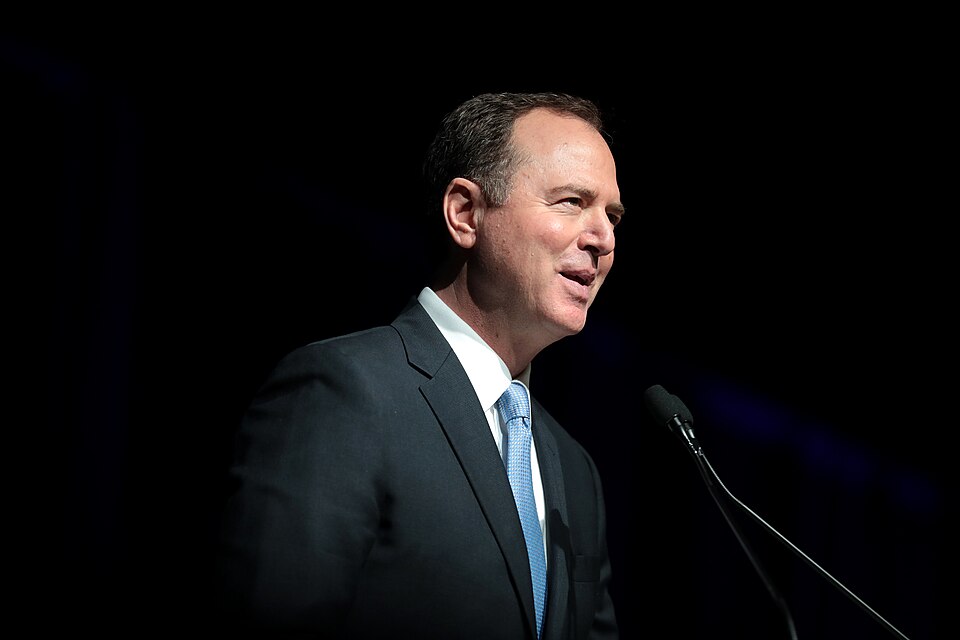
Acting Attorney General Todd Blanche clashed with Democratic California Sen. Adam Schiff during a contentious Senate hearing Wednesday, firmly denying allegations that he violated Justice Department ethics rules because of his previous work representing President Donald Trump.
The sharp exchange covered Blanche’s recusals, Justice Department decisions involving Jan. 6 defendants and the unreleased portion of former special counsel Jack Smith’s report.
Schiff argued that Blanche’s prior legal representation of Trump created serious conflicts of interest. Blanche countered that the senator was mischaracterizing federal ethics requirements and presenting an inaccurate timeline.
The disagreement quickly became one of the hearing’s most closely watched moments.
Schiff Presses Blanche About Trump Cases
Before joining the Trump administration, Blanche represented the president in several major legal disputes. Those matters included the New York case involving Stormy Daniels, the federal classified documents prosecution and proceedings connected to Trump’s challenges following the 2020 election.
Schiff asked whether Blanche had consulted Justice Department ethics attorneys about those previous relationships.
Blanche confirmed that he had and said he recused himself from future litigation or department business directly involving the cases in which he represented Trump.
Schiff nevertheless questioned whether those recusals went far enough.
The California senator pointed to comments Blanche reportedly made at the Conservative Political Action Conference, commonly known as CPAC. Schiff suggested that Blanche had dismissed concerns about possible conflicts involving Justice Department personnel and prosecutions associated with Jan. 6.
Blanche rejected Schiff’s interpretation and said the senator was incorrectly applying ethics rules to matters not covered by his recusal obligations.
Jan. 6 Decisions Spark Heated Disagreement
The hearing became more confrontational when Schiff questioned Blanche about the Justice Department’s decision to seek dismissal of convictions involving 12 Jan. 6 defendants associated with right-wing organizations.
“I was the acting attorney general — so yes, my department moved to dismiss,” Blanche said.
Schiff then asked why Blanche had not recused himself from matters involving the Proud Boys.
Blanche appeared puzzled by the suggestion and responded that the situation did not fall under the federal rules requiring his removal.
“You’re a lawyer. You know the rules,” Blanche told Schiff.
“There are rules that say when I have to recuse, and that’s not one of them,” he added.
Schiff continued pressing the issue, arguing that officials must step away from investigations connected to former clients. Blanche replied that he always follows recusal requirements when they apply.
The exchange reflected a much broader dispute over the recent direction of the Justice Department.
Many Republicans believe federal law enforcement became increasingly politicized during the Biden administration. Democrats, meanwhile, have accused Trump officials of using their authority to protect allies and pursue political opponents. Both sides have made control and independence of the Justice Department a central political issue.
Jack Smith Report Becomes Major Point of Contention
Schiff also questioned Blanche about the second volume of former special counsel Jack Smith’s report, which has not been released publicly.
The senator suggested that the Justice Department had worked to prevent Americans from seeing the document.
Blanche denied participating in such a decision. He said a federal judge in Miami—not the Justice Department—had prohibited the report’s release.
“If you went into court asking them to release it, it would be released by now,” Schiff argued.
Blanche immediately disputed that assertion.
“What you’re saying happens not to be true — I did not do that,” Blanche replied.
“You can’t accuse me of violating my ethical rules and then lie about what I did,” he continued.
Blanche’s response marked the most dramatic moment of the hearing. Rather than accepting Schiff’s premise, he directly accused the senator of making a false claim about his actions.
Schiff Questions Blanche’s Character
Schiff eventually moved beyond individual Justice Department decisions and delivered a broader criticism of Blanche’s professional conduct.
The senator asked what had happened to the prosecutor who once served in the U.S. Attorney’s Office for the Southern District of New York. He suggested that Blanche had abandoned his previous commitment to avoiding political partisanship in federal law enforcement.
Schiff also accused the Justice Department of pursuing Trump’s political adversaries through cases he considered questionable.
His comments appeared to reference the investigation surrounding former FBI Director James Comey’s controversial “8647” social media post. Critics interpreted the message as threatening toward Trump, while others disputed that characterization.
Schiff then cited author Robert Caro’s observation that political power often reveals a person’s character. He accused Blanche of sacrificing his former principles to secure a powerful government position.
Blanche rejected the personal criticism and defended his record.
“I am still here,” he said. “I am the same exact person I was when I was a federal prosecutor in the SDNY.”
Conservative Legal Figures Defend Blanche
Blanche’s performance soon received praise from conservative attorneys and former prosecutors.
Bill Essayli, first assistant U.S. attorney for California’s Central District, criticized Schiff’s presentation of the facts.
“Facts are not Senator Schiff’s strong suit,” Essayli wrote.
Former federal prosecutor Jay Town also praised Blanche’s testimony, calling the exchange “excellent.”
Town argued that Blanche was describing a Justice Department returning its attention to traditional law enforcement priorities, including prosecuting crime and improving public safety.
He contrasted that approach with the department under former Attorney General Merrick Garland. Conservatives frequently criticized the Garland Justice Department over cases and policies involving parents, religious Americans and other citizens who opposed Biden administration priorities.
Debate Over Justice Department Independence Continues
The Blanche-Schiff confrontation highlighted continuing disagreements about the proper role of the Justice Department.
Schiff sought to establish that Blanche’s past work for Trump created conflicts that could influence his decisions. Blanche maintained that he followed the advice of ethics officials, honored all required recusals and remained committed to his responsibilities as a federal prosecutor.
The hearing did not settle the wider political debate. It did, however, give Blanche an opportunity to answer some of the most serious allegations against him directly.
For many conservatives who believe Trump and his supporters were unfairly targeted by federal investigators, Blanche’s refusal to accept Schiff’s accusations was a welcome departure from typical Washington hearings.
His message was straightforward: Previous representation of the president does not automatically require recusal from every Justice Department matter involving Trump’s administration or political movement.
Schiff clearly remained unconvinced. Blanche, however, made equally clear that he would not allow the senator’s allegations to go unanswered.