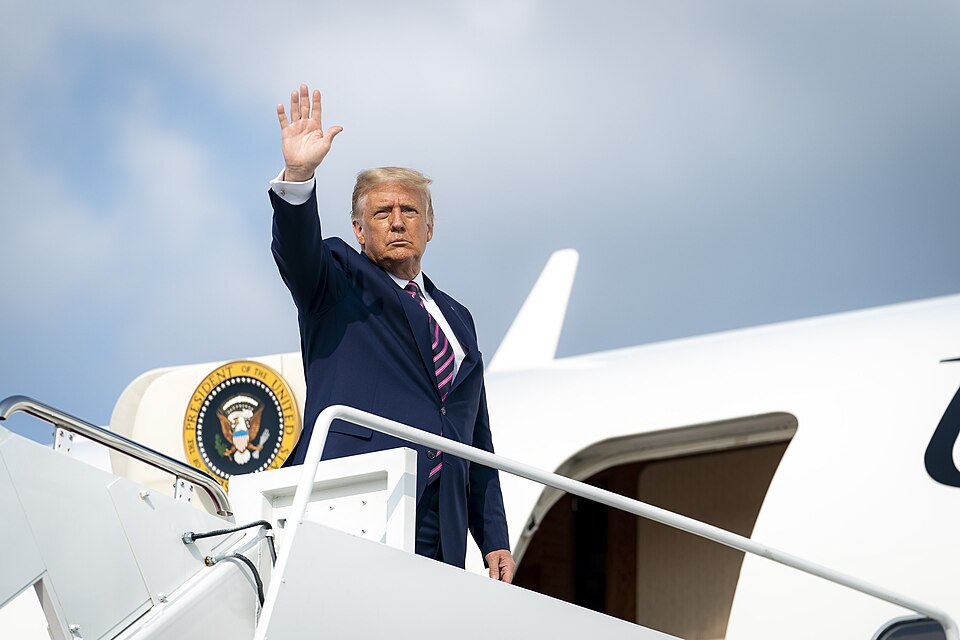
Trump appears to have done it again.
President Donald Trump announced another major step toward ending the war in Gaza on Friday as his newly formed Board of Peace released a comprehensive 15-step roadmap aimed at bringing long-term stability to the region.
The announcement follows Trump’s statement that Hamas had agreed to surrender its weapons as part of a broader peace initiative. If implemented, the proposal would mark one of the most significant diplomatic efforts involving Gaza in recent years.
Key Takeaways
- The Board of Peace introduced a 15-step roadmap to help end the conflict in Gaza.
- The proposal calls for Hamas and other armed groups to disarm under international oversight.
- A new civilian governing authority would assume responsibility for Gaza.
- Israeli forces would withdraw in phases as security benchmarks are met.
- International partners would help oversee reconstruction and humanitarian recovery.
Peace Plan Outlines Path Forward
According to the Board of Peace, the roadmap is built around President Trump’s comprehensive peace initiative and U.N. Security Council Resolution 2803 (2025), creating a framework for implementing the agreement.
The plan aims to end active fighting, restore public services, rebuild damaged infrastructure, improve security, strengthen the economy, and establish conditions for long-term stability in Gaza.
Officials say each stage of the agreement must be completed and independently verified before the next phase can begin.
Ceasefire and Verification
Under the proposal, Israel would complete its remaining obligations under the Sharm Sheikh Protocol, including ending military operations outlined in the agreement.
At the same time, Hamas and other Palestinian factions would be required to permanently halt military activity.
Within 14 days of the roadmap’s approval, negotiators would finalize an implementation timetable. An International Verification Committee would monitor compliance and confirm that both sides have fulfilled their commitments before additional phases move forward.
New Civilian Authority Would Govern Gaza
A central part of the proposal creates the National Committee for the Administration of Gaza (NCAG), which would take over civilian governance during the transition.
Under the roadmap, Hamas and other factions would transfer civilian administrative responsibilities to the NCAG and agree not to interfere with its operations.
The committee would oversee government services, conduct financial and administrative audits, manage public assets, review outstanding financial obligations, and coordinate reconstruction efforts with international support.
Existing civil servants would retain legal protections, while any staffing changes would follow Palestinian law.
Security Measures at the Center of the Agreement
The roadmap emphasizes the principle of “One Authority, One Law, One Weapon,” meaning the NCAG would ultimately become the only authority responsible for security inside Gaza.
Police officers would undergo extensive screening before returning to duty. Individuals who do not meet the required standards could transition into civilian positions or retire while retaining benefits provided under applicable law.
Disarmament of Armed Groups
The proposal calls for Hamas and other armed organizations to begin dismantling military infrastructure after the ceasefire takes effect and the new administration assumes control.
Heavy weapons, weapons production facilities, storage depots, and tunnel networks would be decommissioned according to a phased timetable supervised by international monitors.
Rather than transferring weapons to Israel or another country, the plan states they would remain under the authority of the NCAG until the disarmament process is completed.
When the process concludes, the NCAG would become the only entity authorized to possess or control weapons within Gaza.
Personal firearms would remain subject to Palestinian law through a licensing and registration system administered by the civilian government.
Armed Militias Would Be Dissolved
The roadmap also requires armed militia groups to surrender and store their weapons under NCAG supervision.
Members of those organizations would not be incorporated into Gaza’s future police or security services.
The International Verification Committee would certify that disarmament requirements have been completed before later phases of the agreement move forward.
In addition, the proposal calls for a Social Peace Agreement that would prohibit revenge attacks, armed demonstrations, military parades, and other displays of political violence.
International Stabilization Force
The plan includes the temporary deployment of an International Stabilization Force to support implementation of the agreement.
Its responsibilities would include monitoring the ceasefire, helping protect humanitarian aid deliveries, training Palestinian police personnel, and separating Israeli forces from areas administered by the NCAG.
The force would not carry out routine law enforcement or assume responsibility for Gaza’s internal governance.
Meanwhile, Israeli forces would withdraw from Gaza in stages according to a mutually agreed timetable tied to progress under the roadmap.
Rebuilding Gaza
The final phase of the agreement focuses on reconstruction.
The Board of Peace and the NCAG would oversee rebuilding efforts, restore critical infrastructure, coordinate humanitarian assistance, and support long-term economic recovery with assistance from international partners.
Officials say reconstruction projects would follow internationally recognized standards and proceed according to a structured implementation schedule.
Looking Ahead
Supporters of the proposal argue that the roadmap offers a structured path toward ending the conflict, restoring civilian governance, and rebuilding Gaza after years of war.
Whether the plan ultimately succeeds will depend on each party fulfilling its commitments, the effectiveness of international monitoring, and continued diplomatic cooperation throughout every stage of the agreement.