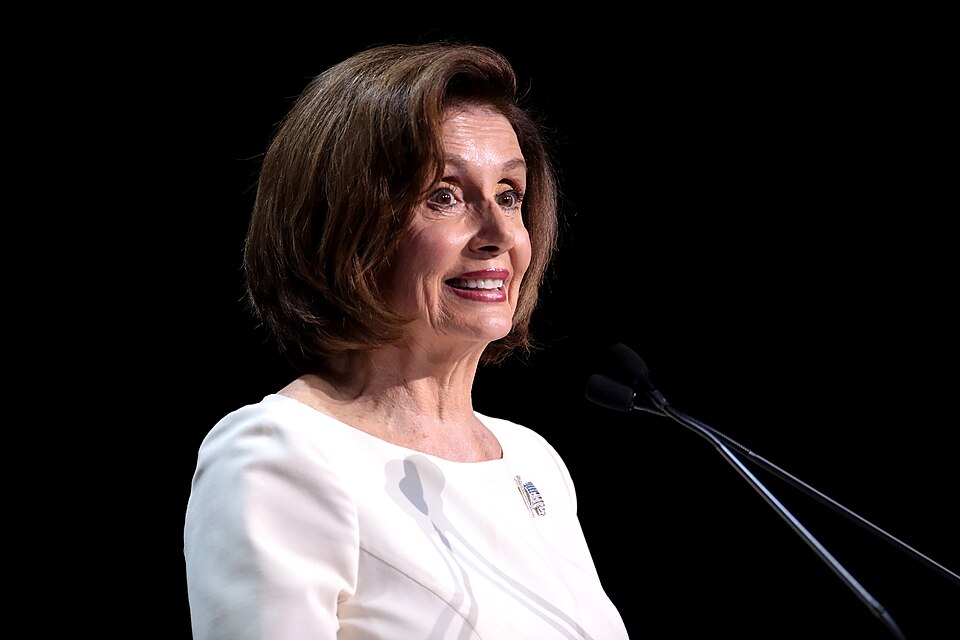
Pelosi won’t like this being public.
Former House Speaker Kevin McCarthy is accusing former Speaker Nancy Pelosi of creating a hostile atmosphere for Republicans during her tenure as Speaker, claiming GOP lawmakers were frequently treated with disrespect and excluded from bipartisan cooperation.
McCarthy made the remarks during an appearance Wednesday on Fox News’s “Jesse Watters Primetime,” where he discussed the growing political divide in America and argued that relationships between Republicans and Democrats have become increasingly strained.
During the interview, McCarthy pointed to polling suggesting many liberals view conservatives more negatively than conservatives view liberals. He also referenced what President Donald Trump has called “Trump Derangement Syndrome,” saying he believes it has contributed to the intense criticism the president continues to receive from many on the political left.
According to McCarthy, Pelosi’s leadership reflected that broader political divide.
“She really felt that way about us,” McCarthy said. “There were times she would yell at me. It was like Republicans weren’t supposed to even be in the room.”
McCarthy alleged that Pelosi’s approach made it difficult for lawmakers from opposite parties to work together on legislation. He argued that Republicans were often treated as political opponents rather than colleagues serving the same institution.
The former speaker also referenced heightened Capitol security measures introduced after the January 6, 2021, attack on Congress. He claimed the installation of magnetometers, commonly known as metal detectors, became another source of frustration for many Republican lawmakers, saying the atmosphere inside the Capitol grew increasingly tense and divided.
McCarthy said those policies symbolized a larger breakdown in trust between the two parties and contributed to an environment where bipartisan cooperation became far more difficult.
“We should be able to disagree with somebody without being disrespectful,” McCarthy said, arguing that political opponents should still be able to work together despite their differences.
He added that America has lost some of its ability to engage in civil political debate, warning that personal attacks have increasingly replaced respectful disagreement.
McCarthy also contrasted how he believes Republicans generally viewed Democrats with how many Democrats viewed conservatives.
According to McCarthy, Republicans often saw Democrats as simply misguided on policy while still respecting them as fellow Americans. By contrast, he claimed many Democrats portrayed Republicans as dangerous extremists based solely on their political beliefs.
The comments come as partisan tensions continue to escalate ahead of the upcoming midterm elections, with both parties sharpening their messaging on issues ranging from immigration and the economy to government spending and the future direction of the country.
Current House Speaker Mike Johnson has also intensified his criticism of Democrats in recent weeks. Johnson has warned that the growing influence of democratic socialist figures within the Democratic Party represents a serious ideological shift that could fundamentally reshape the nation’s future.
In a recent post on X, Johnson argued that Congress is engaged in a battle over whether America will continue as a constitutional republic or move toward policies he believes resemble socialism and communism.
McCarthy’s criticism of Pelosi adds to the broader Republican argument that political divisions in Washington have worsened in recent years and that restoring civility should be a priority for elected leaders. Democrats, meanwhile, have defended their actions surrounding Capitol security and have consistently argued that the measures implemented after January 6 were necessary to protect lawmakers, staff, and visitors following the unprecedented attack on the Capitol.
As the 2026 election season accelerates, sharp exchanges between Republican and Democratic leaders are expected to remain a defining feature of the national political conversation. With control of Congress once again at stake, disputes over leadership, security, and the direction of the country are likely to play a central role in the campaigns ahead.