It’s only heating up.
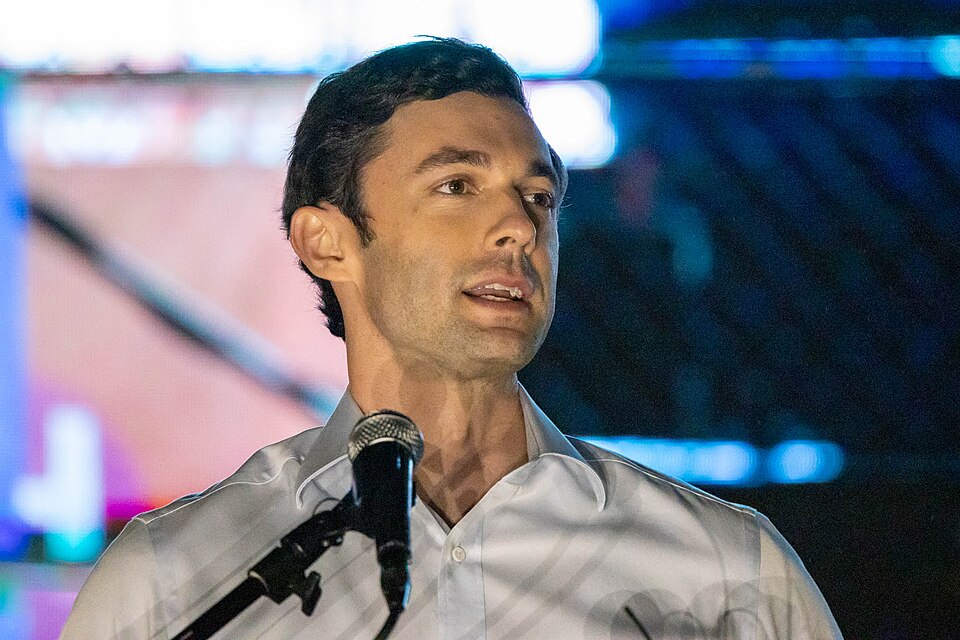
President Donald Trump’s political feud with Democratic Sen. Jon Ossoff is reaching a new level, with the Georgia senator launching increasingly personal attacks as he fights to keep his Senate seat this November.
The war of words intensified Tuesday when Ossoff appeared alongside Democratic Sen. Mark Kelly of Arizona at a campaign event.
Ossoff sharply attacked Trump over the ongoing conflict with Iran, accusing the president of recklessly leading the United States into a war without a clear strategy for ending it.
His remarks came after White House officials fired back at Ossoff with their own highly personal criticism, turning what was already a bitter political disagreement into one of the more heated feuds of the 2026 election season.
And with Georgia once again emerging as a critical battleground state, the fight could have consequences far beyond a few angry exchanges in Washington.
Ossoff Makes the Fight Personal
The latest controversy began when Ossoff attacked Trump’s handling of the Iran conflict and brought longtime Trump aide Natalie Harp into the argument.
During his criticism of the president, Ossoff referenced Trump’s White House ballroom project and the presidential aircraft provided by Qatar. He then specifically mentioned Harp while accusing Trump of being distracted from his responsibilities as commander in chief.
The reference immediately drew attention because Harp is a White House staff member rather than an elected official or political candidate.
Trump allies viewed the remark as an unnecessary personal attack on a woman who has spent years working closely with the president.
Some political observers also questioned why Ossoff singled out Harp at all.
While she is familiar to people who closely follow Trump and the White House, Harp remains relatively unknown to millions of ordinary Americans.
That has fueled speculation that Ossoff’s remarks were aimed largely at highly engaged Democratic activists and political audiences online.
White House Fires Back
The response from Trump’s White House came quickly.
White House spokesperson Davis Ingle mocked Ossoff’s background and dismissed him as a political lightweight.
White House communications director Steven Cheung responded even more aggressively on social media, unleashing several personal insults against the Georgia Democrat.
The language demonstrated just how far the dispute has moved beyond an ordinary disagreement over policy.
Trump himself took a somewhat different approach when reporters asked him about Ossoff.
Rather than delivering a lengthy response, the president returned to a nickname he has previously used against the senator, comparing Ossoff to the late television character Pee-wee Herman.
The exchange added another chapter to a rivalry that has been building for years.
Trump Allies Rally Around Natalie Harp
Ossoff’s decision to mention Harp also triggered criticism from people within Trump’s political orbit.
Colton Snedecor, who previously served as White House deputy director of media affairs, defended Harp and accused Democrats of applying a double standard to women working in Republican administrations.
Snedecor argued that Harp has devoted countless hours to serving the president and the country and should not become the target of a political controversy simply because of her position inside Trump’s White House.
He also called on Ossoff to apologize.
The controversy grew further when a CNN correspondent questioned Trump about Ossoff’s comments during an Oval Office appearance.
The White House rapid response operation strongly criticized the question on social media, demonstrating the sensitivity surrounding Ossoff’s remarks.
Ossoff has defended his comments.
The senator said his broader point was that Trump had surrounded himself with a small group of West Wing aides while the country faces serious challenges abroad.
That explanation has done little to calm the dispute.
Georgia Could Decide Ossoff’s Future
Before Ossoff can seriously consider any future national campaign, however, he must win another election in Georgia.
That makes his confrontation with Trump particularly significant.
Georgia has become one of America’s most competitive political battlegrounds.
Trump carried the state in 2016 before Democrats narrowly captured it in the 2020 presidential election. Trump then put Georgia back in the Republican column during his successful 2024 campaign for the White House.
Ossoff, meanwhile, won his Senate seat in a January 2021 runoff election.
He is now defending that seat against Republican Rep. Mike Collins.
Republicans see the race as a major opportunity because Ossoff represents a state Trump won just two years ago. Democrats, meanwhile, are determined to protect one of their most important Senate incumbents.
Recent polling cited in the original report has given Ossoff an advantage.
A Fox News survey released last month showed Ossoff ahead of Collins by 56 percent to 43 percent among registered Georgia voters.
An AARP survey conducted by bipartisan polling teams Fabrizio Ward and Impact Research also showed Ossoff leading, 52 percent to 43 percent.
The Cook Political Report recently moved its rating of the contest from “Toss Up” to “Lean Democratic.”
Those numbers suggest Ossoff currently has the advantage, but Georgia’s recent political history gives Republicans plenty of reason to keep fighting.
Trump and Ossoff Have Been Fighting for Years
The latest confrontation is hardly the beginning of the Trump-Ossoff rivalry.
Their political battle stretches back to Ossoff’s first Senate campaign.
Trump has repeatedly mocked the Georgia Democrat, including using his Pee-wee Herman comparison, while Ossoff has accused Trump of corruption and argued that he is unfit for the presidency.
Election security has become another major source of disagreement.
The feud intensified again last month after Trump raised concerns about the security of American elections during a public speech.
Ossoff responded by accusing the president of encouraging doubts about the integrity of the election system.
Now the disagreement has expanded from elections and foreign policy into increasingly personal territory.
Could the Strategy Backfire?
There is still a political risk for Ossoff.
Confronting Trump may generate headlines, social media attention and enthusiasm among Democratic activists, but that does not necessarily mean the approach will persuade Georgia’s independent and swing voters.
One Democratic operative pointed to Florida Gov. Ron DeSantis as an example of the difference between national political attention and success in a presidential campaign.
DeSantis received enormous attention as a potential Republican presidential contender ahead of the 2024 election, but national buzz did not ultimately translate into winning the Republican nomination.
Ossoff could face a similar challenge if his national ambitions become more obvious.
Georgia voters elected him to represent their state in the Senate, and Republicans are likely to argue that he should be focused on Georgia rather than positioning himself for a future presidential campaign.
That could become an increasingly important Republican line of attack as Election Day approaches.
A Senate Race With National Consequences
The Trump-Ossoff feud now brings together several of the biggest political stories heading into the 2026 midterm elections: control of the Senate, Trump’s presidency, the war with Iran and early speculation surrounding the 2028 presidential race.
For Republicans, defeating Ossoff would mean capturing a Democratic-held Senate seat in a state Trump carried in 2024.
For Democrats, keeping Ossoff in office would protect an important incumbent while potentially strengthening the national standing of one of the party’s younger political figures.
That helps explain why neither side appears interested in backing down.
But the increasingly personal nature of the fight could also test voters’ patience.
Americans will ultimately decide whether they view the feud as legitimate political combat or another example of Washington politics becoming too personal.
One thing is increasingly clear: the battle between Trump and Ossoff is no longer just another disagreement between a Republican president and a Democratic senator.
With a crucial Georgia Senate election approaching and speculation already building about 2028, both men have plenty at stake — and their political fight may get even nastier before voters have the final say.