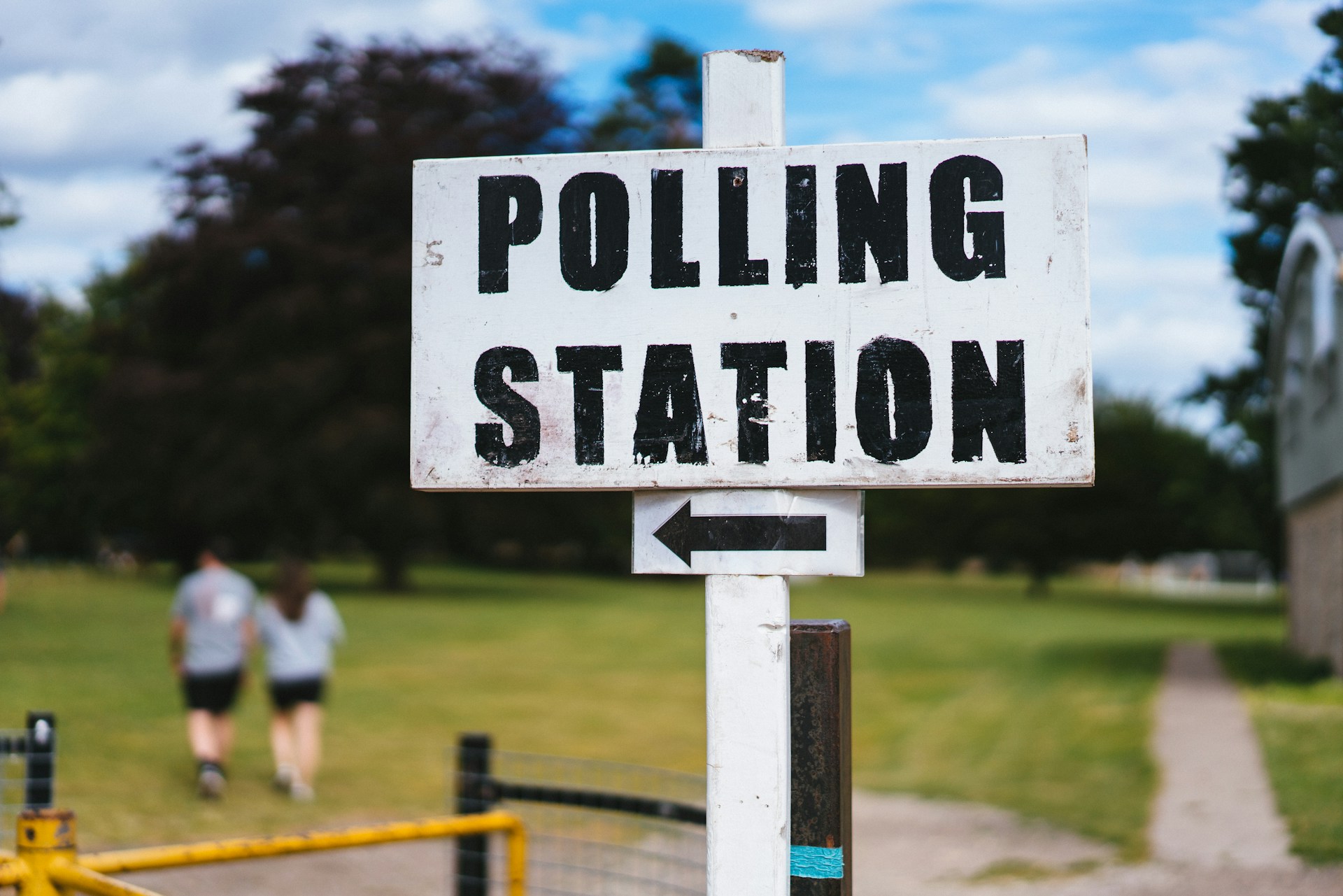
Here’s what the DOJ is planning to do.
President Donald Trump’s Justice Department is preparing a major election-monitoring operation ahead of the 2026 midterm elections, putting voting rules, election security and federal oversight back at the center of America’s political debate.
The Department of Justice is reportedly planning to deploy approximately 1,000 election monitors as Americans prepare to vote in congressional races that could determine control of Washington.
For voters concerned about election integrity, the move represents a significant expansion of federal scrutiny at polling locations. But Democrats are raising concerns about the administration’s broader approach to election enforcement and the possibility of federal law-enforcement activity near voting sites.
The disagreement is setting up another major political battle ahead of November.
DOJ Expands Election Monitoring Ahead of Midterms
The Justice Department has already deployed more than 75 monitors across five states and more than 200 polling locations during the primary season.
Harmeet Dhillon, assistant attorney general for the Justice Department’s Civil Rights Division, has said election monitoring remains an important responsibility of her office.
According to the DOJ, the purpose of the monitoring is to help ensure elections remain fair, accessible and free from unlawful discrimination.
Federal observers can examine whether state and local officials are complying with major election laws, including the Voting Rights Act, National Voter Registration Act, Help America Vote Act, Uniformed and Overseas Citizens Absentee Voting Act, Americans with Disabilities Act and Civil Rights Act.
That means monitors could be watching a wide range of election procedures, from voter access and disability accommodations to compliance with federal voting protections.
Federal Election Monitors Are Not New
Although the Trump administration’s plans are generating political controversy, Justice Department monitoring of elections is not unique to Republican administrations.
Under former President Joe Biden, the DOJ conducted similar operations.
Federal election personnel were dispatched to jurisdictions across 22 states during the 2022 midterm elections. The effort grew during the 2024 presidential election, when the Justice Department announced monitoring in 27 states.
Arizona and Michigan were among the states receiving federal attention during the Biden administration, and those states are again part of the conversation under Trump.
The major difference now is the political environment surrounding the operation.
Trump has made election integrity, voter citizenship and immigration enforcement major priorities of his second administration, placing considerably more attention on who is eligible to register and vote in federal elections.
Trump Pushes Tougher Citizenship Rules
Trump and congressional Republicans have also been fighting for sweeping changes to federal election requirements through the SAVE America Act.
The legislation has become one of Washington’s most contentious election issues ahead of the midterms.
Proposals debated in Congress would impose new identification requirements, including documentary proof of U.S. citizenship for voter registration and voter-ID requirements for federal elections. Supporters argue those safeguards would strengthen confidence that only eligible American citizens participate in federal elections.
Democrats and voting-rights advocates strongly disagree.
They contend that tougher documentation requirements could create unnecessary obstacles for eligible American citizens who do not have easy access to documents such as passports or birth certificates.
The legislation has faced major obstacles in the Senate despite Trump pressing lawmakers to act before the midterm elections.
For Republicans, however, the underlying question remains straightforward: Should Americans have to demonstrate citizenship when registering to participate in federal elections?
That debate is unlikely to disappear before November.
Key States and Counties Under Scrutiny
The DOJ monitoring effort is attracting particular attention because several locations involved have large immigrant populations.
Miami-Dade County in Florida has one of America’s most prominent Cuban immigrant communities, while Wayne County in Michigan is home to a substantial Arab American population.
Minnesota has also received heightened political attention as Trump has raised allegations concerning fraud involving members of the state’s Somali immigrant community.
Claims involving widespread or organized fraud should be evaluated based on documented evidence, but the controversy illustrates how closely immigration and election policy have become connected in the national political debate.
For many Republican voters, citizenship verification is fundamentally an election-security issue.
Democrats are approaching the matter differently, warning that aggressive federal enforcement near polling locations could discourage some lawful voters from participating.
Democrats Warn About Federal Agents Near Polling Places
Democratic lawmakers have been especially critical of the possibility of Immigration and Customs Enforcement personnel appearing at or around voting locations.
They argue that immigration agents near polling places could intimidate eligible voters, particularly in immigrant communities.
Sen. Jacky Rosen of Nevada has argued that state and local election officials have successfully administered elections throughout American history without federal forces stationed outside polling locations.
She has also warned that using federal law enforcement in such a manner could interfere with Americans exercising their legal right to vote.
But there is an important distinction in this debate.
Justice Department election monitors are not the same thing as ICE agents conducting immigration enforcement.
DOJ election monitoring has been conducted under both Republican and Democratic administrations and is intended to assess compliance with federal voting laws.
That distinction could become increasingly important as political rhetoric surrounding the midterms intensifies.
Republicans Focus on Election Integrity
Republicans have spent years arguing that America needs stronger voter-roll maintenance, citizenship verification and enforcement of existing election laws.
The discovery of improperly registered noncitizens in New Jersey is likely to reinforce those concerns among conservative voters, even though registration alone does not prove that an illegal vote was cast.
Supporters of tougher election laws argue that safeguards should be designed to prevent problems before ballots are counted rather than waiting until after an election to investigate possible violations.
Democrats generally counter that election-security policies must be carefully designed so eligible citizens are not accidentally prevented from voting.
That disagreement represents one of the fundamental differences between the parties heading into the 2026 midterms.
Stakes Are High Ahead of November
Control of Congress will be on the line, meaning even relatively small election controversies could receive enormous national attention.
With the Justice Department potentially deploying approximately 1,000 election monitors, the Trump administration is signaling that federal election-law compliance will receive substantial scrutiny.
Supporters may see the move as a commonsense precaution designed to strengthen public confidence in the democratic process.
Opponents are likely to scrutinize how and where federal personnel are deployed and whether the administration stays within established legal boundaries.
Either way, Trump has once again placed election security near the center of the national conversation.
As Americans prepare to decide who controls Congress, the debate is no longer simply about candidates and political parties.
It is also about who can vote, how eligibility should be verified, how elections should be monitored and what role Washington should play in protecting the process.
And with November approaching, those questions could become just as important politically as the names appearing on the ballot.
What do you think? Should the federal government increase election monitoring to help ensure voting laws are followed, or should election oversight remain primarily in the hands of state and local officials?