This was unexpected.
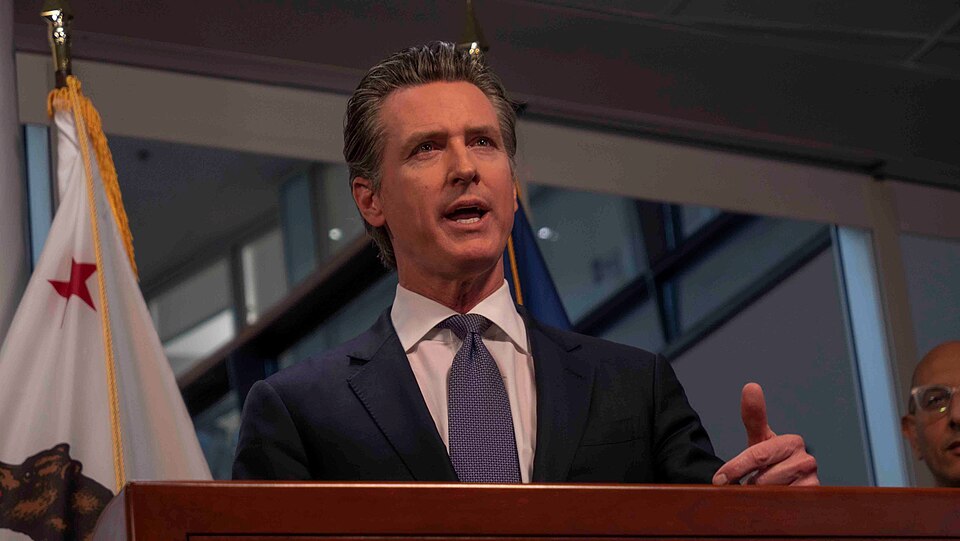
California Gov. Gavin Newsom offered rare praise for one of President Donald Trump’s signature economic policies Friday, encouraging families across the Golden State to take advantage of the new federal Trump Accounts for children.
The Democratic governor, who has repeatedly battled Trump over immigration, federal authority and other major issues, acknowledged that the children’s investment program represents a significant opportunity for American families.
Speaking at a San Francisco event focused on children’s savings, Newsom described the federal initiative as one of the standout accomplishments of the Trump administration and urged eligible California parents to take advantage of it.
The unusual praise comes after years of political clashes between Newsom and Trump — and at a time when both California and Washington are promoting programs designed to help parents build financial resources for their children.
What Are Trump Accounts?
Trump Accounts are tax-advantaged investment accounts created under federal legislation signed by President Trump.
Under the program, eligible U.S. citizen children born between Jan. 1, 2025, and Dec. 31, 2028, can receive a one-time $1,000 contribution from the federal government.
Parents and other eligible contributors can add money to the accounts, allowing families to potentially build a much larger financial foundation for their children over time.
Annual contributions are generally capped at $5,000, and the money is invested in qualifying funds tied to the U.S. stock market.
That means children receiving the initial government contribution have years for the investment to potentially grow before reaching adulthood.
As with any market-based investment, however, future returns are not guaranteed and account values can rise or fall.
Newsom Encourages California Parents To Participate
Despite his frequent criticism of Trump, Newsom encouraged California families to look beyond partisan politics when deciding whether to participate.
The governor said the federal program deserved recognition and pointed to support for the concept from lawmakers on both sides of the political aisle.
Newsom specifically highlighted Republican Sen. Ted Cruz of Texas and Democratic Sen. Cory Booker of New Jersey for their involvement in advancing children’s investment accounts.
He appeared alongside California first lady Jennifer Siebel Newsom, San Francisco Treasurer Jose Cisneros and venture capitalist Brad Gerstner.
Gerstner’s nonprofit organization, Invest America, has been closely involved in efforts surrounding the children’s investment initiative.
For Newsom, the appearance represented an unusual moment of agreement with an administration he has spent years fighting.
Newsom And Trump Have Frequently Clashed
Newsom has positioned himself as one of Trump’s most visible Democratic opponents.
California has repeatedly challenged Trump administration policies in court, while Newsom and the White House have exchanged sharp criticism over immigration enforcement and other federal policies.
That history made the governor’s praise for Trump Accounts particularly notable.
Rather than dismissing the program because it carries Trump’s name, Newsom encouraged families to consider the potential financial benefit for their children.
For parents, the practical question is straightforward: If their child qualifies for federal money that could potentially grow over decades, political disagreements may take a back seat to family finances.
Private Donors Put Billions Behind Children’s Savings
Trump Accounts have also attracted substantial support from America’s business and philanthropic communities.
Dell Technologies founder Michael Dell and his wife, Susan, committed billions of dollars to provide additional deposits for millions of eligible children.
Their initiative is designed to provide $250 contributions for qualifying children in communities meeting specified income requirements.
Other companies have joined the effort.
Micron has pledged $250 million toward children’s savings initiatives, including contributions benefiting children in Sacramento and Santa Clara counties.
The company has also announced matching support connected to its employees.
San Francisco has attracted additional private funding as well. An anonymous donor committed $3.5 million to provide $500 deposits benefiting babies born in the city during 2026.
The growing private-sector involvement could significantly expand the amount of money some children receive beyond the original federal contribution.
Why Starting With $1,000 Could Matter
The biggest potential advantage of starting an investment account for a newborn is time.
Money invested early has decades to potentially benefit from compound growth.
Even a relatively modest initial investment can become considerably larger when allowed to remain invested for many years. Families that make additional contributions could potentially accumulate substantially more.
But projections should not be confused with guarantees.
Stock-market returns fluctuate, and the eventual value of any Trump Account will depend on investment performance, contributions, fees, tax rules and how long the money remains invested.
The broader objective is to give children something many Americans do not receive until much later in life: an early introduction to long-term saving and investing.
California Promotes Its Own CalKIDS Program
Newsom used Friday’s event to highlight California’s existing children’s savings initiative alongside the federal program.
The California Kids Investment and Development Savings Program, better known as CalKIDS, was launched statewide in 2022.
California provides publicly funded savings accounts for eligible children, including money intended to help cover future higher-education and career-training expenses.
The state says more than 6 million CalKIDS accounts have been established and funded, representing more than $2.3 billion in potential college and career savings.
California announced Friday that families have now claimed 1 million of those accounts.
Eligible students can receive as much as $1,500 through CalKIDS, although the amount depends on eligibility and individual circumstances.
Newsom encouraged families to claim money available through both state and federal initiatives rather than leaving potential benefits unused.
Trump Accounts Put Focus On Long-Term Family Wealth
The growing attention surrounding Trump Accounts comes as many American families remain concerned about the rising cost of college, housing and other major expenses their children could eventually face.
Supporters argue that providing children with investment accounts at an early age could help more Americans participate in long-term wealth building.
Instead of waiting until adulthood to begin investing, qualifying children can potentially enter adulthood with years of market participation already behind them.
Additional contributions from parents, grandparents, employers and philanthropic organizations could make the accounts considerably more valuable over time.
For families already struggling with household expenses, the federal government’s initial $1,000 contribution also means they can potentially begin building an investment for an eligible child without providing the entire starting balance themselves.
Newsom Jokes About Trump’s Name Being Attached To Program
Newsom finished his appearance with a joke about the attention generated by Trump’s branding.
The California governor suggested his state’s program might have received more political attention if officials had simply named it after him.
But regardless of what either program is called, the competition between California’s CalKIDS initiative and the federal Trump Accounts program has put a larger spotlight on children’s savings and long-term investing.
It has also produced something increasingly uncommon in American politics: Gavin Newsom publicly acknowledging the merits of a policy closely associated with Donald Trump.
For eligible families, the political rivalry is ultimately secondary to a much more practical consideration.
There is money available to help qualifying children begin building a financial foundation — and even one of Trump’s most persistent Democratic critics is telling parents to take a serious look at it.