This was shocking to hear.
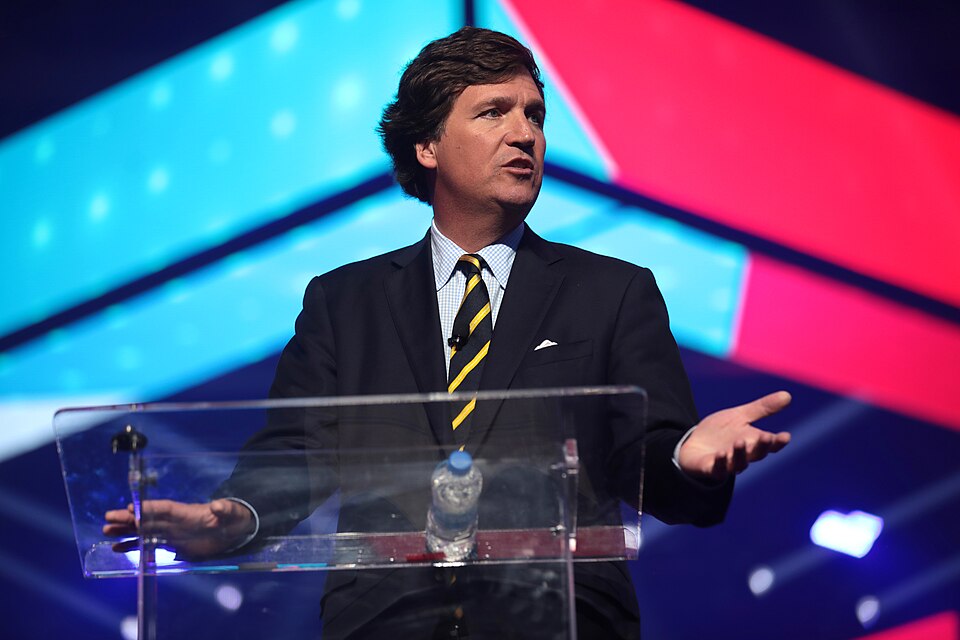
Tucker Carlson is taking his growing disagreement with President Donald Trump to a dramatic new level, saying Trump should be immediately removed from office if he is actively considering the first use of nuclear weapons.
The conservative commentator made the explosive argument Friday during a discussion about America’s nuclear strategy, the war with Iran and the direction of the Trump administration’s foreign policy.
Carlson’s comments are particularly striking because he was once one of Trump’s most influential allies in conservative media. He also strongly opposed both impeachment efforts against Trump during the president’s first term.
Now, however, the two men are increasingly finding themselves on opposite sides of a major debate over war, American military power and what an “America First” foreign policy should actually mean.
Tucker Carlson Draws A Nuclear Red Line
Carlson argued that the possibility of initiating nuclear warfare should represent an absolute boundary for any American president.
In his view, if a commander in chief begins seriously contemplating the first use of nuclear weapons, that alone should raise immediate questions about whether that president remains qualified to serve.
Carlson said the potentially devastating consequences of nuclear warfare make the issue fundamentally different from an ordinary political or military disagreement.
He went even further by questioning why there would not be an immediate attempt to remove a president under those circumstances.
His argument wasn’t limited specifically to Trump. Carlson suggested the same standard should apply to any leader willing to seriously consider initiating nuclear warfare.
But because Trump currently occupies the White House, Carlson’s comments amounted to one of his strongest public challenges yet to a president he previously supported.
There’s One Major Detail Americans Should Know
Despite the dramatic nature of Carlson’s warning, there is an important distinction.
Trump has not publicly announced that he is considering a nuclear first strike.
That means Carlson’s removal argument rests on a condition: if Trump is actively considering first use of nuclear weapons, Carlson believes he should no longer remain president.
That context is critical because discussions about military contingency planning do not necessarily mean the president has decided to pursue a particular course of action.
The U.S. military routinely prepares for an enormous range of potential threats and scenarios so that presidents have options available during a national security crisis.
Carlson, however, is concerned that current discussions surrounding America’s nuclear strategy could move the country in a dangerous direction.
Pentagon Reviews America’s Nuclear Strategy
The controversy comes as the Pentagon examines U.S. nuclear strategy.
Elbridge Colby, the undersecretary responsible for defense policy, recently discussed the administration’s approach during a U.S. Strategic Command deterrence conference.
Colby said defense officials want the president and Defense Secretary Pete Hegseth to have nuclear options that are credible and rational as part of America’s broader deterrence strategy.
The objective, according to Colby’s public remarks, is not simply to prepare for nuclear conflict. Administration officials argue that credible military capabilities can help prevent enemies from believing they could attack the United States or its allies without facing devastating consequences.
Colby has also emphasized the importance of maintaining America’s nuclear deterrent as Russia and China continue to present serious strategic challenges.
At the same time, the subject has generated debate about how many nuclear options an American president should have and under what circumstances those weapons could ever be used.
Joe Kent Raises Concerns About Iran
Carlson made his remarks during a conversation with Joe Kent, the former director of the National Counterterrorism Center.
Kent left the Trump administration earlier this year amid disagreement over the war with Iran.
During his discussion with Carlson, Kent raised concerns about what could happen if conventional military operations fail to produce the results the administration wants.
His concern centers on the possibility that Washington could begin considering increasingly aggressive alternatives if traditional military options prove insufficient.
That possibility has become a major point of contention for Carlson.
The former Fox News host has emerged as one of the most outspoken conservative critics of the Iran war, repeatedly warning against deeper American involvement in another major overseas conflict.
Trump And Tucker Carlson Were Once Allies
The dispute represents a remarkable change in the relationship between Trump and Carlson.
For years, Carlson was one of the most recognizable media figures associated with the political movement that helped reshape the Republican Party.
His television program reached millions of conservative Americans, and his commentary frequently aligned with Trump’s criticism of Washington’s political establishment, illegal immigration, globalism and prolonged foreign wars.
Foreign policy has now become a major dividing line.
Carlson has embraced a strongly non-interventionist position, arguing that American leaders should focus on protecting the United States rather than becoming trapped in expensive and dangerous foreign conflicts.
Trump has defended his own approach to national security while increasingly criticizing conservatives who challenge his decisions.
Trump Fires Back At Carlson
The disagreement has also become personal.
Trump recently criticized Carlson on Truth Social after the commentator met with Republican Rep. Thomas Massie of Kentucky and former Rep. Marjorie Taylor Greene of Georgia.
Trump publicly dismissed Carlson as a “loser,” another indication that the once-friendly relationship has deteriorated considerably.
But the dispute is bigger than a feud between two famous conservative personalities.
It reflects an increasingly important question inside the Republican Party: What should America First foreign policy look like when the United States faces a serious military threat?
Some conservatives believe maintaining peace requires overwhelming military strength and a willingness to make America’s enemies believe that every option remains available.
Others argue that America’s greatest danger comes from becoming entangled in conflicts that could spiral into larger wars with unpredictable consequences.
Carlson clearly falls into the latter camp.
A Bigger Debate Inside The MAGA Movement
Trump transformed Republican foreign policy by challenging decades of conventional Washington thinking.
During his rise to political power, he repeatedly criticized lengthy foreign wars and argued that American leaders had spent too much money and sacrificed too many lives overseas while neglecting problems at home.
That message resonated with millions of voters, including older Americans who lived through the Cold War, Vietnam, the Gulf War and the post-9/11 conflicts in Iraq and Afghanistan.
But America’s current confrontation with Iran has exposed disagreements over how those principles should be applied when national security is directly at stake.
Trump supporters who favor a muscular approach argue that America’s adversaries are less likely to challenge the United States when they believe the president is willing to use overwhelming force.
Carlson and other non-interventionist conservatives counter that military escalation can create consequences no president can completely control.
The nuclear question makes those disagreements considerably more serious.
Nuclear Weapons Remain America’s Ultimate Deterrent
America’s nuclear arsenal has played a central role in national defense for generations.
The basic principle of nuclear deterrence is that an adversary should understand that attacking the United States or its allies could bring consequences so severe that launching the attack would never be worth the cost.
Supporters of a strong nuclear deterrent therefore argue that maintaining credible options can actually help prevent war.
Critics worry that expanding the number or type of scenarios in which nuclear weapons could potentially be used could increase the danger of escalation.
That tension has existed throughout the nuclear age, and it remains one of the most consequential decisions any American president could face.
For voters who remember the Cold War, the subject also carries particular significance. Generations of Americans grew up knowing that a confrontation between nuclear powers could have consequences unlike any conventional military conflict.
Carlson’s Warning Comes With An Important Qualification
Carlson’s remarks will almost certainly attract attention because of his demand for immediate removal.
However, readers should distinguish between what Carlson fears could happen and what the Trump administration has actually announced.
There has been no public announcement from Trump that he intends to initiate nuclear warfare against Iran.
The Pentagon’s development and review of military options also should not automatically be interpreted as evidence that any particular option has been approved for use.
Instead, Carlson is arguing that if consideration of a nuclear first strike reaches the presidential level, it should become a constitutional red line.
That distinction matters.
It also makes the disagreement more complicated than a simple fight between Trump supporters and Trump critics.
Trump Faces A New Challenge From His Own Side
For Trump, criticism from Carlson is different from the attacks he routinely receives from Democrats and liberal media personalities.
Carlson has spent years speaking directly to many of the same conservative and populist voters who make up Trump’s political coalition.
That’s why their disagreement could receive significant attention among Republican voters.
The battle isn’t primarily over taxes, immigration, government spending or the usual partisan disputes dominating Washington.
It’s over war and peace—and ultimately over how far an American president should be prepared to go to defend the country’s interests.
Carlson believes the possibility of initiating nuclear warfare should be an uncrossable boundary.
Trump has not publicly said he plans to cross that boundary.
But the growing disagreement between the two men shows that America’s foreign policy debate is producing serious divisions even among conservatives who once stood firmly on the same side.
As tensions surrounding Iran and U.S. nuclear strategy continue, the dispute between Trump and Carlson may become part of a much larger battle over the future of the America First movement—and the role the United States should play in an increasingly dangerous world.