These were strange words from Obama.
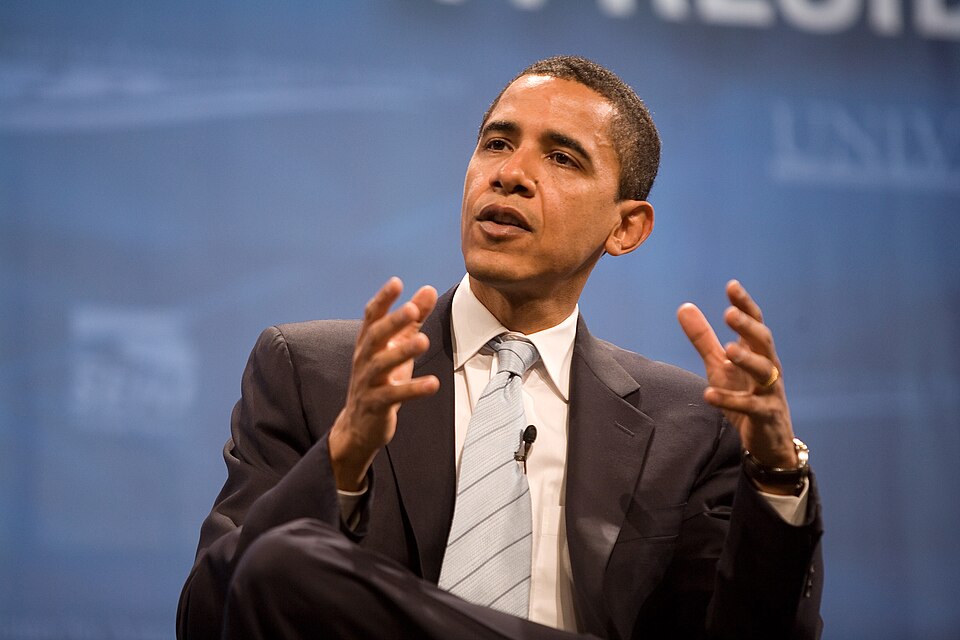
Former President Barack Obama is raising eyebrows after offering a surprisingly positive assessment of the federal government, saying Washington is far less corrupt today than it was during earlier periods of American history.
Obama did not specifically praise President Donald Trump or credit the Trump administration. However, his comments are notable given the ongoing political battle over government accountability, federal agencies and Washington’s influence over everyday Americans.
The former president made the remarks during his new Audible podcast, “A Great Book with Barack Obama,” which debuted Thursday as a six-episode series from Audible and Higher Ground, the media company founded by Barack and Michelle Obama.
During a conversation about political corruption and the history of American government, Obama argued that outright bribery, patronage and political favors have become significantly less common inside the federal government.
Obama Says Federal Government Is Less Corrupt
Obama said many people are surprised when he tells them the federal government is less corrupt than it was during previous generations.
His comments focused specifically on traditional political corruption, including bribery, patronage and politicians exchanging favors for political support.
The discussion came during an episode featuring Pulitzer Prize-winning historian Jill Lepore and centered on Robert Penn Warren’s famous 1946 novel “All the King’s Men.”
The book follows the rise and downfall of a fictional populist Southern governor and explores political power, ambition and corruption.
That discussion led Obama to reflect on his own experience in government, from the Illinois state legislature to the U.S. Senate and eventually the White House.
Obama Looks Back at Old-School Washington Politics
Obama described an era when political leaders could secure votes by asking lawmakers what they needed and then finding ways to deliver favors, benefits or political support.
He pointed to former President Lyndon B. Johnson as an example of a politician known for aggressively persuading lawmakers and building congressional coalitions.
According to Obama, reforms enacted before and after the Watergate scandal significantly weakened those traditional political machines.
Those reforms were designed to reduce corruption and strengthen public confidence in government.
But Obama suggested they also produced an unintended consequence.
By eliminating many of the favors and incentives once used to bring lawmakers together, Washington may have become less effective at building compromises across ideological lines.
Did Government Reform Make Congress Harder to Manage?
Obama suggested that the old political system had what amounted to a form of political “lubrication” that helped congressional leaders persuade lawmakers to support legislation they might otherwise oppose.
Few Americans would argue in favor of bribery or corruption.
However, Obama’s broader point was that reforms can sometimes produce unexpected consequences.
Historian Jill Lepore offered a similar assessment.
She emphasized that America’s old political machines should not be romanticized, but said those organizations once played an important role in political and civic life.
Progressive Era reforms brought major changes to the political system, including campaign finance restrictions and stronger protections for voters.
Those reforms also helped weaken powerful party organizations.
According to Lepore, another influential force eventually emerged in their place: the professional political consulting industry.
Obama’s Comments Come Amid Trump’s Fight Over Washington
Obama’s remarks arrive at an especially interesting moment in American politics.
President Trump has repeatedly argued that Washington’s federal bureaucracy needs greater accountability and significant reform.
Trump and his supporters have frequently criticized unelected bureaucrats, federal agencies and what they describe as entrenched political interests inside the nation’s capital.
Democrats and other critics of Trump have countered that many civil-service protections and institutional safeguards are necessary to prevent presidents from using government agencies for political purposes.
Obama’s comments do not directly resolve that debate.
But they highlight an important distinction between the political problems facing Americans today and the more direct forms of corruption that were common during earlier periods.
Americans may still worry about lobbying, government waste, campaign money, political consultants, bureaucratic power and special interests.
Obama’s argument is that outright bribery and traditional patronage are considerably less common than they once were.
Washington Still Faces a Trust Problem
Even if traditional corruption has declined, public frustration with Washington remains widespread.
Modern political debates often focus less on envelopes of cash or direct political favors and more on questions involving government spending, lobbying, regulatory power, federal agencies, campaign financing and the influence of wealthy organizations.
That helps explain why government accountability continues to be such a major issue for voters.
For older Americans who have watched Washington change over several decades, Obama’s remarks may also provide an interesting historical perspective.
The methods may have changed, but concerns about political power and influence remain deeply embedded in American politics.
Obama Launches New Audible Podcast
Obama’s new program takes a different approach from the typical political podcast.
Rather than concentrating primarily on the latest political controversy, the former president uses major works of literature to begin conversations about American history, culture, government and society.
Audible says “A Great Book with Barack Obama” is a six-episode series examining books that influenced Obama’s thinking and worldview.
The featured works include “The Fire Next Time” by James Baldwin, “Gilead” by Marilynne Robinson, “All the King’s Men” by Robert Penn Warren, “Song of Solomon” by Toni Morrison, “All the Pretty Horses” by Cormac McCarthy and “Tinker, Tailor, Soldier, Spy” by John le Carré.
The podcast officially debuted September 24, 2026.
The Bottom Line
Obama did not directly praise President Trump.
But his declaration that the federal government is less openly corrupt than it was in past generations stands out during an era when Americans are constantly hearing arguments about corruption, government accountability and Washington dysfunction.
His comments also raise a larger question.
America may have succeeded in eliminating many of the blatant political machines and patronage systems of the past, but has political influence simply taken new forms?
For voters concerned about Washington, that debate is unlikely to disappear anytime soon.