Here’s what the left is saying now.
Alexandria Ocasio-Cortez has spent years as one of the most recognizable figures on the Democratic Party’s progressive wing. Now, with attention slowly shifting toward the 2028 presidential race, some Democrats are openly considering whether the New York congresswoman could become a major contender for the White House.
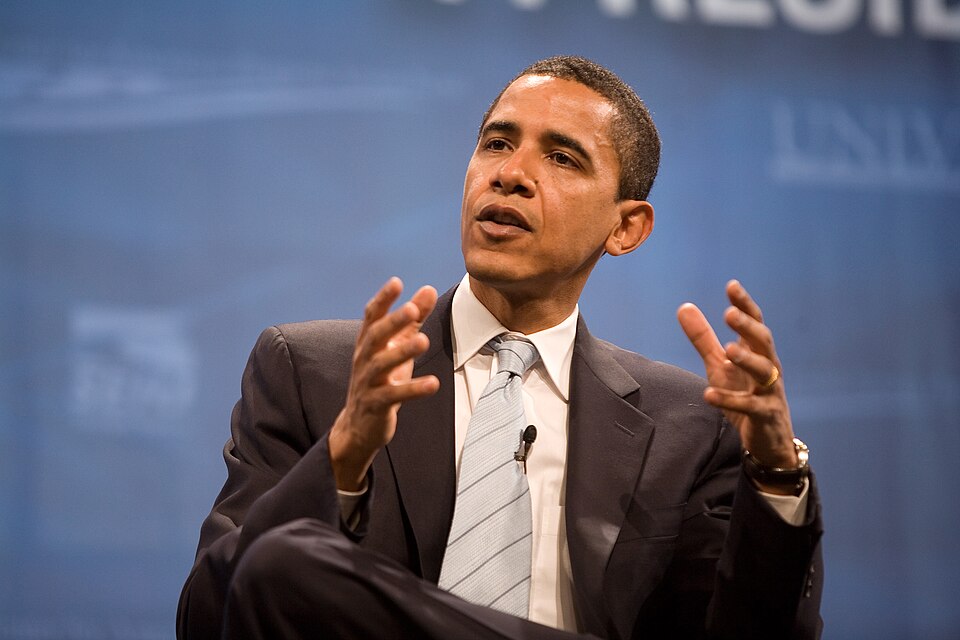
The discussion has even produced comparisons with Barack Obama, whose 2008 presidential campaign transformed him from a relatively new senator into the Democratic nominee and eventually the 44th president.
Those comparisons remain speculative. Ocasio-Cortez has not announced a presidential campaign, and the Democratic field for 2028 is far from settled.
But comments from Democratic donors and strategists suggest that party insiders are taking the possibility increasingly seriously.
Democratic Donor Sees Potential for Huge Grassroots Movement
Longtime Democratic donor Robert Wolf told The Hill that an Ocasio-Cortez presidential campaign could produce a major volunteer response.
Wolf has a notable connection to the Obama comparison: He hosted Obama’s first New York fundraiser in 2007.
Wolf told The Hill that if she decides to enter the race, he expects a surge of volunteers on a scale Democrats have not seen since 2007.
Wolf also predicted that Ocasio-Cortez entering the race could quickly reshape the Democratic primary field.
That does not mean she would follow Obama’s political trajectory. The two politicians emerged under very different circumstances, with different records and political coalitions.
Still, the comparison demonstrates how some Democrats view Ocasio-Cortez’s ability to generate enthusiasm among activists and younger voters.
AOC Hasn’t Ruled Out 2028
The biggest unanswered question is whether Ocasio-Cortez actually intends to run.
During an August 9 appearance on ABC News’ “This Week,” she was directly questioned about potentially seeking either a Senate seat or the presidency.
“I haven’t ruled out the possibility,” Ocasio-Cortez said when discussing her political future. ABC characterized her broader response as saying that “anything is possible.”
That ambiguity has allowed speculation to continue.
Ocasio-Cortez entered Congress after defeating longtime Democratic Rep. Joe Crowley in a stunning 2018 primary upset. Since then, she has become one of the nation’s best-known progressive politicians and a prominent voice in debates over the direction of the Democratic Party.
Her Communication Skills Get Attention
Democratic strategist Eddie Vale told The Hill that Ocasio-Cortez’s political abilities may be stronger than some of her critics recognize.
He specifically pointed to her communication skills and her ability to reach audiences through platforms that many traditional politicians have struggled to use effectively.
That could matter in a presidential primary increasingly shaped by podcasts, online video, social media and direct communication between candidates and voters.
Ocasio-Cortez built much of her national profile through exactly those channels.
Her supporters view that ability as a significant political advantage. Her critics, meanwhile, continue to question whether her progressive record would translate beyond heavily Democratic constituencies.
Those competing arguments would likely become central to any presidential campaign.
Is AOC Trying to Broaden Her Appeal?
Ocasio-Cortez has also attracted attention for the way she has recently discussed some positions associated with the progressive movement.
During her August appearance on ABC, host Jonathan Karl questioned her about proposals associated with democratic socialist candidates and organizations, including calls involving policing, prisons and other major institutions.
Ocasio-Cortez emphasized that candidates should be judged on what they currently advocate, saying that political races ultimately depend on local circumstances. She also referenced New York City Council Member Chi Ossé’s phrase, “Woke 1 was crazy,” while discussing some positions embraced on the left in previous years.
Some political observers have interpreted comments like those as evidence that she is thinking about reaching a broader electorate.
Ocasio-Cortez herself did not say during the interview that the remarks represented preparation for a presidential campaign.
That distinction matters as speculation surrounding 2028 grows.
Progressives and Moderates Still Clash Over the Party’s Direction
A potential Ocasio-Cortez campaign would also arrive amid an ongoing debate inside the Democratic Party.
Progressive candidates have scored victories in several Democratic contests, while centrist Democrats have pushed back against the growing influence of democratic socialism.
ABC News reported in August that moderate Democratic lawmakers had publicly emphasized that they considered themselves capitalists rather than socialists. The centrist group Third Way also pledged millions of dollars toward an effort opposing democratic socialist influence ahead of the 2028 election cycle.
Ocasio-Cortez, meanwhile, described the Democratic Party as undergoing a period of “renewal” and argued that Democrats should concentrate on economic concerns facing working Americans.
That ideological divide could become one of the defining arguments of the next Democratic presidential primary.
National Numbers Show the Challenge
Ocasio-Cortez’s enormous name recognition does not automatically translate into broad popularity.
As of September 15, 2026, The Hill and Decision Desk HQ’s national polling average showed 30.8% of respondents holding a favorable opinion of Ocasio-Cortez, compared with 40.1% who viewed her unfavorably. The average incorporated 105 polls involving different populations and methodologies.
Those numbers are only a snapshot.
Public opinion can change substantially once a presidential campaign begins, and polling more than two years before a general election cannot establish how voters would ultimately respond to a particular candidacy.
Still, the figures illustrate the challenge Ocasio-Cortez would face if she attempted to expand her political coalition nationally.
The Obama Comparison Has Important Limits
Comparing Ocasio-Cortez with Obama makes for an attention-grabbing political storyline, but there are substantial differences between their circumstances.
Obama entered the 2008 presidential contest as a U.S. senator and challenged Hillary Clinton in a Democratic primary that became a lengthy battle over the direction and leadership of the party.
Ocasio-Cortez would bring a different political identity to a future presidential campaign.
She has spent much of her congressional career closely identified with the Democratic Party’s progressive wing and democratic socialist politics. Any national campaign would therefore subject her record, policy positions and past statements to considerably more scrutiny.
At the same time, her supporters point to qualities that helped make her a national political figure in the first place: an energetic activist following, strong name recognition and an ability to communicate directly with voters.
Whether those strengths could translate into a successful presidential coalition is something that only an actual campaign could test.
2028 Speculation Is Just Beginning
The presidential election is still more than two years away, and prospective candidates have considerable time before they must make final decisions.
Ocasio-Cortez has not declared a presidential campaign.
But she also has not closed the door.
Her August ABC appearance confirmed that higher office remains a possibility, while comments from Democratic donors and strategists show that some influential figures are already considering what her entry could mean for the race.
For now, calling Ocasio-Cortez “America’s new Obama” remains a comparison made by political observers rather than an established political reality.
What is increasingly clear is that Alexandria Ocasio-Cortez has become one of the names being discussed as Democrats look beyond the current election cycle and toward the battle for the White House in 2028.