Here’s what Trump just did.
The Trump administration is making a major change at the U.S. Department of Education, formally abandoning a Biden-era interpretation of Title IX that treated discrimination based on sexual orientation and gender identity as a form of sex discrimination.
The move reinforces the Education Department’s return to the Title IX regulations adopted during President Donald Trump’s first term in 2020.
For millions of parents, students, teachers and college administrators, the decision could have significant consequences for how federally funded schools handle women’s sports, student privacy, discrimination complaints and Title IX investigations.
Education Department Changes Course On Title IX
The Department of Education has rescinded Biden-era guidance interpreting Title IX’s prohibition against discrimination “on the basis of sex” to include sexual orientation and gender identity.
The department’s current Title IX webpage identifies the 2021 interpretation as rescinded. The Biden administration later incorporated similar protections into its broader 2024 Title IX regulations.
Those regulations did not survive a legal challenge.
On January 9, 2025, a federal district court vacated the 2024 Title IX rule nationwide. The Education Department subsequently returned to enforcing the regulations adopted in 2020.
That means schools and colleges receiving federal financial assistance are once again operating under the earlier federal Title IX framework.
Linda McMahon Says Move Will Bring Clarity
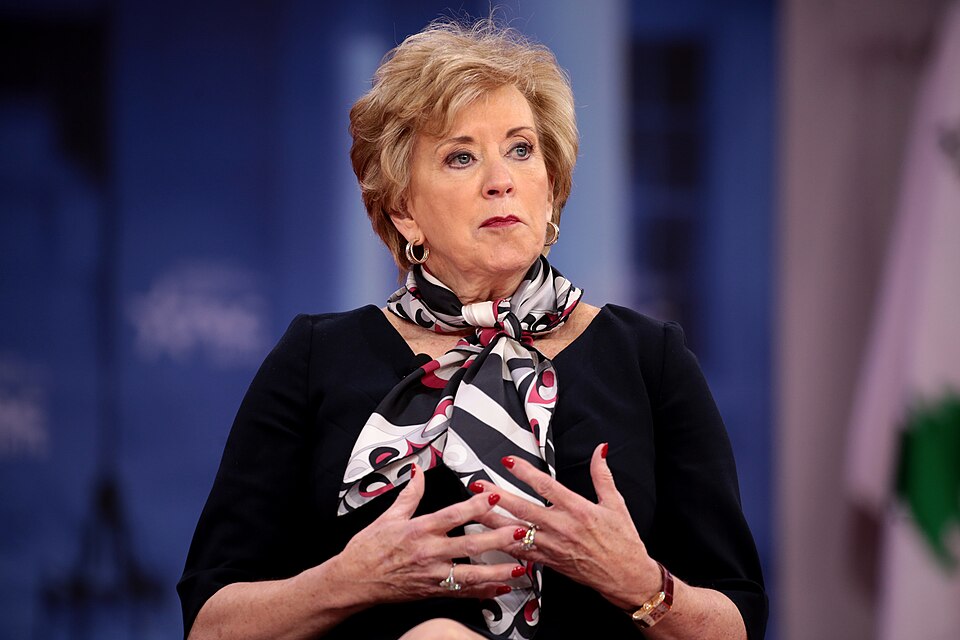
Education Secretary Linda McMahon said the administration believes its approach will reduce uncertainty for American families and educational institutions.
“Thanks to today’s action, the published Title IX regulations faithfully reflect court orders and Congressional intent — reducing confusion for parents, students, and educational institutions,” McMahon said.
She added that the department would continue enforcing protections involving equal opportunity, privacy and athletic opportunities for women and girls.
The administration maintains that Title IX should be enforced according to sex rather than gender identity.
That interpretation has become one of the most consequential education-policy disputes in Washington.
Biden Title IX Rule Was Struck Down In Court
The policy change did not occur in isolation.
President Joe Biden’s administration issued a sweeping Title IX rule in 2024 that expanded federal regulations concerning sex discrimination.
Among other provisions, the rule stated that sex discrimination included discrimination based on sexual orientation and gender identity.
Republican-led states and other challengers filed lawsuits arguing that the Education Department had exceeded its authority.
A federal district court ultimately vacated the entire 2024 rule in January 2025.
As a result, the Education Department says the 2020 Title IX regulations are once again in effect nationwide.
The department has since instructed schools and colleges that its Office for Civil Rights will enforce Title IX according to the 2020 regulations.
Women’s Sports Become Major Focus
Women’s athletics have become one of the central issues surrounding the administration’s Title IX policy.
Since Trump returned to the White House, the Education Department has investigated educational institutions over allegations involving transgender athletes participating in women’s sports.
The administration argues that allowing athletic participation according to gender identity can conflict with Title IX protections for female students.
In January 2026, for example, the Education Department announced investigations involving 18 educational entities across 10 states following complaints alleging sex discrimination connected to athletic participation policies.
Those investigations included K-12 school systems, colleges and state education agencies.
An investigation itself does not establish that a school violated federal law. It begins a federal review to determine whether a violation occurred.
Trump Administration Has Taken Action Against Schools
The administration has also used federal civil-rights enforcement to pressure educational institutions to change policies involving athletics and sex-separated programs.
The Education Department says its enforcement strategy is intended to protect opportunities for female athletes as well as privacy in facilities such as locker rooms.
The administration has reached agreements with some educational institutions and pursued investigations against others as part of that effort.
The University of Pennsylvania became one of the most closely watched examples after the federal government challenged the university’s policies involving transgender participation in women’s athletics.
The issue has expanded far beyond college sports and now affects school districts, state education departments and universities throughout the country.
Critics Warn About Transgender Student Protections
The administration’s position has also drawn strong criticism from civil-rights organizations and advocates for transgender students.
Critics contend that removing federal protections based explicitly on gender identity could leave transgender students more vulnerable to discrimination.
They also argue that broader changes in Title IX enforcement must not undermine protections for students reporting sexual harassment or sexual assault.
Shiwali Patel of the National Women’s Law Center criticized the administration’s approach, arguing that federal officials should place greater emphasis on protecting survivors of sexual violence.
The Trump administration disputes claims that returning to the 2020 regulations abandons Title IX protections.
Federal officials argue instead that the government is enforcing the statute according to its original prohibition against discrimination based on sex.
What Is Title IX?
Title IX has played a major role in American education for more than five decades.
Congress enacted the law in 1972.
At its core, Title IX prohibits sex discrimination in education programs and activities receiving federal financial assistance.
The law applies to a wide range of institutions, including many:
- Public elementary and secondary schools
- Colleges and universities
- School districts
- Vocational and technical programs
- Other educational institutions receiving federal funds
Title IX is frequently associated with women’s athletics, but its reach extends considerably further.
It can also affect discrimination complaints, sexual harassment policies, pregnancy-related protections and procedures schools use when responding to allegations of misconduct.
That is why changes in Title IX regulations can have consequences for institutions across the country.
What The New Title IX Policy Means For Parents And Students
For families trying to understand the latest change, one fact is particularly important: the Biden administration’s 2024 Title IX regulations are no longer in effect.
The Education Department currently identifies the Trump administration’s 2020 regulations as the governing federal Title IX framework.
Schools receiving federal financial assistance are therefore expected to comply with those requirements when addressing Title IX matters.
For parents, the change could become especially noticeable in debates involving athletics, locker rooms, bathrooms, student privacy and school discrimination policies.
Individual schools may also be subject to state laws and other federal requirements, meaning policies can differ considerably depending on where a family lives.
Title IX Battle Is Far From Over
The latest Education Department action is unlikely to end the national fight over Title IX.
Supporters of the Trump administration’s approach argue that separating sex from gender identity is necessary to preserve protections originally established for women and girls.
Opponents argue that transgender students should receive explicit federal protection against discrimination based on gender identity.
Those competing interpretations have produced years of litigation, regulatory changes and political battles.
Congress could ultimately address some of those disagreements through legislation, while federal courts are likely to continue playing an important role in determining how Title IX may be interpreted.
For now, however, the Education Department has made its position clear.
The Biden-era Title IX framework has been set aside, the 2020 regulations are back in force, and the Trump administration is putting its interpretation of sex-based protections at the center of federal education policy.