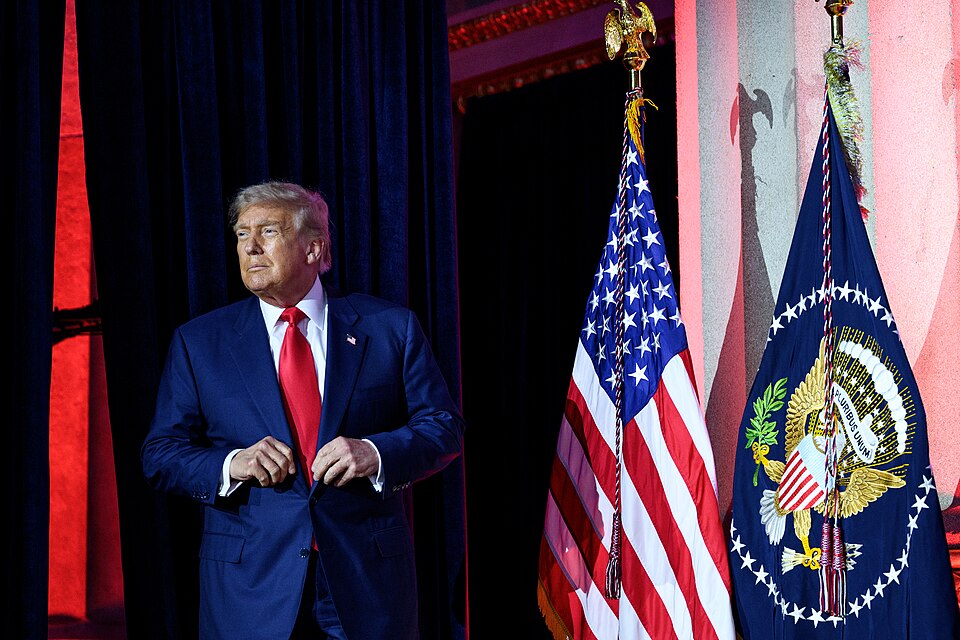
President Donald Trump is sounding the alarm over one of the most closely watched Senate races of the 2026 midterm elections.
Trump acknowledged Friday that he is concerned about Republican Senate candidate Michael Whatley’s chances in North Carolina, where the former Republican National Committee chairman is facing former Democratic Gov. Roy Cooper.
Speaking to reporters before traveling to a campaign rally in Alabama, Trump offered strong praise for Whatley while making clear that he believes the race deserves serious attention.
“I think he’s a great man, and I am worried about him,” Trump said.
“I hope he wins. He was a great leader for the whole Republican Party when I won, and he’d be a great senator,” the president added.
The comments are notable because political leaders usually try to project confidence about their party’s candidates, particularly during the closing weeks of a major election.
Trump’s decision to publicly acknowledge his concerns could signal just how important North Carolina has become in the battle for control of the U.S. Senate.
North Carolina Senate Race Draws Growing Attention
Whatley is running against Cooper in a contest that could have major consequences for Republicans in Washington.
Recent polling has shown Cooper holding an advantage, putting additional pressure on Whatley and national Republican organizations as Election Day approaches.
A Catawba College and YouGov poll released this week showed Cooper leading Whatley by 10 percentage points.
The Cook Political Report has also rated the North Carolina Senate race as “Lean Democrat,” suggesting Democrats currently have an advantage while the contest remains competitive.
For Republican voters, those numbers are likely to increase concerns about whether the GOP can hold the seat.
North Carolina has become an increasingly competitive political battleground in recent election cycles, making turnout especially important.
Republican Campaign Spending Raises Questions
Trump’s comments also come amid changes in Republican advertising plans in the state.
Millions of dollars in previously planned advertising reservations connected to Republican efforts in North Carolina have reportedly been canceled or redirected, raising questions about how national party strategists are allocating resources during the final stretch of the campaign.
Campaign spending decisions can change quickly during a midterm election.
Political groups often shift money toward races where polling, voter turnout models and internal data suggest additional advertising could make the biggest difference.
Still, any significant reduction in spending is likely to attract attention when a candidate is already trailing in public polling.
That makes Trump’s concern about Whatley especially noteworthy.
Trump Has Personally Backed Whatley
Trump has invested considerable political capital in Whatley’s campaign.
Both Trump and Vice President JD Vance traveled to North Carolina last month to campaign with the Republican nominee.
Whatley also has a long history inside Republican politics.
Before launching his Senate campaign, he served as chairman of the Republican National Committee and previously led the North Carolina Republican Party.
Trump has repeatedly praised Whatley’s leadership and loyalty to the Republican movement.
That relationship could help Whatley energize Trump supporters, particularly older conservative voters who have consistently played an important role in Republican turnout.
But the campaign still faces a difficult challenge against Cooper.
Roy Cooper Brings Statewide Name Recognition
Cooper enters the race with one significant advantage: years of statewide political experience.
The Democrat previously served as governor of North Carolina and built substantial name recognition among voters across the state.
That familiarity could make it more difficult for Republicans to define Cooper during the final weeks of the election.
At the same time, Republican candidates are expected to focus on national issues that could motivate conservative voters.
Inflation, taxes, immigration, government spending, energy costs, crime and the future direction of the country are all likely to remain major themes as Republicans attempt to increase turnout.
The GOP may also argue that electing Whatley is necessary to help President Trump advance his agenda in Washington.
Senate Control Could Be at Stake
The North Carolina race matters far beyond the state itself.
Control of the Senate could determine how much success Trump has advancing his legislative priorities during the second half of his term.
A Republican-controlled Senate would make it easier for the president to pursue his agenda and confirm key nominees.
A Democratic Senate majority could create new obstacles for the White House.
That means every competitive Senate race carries national consequences.
North Carolina could ultimately become one of the states that determines which party controls the chamber.
For conservatives who support Trump’s agenda, that raises the stakes considerably.
Why Trump’s Warning Matters
Trump is known for projecting confidence on the campaign trail.
That is why his admission that he is “worried” about Whatley immediately drew attention.
The president did not suggest that the race was lost.
Instead, his comments could serve as a warning to Republican voters that the election remains competitive and that turnout will be critical.
Midterm elections often depend heavily on which side is more successful at motivating its supporters to vote.
Older Americans historically participate in elections at high rates, making voters age 50 and above particularly important to both parties.
Republicans will likely spend the remaining weeks emphasizing the importance of maintaining GOP control in Washington.
Democrats, meanwhile, are expected to portray Cooper as an experienced statewide leader who could give them another important Senate seat.
Republicans Face a Critical Final Stretch
The coming weeks could determine whether Whatley can close the polling gap.
Trump and other Republican leaders may increase their involvement if the race remains within reach.
Campaign appearances, advertising, voter outreach and early voting efforts could all play an important role.
North Carolina Republicans will also need strong participation from rural communities, suburban conservatives, senior citizens and working-class voters if they hope to overcome Cooper’s current advantage.
A strong Election Day turnout could dramatically change the outcome, particularly in a politically competitive state.
What Happens Next
With the 2026 midterm elections approaching, Republicans will be watching North Carolina closely.
Trump clearly wants Whatley in the Senate, and his public concern shows that the president recognizes the difficulty of the race.
The contest now represents more than a battle between two candidates.
It has become part of the larger struggle over the direction of Washington during the final two years of Trump’s current term.
For Republican voters, the question is straightforward: Can Trump’s political influence help Whatley overcome his polling deficit and keep North Carolina in the GOP column?
The answer could help determine who controls the United States Senate after the 2026 midterms.