This is outrageous.
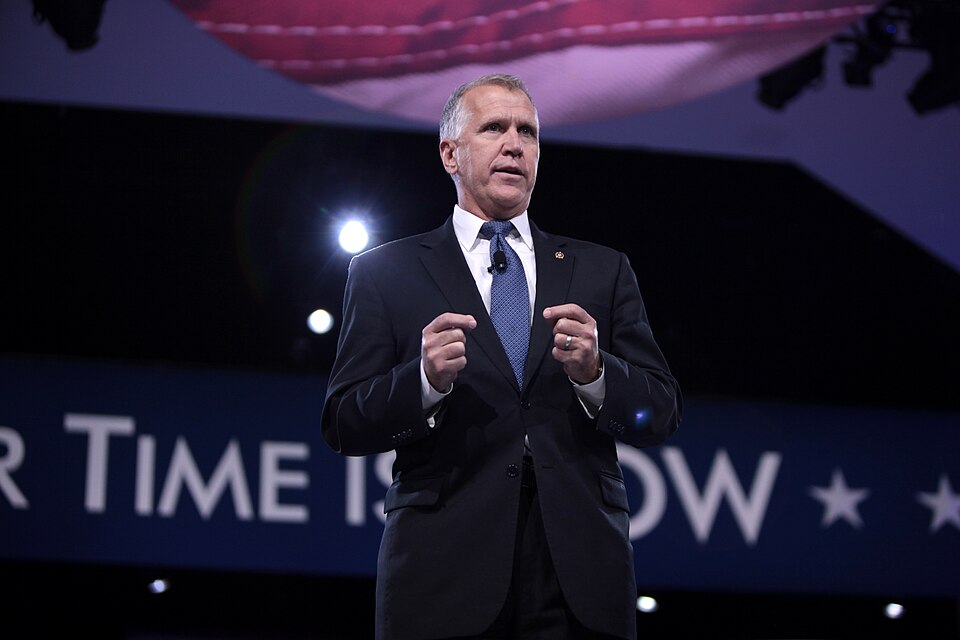
Republican Sen. Thom Tillis of North Carolina raised eyebrows Monday after joking that he also has President Donald Trump’s personal phone number during a television discussion about Trump’s recent clash with another GOP senator.
The remark came as Tillis appeared on The View to promote his new book.
What began as a discussion about Tillis’ strained relationship with Trump quickly turned into an exchange about personal phone numbers, political retaliation and the growing tensions between prominent Republicans.
Although Tillis did not directly say he planned to publish Trump’s number, his quick response immediately attracted attention.
Tillis Asked About His Feud With Trump
During the interview, co-host Sunny Hostin brought up Tillis’ decision to retire from the Senate after his current term.
The North Carolina Republican announced his retirement following a public disagreement with Trump over the president’s sweeping legislative agenda.
Hostin also discussed private communications between Tillis and Trump that the senator recounts in his book.
According to Tillis, Trump previously called him a “loser” and suggested that he had effectively pushed the senator out of Washington.
Tillis said he responded forcefully and made clear that he would not accept personal attacks, even from the president.
Hostin then asked whether Trump ever replied.
“Actually, we’ve talked or texted back and forth several times since then,” Tillis said.
That answer quickly led the conversation in another direction.
Tillis Says He Has Trump’s Number Too
Co-host Ana Navarro joked that Trump might respond by giving out Tillis’ phone number.
Alyssa Farah Griffin joined in on the exchange.
Tillis wasted little time responding.
“With all due respect, I have his number, too,” Tillis said.
The comment appeared to be delivered as a joke rather than a direct threat. Still, the implication was difficult to miss.
Tillis was reminding the audience that access to personal contact information can work both ways.
The exchange came shortly after Trump publicly posted Republican Sen. Tom Cotton’s phone number during a disagreement involving daylight saving time.
That episode generated debate over whether personal contact information should become part of political disputes, even when the people involved are high-profile elected officials.
Tillis Says He Is Not Afraid of Trump
Hostin later asked whether Tillis feared that Trump could come after him politically because of criticism contained in his new book.
Tillis said he was not worried.
“Not at all,” he replied.
The retiring senator then broadened the discussion beyond his own relationship with Trump.
Tillis argued that political parties can put themselves in danger when they excuse behavior from their own side that they would condemn from their opponents.
Tillis warned that when voters overlook political overreach by their own party, it can ultimately hurt that party at the ballot box.
He also argued that most American voters are not firmly planted at the political extremes.
“Most of the people in this country live between the 35 yard lines in politics,” Tillis said.
According to Tillis, the political party that understands those voters first could gain a major long-term advantage.
A Growing Debate Inside the Republican Party
Tillis’ comments come as Republicans continue debating how much room GOP lawmakers should have to publicly disagree with Trump.
Trump remains the central figure in the modern Republican Party and maintains tremendous influence among conservative voters.
At the same time, Republican senators have occasionally broken with the president over spending, foreign policy, personnel decisions and other major issues.
Those disagreements are not unusual in American politics.
What has changed is how quickly internal disputes can become highly public and personal.
Social media now allows presidents, lawmakers and political commentators to communicate directly with millions of Americans, sometimes turning relatively small disagreements into national controversies within minutes.
For many longtime Republican voters, the larger issue may be whether these public fights ultimately help advance conservative priorities or distract from them.
Tillis Warns About Political Overreach
Tillis used his appearance to make a broader argument about the state of American politics.
Instead of focusing exclusively on Democrats or Republicans, he suggested both parties can become vulnerable when partisan loyalty prevents lawmakers from acknowledging mistakes made by their own side.
His comments appear aimed in part at independent voters and politically moderate Americans who could play a decisive role in future elections.
That message could resonate with older voters who have watched the political landscape become considerably more combative over the past several decades.
For Republicans, the challenge is particularly significant.
The GOP must balance Trump’s enormous popularity with the party’s conservative base against the need to attract independents, suburban voters and Americans who may support Republican policies without embracing every political confrontation.
Tillis appears to believe that Republicans cannot afford to ignore those voters.
Trump’s Influence Remains Strong
Despite criticism from Republicans such as Tillis, Trump continues to exercise enormous influence over the direction of the GOP.
Candidates regularly seek his endorsement, Republican lawmakers closely follow his policy priorities, and his public comments can quickly reshape political debates.
That makes Tillis’ willingness to openly challenge him noteworthy.
However, the senator is also in a different political position from many of his colleagues.
Because Tillis has already announced plans to leave the Senate, he does not face the same concerns about a future Republican primary that could influence lawmakers seeking reelection.
That gives him greater freedom to criticize Trump without worrying about the immediate political consequences.
A Joke With a Serious Message
Tillis’ remark about having Trump’s phone number drew laughs, but the underlying message was more serious.
He was signaling that he does not appear intimidated by the possibility of another public confrontation with the president.
There was no explicit promise from Tillis that he would release Trump’s personal information.
Instead, his comment appeared to be a humorous response to the suggestion that Trump might share his.
Still, the exchange demonstrated just how personal political disagreements can become in Washington.
For conservative voters, the controversy also raises a larger question about Republican unity.
Should GOP lawmakers challenge a Republican president publicly when they disagree with him, or should those disputes remain private so the party can stay focused on its broader agenda?
With major political battles ahead, Republicans may have to answer that question sooner rather than later.