Here’s what happened.
President Donald Trump is facing fierce criticism from California Governor Gavin Newsom after making controversial remarks about Iran, Los Angeles, and San Diego during a Republican campaign rally. The White House is pushing back, accusing Democrats and the media of misrepresenting the president’s comments about national security.
The latest political confrontation began Monday in Grand Island, Nebraska, where Trump addressed the ongoing conflict with Iran, rising gasoline prices, and the importance of protecting the United States from foreign threats.
While defending his administration’s military strategy, Trump mentioned the possibility of Iran attacking major American cities.
His choice of words immediately sparked controversy, with Newsom and other California Democrats accusing the president of making dangerous statements about millions of Americans.
The White House, however, insists Trump was warning about the threat posed by a nuclear-armed Iran rather than suggesting that American cities should be attacked.
The disagreement has quickly become another major political controversy as Republicans and Democrats prepare for the November midterm elections.
Trump Makes Controversial Statement About American Cities
During his Nebraska rally, President Trump defended the ongoing military campaign against Iran and argued that protecting American national security sometimes requires temporary economic sacrifices.
The president acknowledged that gasoline prices have increased during the conflict but maintained that preventing Iran from obtaining nuclear weapons is a far greater priority.
Trump argued that higher energy costs were a relatively small price compared with the potentially devastating consequences of allowing a hostile foreign government to threaten American communities.
He then made a statement that quickly drew national attention.
“They can take out a city. Let them take out Los Angeles. Let them take out San Diego,” Trump told the crowd.
The president subsequently characterized the economic consequences of the conflict as temporary and predicted that the fighting would conclude soon.
His remarks prompted immediate questions about what he intended to communicate.
Critics argued that his language appeared to dismiss the potential destruction of two major American cities.
Supporters of the administration pointed to the broader discussion of Iran’s nuclear ambitions, arguing that Trump was describing the dangers his military policies were designed to prevent.
The controversy intensified as California officials began responding publicly.
Gavin Newsom Launches Sharp Attack Against Trump
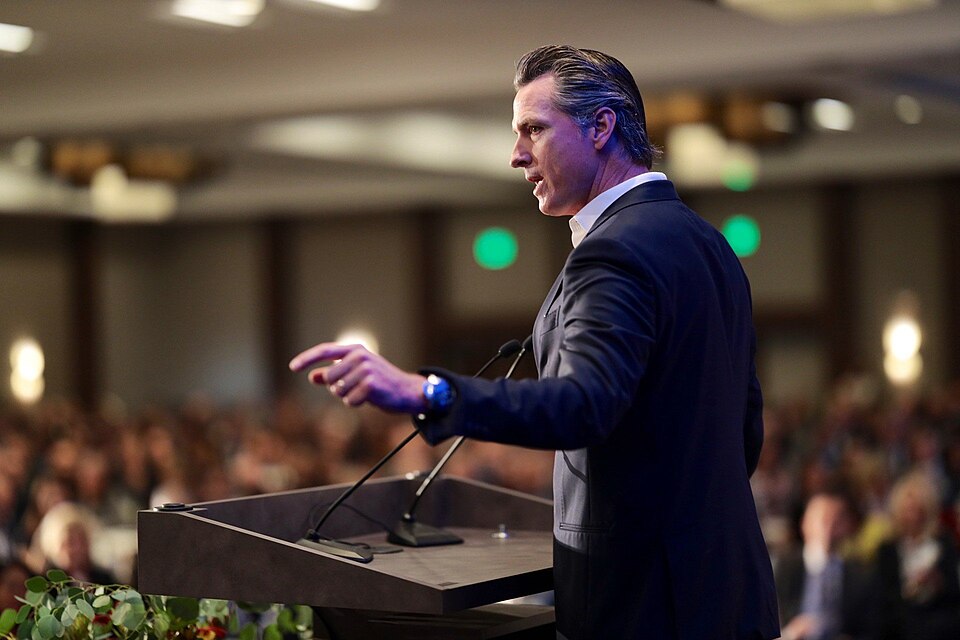
California Governor Gavin Newsom quickly criticized Trump’s remarks, accusing the president of making an unacceptable statement about American citizens.
Newsom referenced previous disagreements involving federal immigration enforcement and the deployment of National Guard troops and Marines in California.
He then condemned the president in unusually direct language.
“He is deranged and dangerous,” Newsom wrote on X.
The governor’s press office also weighed in, accusing Trump of advocating for an attack that could threaten millions of people living in Southern California.
Newsom’s response added another chapter to an already contentious relationship between the Democratic governor and the Republican president.
The two leaders have repeatedly exchanged criticism over immigration, public safety, federal authority, and California’s handling of major emergencies.
This latest disagreement, however, centers on the president’s language about foreign military threats and the security of American cities.
White House Defends Trump’s Remarks
The Trump administration wasted little time responding to the criticism.
White House Communications Director Steven Cheung rejected the suggestion that Trump had encouraged Iran to attack the United States.
Cheung argued that the president’s remarks had been taken out of context and that the broader message concerned preventing Iran from developing the ability to threaten American population centers.
According to Cheung, Trump was explaining why confronting Iran was essential to protecting the country.
The White House maintains that a nuclear-armed Iran could pose serious dangers to American national security and that the administration’s actions are intended to reduce those risks.
Administration officials also criticized news coverage of the remarks, arguing that the president’s warning was being mischaracterized as support for an attack.
The distinction is central to the controversy.
Trump’s critics say his actual wording was troubling, while the White House argues that his intended message was about preventing attacks on American cities.
Both sides have continued defending their interpretations as the disagreement receives nationwide attention.
Los Angeles and San Diego Officials Respond
The controversy extended beyond Governor Newsom as other California leaders publicly criticized the president.
Los Angeles Mayor Karen Bass described Trump’s remarks as dangerous and argued that protecting American citizens should remain the president’s highest responsibility.
Bass suggested that statements involving potential attacks on major cities could undermine public confidence and raise unnecessary concerns about public safety.
San Diego Mayor Todd Gloria also rejected the suggestion that his city could be treated as an acceptable casualty of an international conflict.
The reactions reflect the seriousness with which California officials are treating the president’s comments.
Los Angeles and San Diego are home to millions of residents, major businesses, transportation infrastructure, and important national security facilities.
San Diego is also a major center of American military activity, with substantial Navy and Marine Corps operations in the region.
For many residents, the controversy raises broader questions about presidential communication during international conflicts.
The White House continues to maintain that Trump was discussing the consequences of allowing Iran to obtain nuclear weapons, not expressing support for attacks against American communities.
Trump and Newsom’s Political Rivalry Continues
The latest exchange comes amid a long history of political disagreements between Trump and Newsom.
The president has frequently criticized California’s Democratic leadership over crime, homelessness, immigration enforcement, and state spending.
Trump has also questioned Newsom’s handling of natural disasters, including the devastating Los Angeles-area wildfires.
Newsom has responded by challenging the president’s decisions on immigration, federal spending, and the use of executive authority.
Their public disputes have helped establish Newsom as one of the administration’s most visible Democratic critics.
The governor has also attracted attention as a possible contender in the 2028 presidential election, although he has not formally announced a campaign.
With both political figures commanding significant national attention, their confrontations frequently extend well beyond California.
The latest dispute highlights how foreign policy, national security, and domestic political rivalries can become closely connected.
Rising Gas Prices Add Pressure on the Trump Administration
Although the controversy has focused primarily on Trump’s remarks about California, the original discussion involved another issue affecting millions of Americans: rising energy costs.
The conflict with Iran has contributed to concerns about gasoline supplies, oil markets, and the broader economic consequences of military operations in the Middle East.
Higher gasoline and diesel prices can place additional pressure on family budgets.
For retirees and Americans living on fixed incomes, even relatively modest increases in transportation and household expenses can make monthly financial planning more difficult.
Businesses also face challenges when energy costs rise.
Trucking companies, farmers, manufacturers, and distributors depend on affordable fuel to transport products and maintain operations.
When transportation expenses increase, some of those additional costs can eventually reach consumers through higher prices.
Trump has argued that temporary increases in energy costs are justified if military action prevents Iran from becoming a more serious threat to the United States.
The president has also expressed confidence that the economic pressure associated with the conflict will ease.
However, questions remain about how quickly gasoline prices may decline and what the longer-term economic consequences could be.
For American households, these financial concerns remain important regardless of the political disagreements taking place in Washington and California.
National Security Remains a Central Issue
The administration’s broader argument focuses on preventing Iran from acquiring nuclear weapons.
American leaders from both political parties have long expressed concerns about Iran’s nuclear program and its potential impact on international security.
Trump has repeatedly presented his administration’s military approach as necessary to prevent future threats against the United States and its allies.
The White House argues that decisive action now could help prevent more dangerous confrontations in the future.
Critics, meanwhile, have questioned the administration’s strategy, the economic consequences of the conflict, and how the president communicates about military threats.
The dispute involving Los Angeles and San Diego has brought those disagreements into sharper focus.
It has also renewed attention on the importance of clearly communicating national security objectives to the American public.
Midterm Elections Raise the Political Stakes
The timing of the controversy is particularly important because Americans are preparing to vote in the November 3, 2026, midterm elections.
Republicans are working to maintain their congressional majorities, while Democrats are seeking to regain control of Congress.
Trump has increased his campaign appearances and is encouraging Republican voters to participate in races across the country.
The president has repeatedly expressed confidence in the enthusiasm surrounding his rallies and the party’s prospects heading into Election Day.
In a Tuesday message on Truth Social, Trump celebrated the crowds attending his campaign events and suggested that Republicans could deliver stronger results than political observers expect.
He also predicted a potential surprise in the upcoming elections.
Democrats, meanwhile, are highlighting economic concerns, the conflict with Iran, and disagreements over the administration’s leadership.
The outcome of the elections will have significant consequences for Trump’s remaining time in office.
Congressional control will influence legislation, federal spending priorities, oversight investigations, and the administration’s ability to advance its agenda.
For voters, issues such as national security, the cost of living, immigration, and economic stability are likely to remain prominent as Election Day approaches.
What Happens Next?
The exchange between Trump and Newsom demonstrates how quickly a presidential statement can become a national political controversy.
California Democrats argue that Trump’s remarks about Los Angeles and San Diego were inappropriate and dangerous.
The White House strongly disagrees, maintaining that the president was emphasizing the dangers of a nuclear-armed Iran and the importance of preventing attacks against American citizens.
Meanwhile, the administration continues defending its military strategy as Americans face economic uncertainty tied to the conflict.
With the midterm elections approaching, the disagreement is likely to contribute to the wider debate about presidential leadership, national security, and the direction of the country.
Ultimately, Americans will have to evaluate the administration’s actions, the effectiveness of its national security strategy, and whether its policies are delivering greater safety and economic stability.