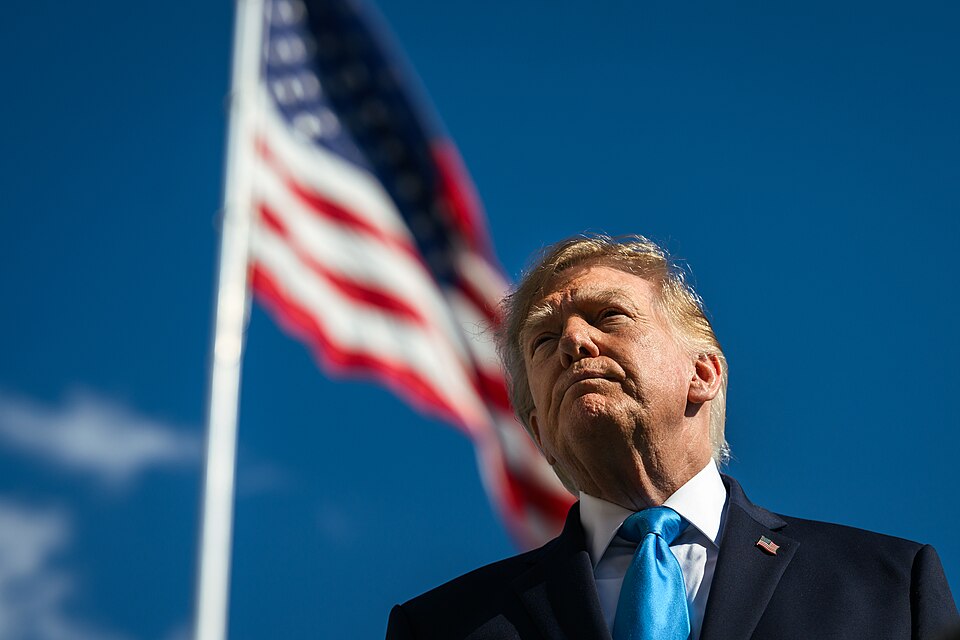
Trump has 1 very important question.
President Donald Trump has delivered a blistering political challenge to Democratic Senate candidate James Talarico, using just three words to ignite a new controversy in one of the most closely watched races of the 2026 midterm elections.
As Republicans fight to maintain control of the U.S. Senate, Trump is taking direct aim at Talarico over his recent absence from the campaign trail and the ongoing debate controversy involving Texas Attorney General Ken Paxton.
The president’s message to the Democratic candidate was straightforward.
“Where is he?”
Those three words have added fresh attention to a Texas Senate contest that could have major consequences for President Trump’s agenda and the Republican Party’s political future.
Trump Demands Answers From Texas Democrat
Trump escalated his criticism Wednesday in a Truth Social post questioning why Talarico had been absent from recent campaign appearances.
The president declared that the Democratic candidate was “MISSING IN ACTION” and suggested that Texans deserved to hear directly from someone seeking to represent them in Washington.
Trump also questioned Talarico’s whereabouts before challenging him to face Republican nominee Ken Paxton in a public debate.
The president praised Paxton as one of America’s leading attorneys general and expressed hope that he would soon represent Texas in the United States Senate.
The public challenge comes at a critical moment for Republicans.
With Election Day approaching, Trump is working to energize conservative voters and protect a Senate majority that will be essential to advancing his administration’s priorities.
Paxton Campaign Raises Questions About Talarico’s Absence
Trump’s criticism followed a series of campaign advertisements from Paxton’s team drawing attention to Talarico’s absence from in-person political events.
One advertisement claimed the Democrat had been missing from the campaign trail for 11 days.
Talarico’s last widely reported in-person appearance before his illness was a September 28 fundraising event in New York featuring Hollywood actor Robert De Niro.
However, Talarico subsequently explained that he had been diagnosed with the flu.
During a September 30 virtual appearance before the U.S. Hispanic Business Council, the Democrat acknowledged his illness, which his campaign said was responsible for his temporary absence.
Despite that explanation, Republicans have continued to scrutinize his campaign activities as the election draws closer.
The dispute has become another example of how closely both political parties are watching a Texas contest that many Republicans once expected to be relatively comfortable.
Trump Pushes for Major Senate Debate
The president’s demand for a debate has added another dimension to the race.
Trump wants Talarico to face Paxton directly, allowing Texas voters to compare the two candidates before heading to the polls.
But the debate situation is more complicated than the president’s criticism suggests.
Talarico has already accepted invitations from four television organizations, including CNN and several Texas broadcasters.
The Democratic candidate also challenged Paxton to participate in a Fox News debate, arguing that he was willing to defend his positions before a potentially skeptical audience.
Paxton’s campaign previously indicated that the Republican attorney general would participate in a debate.
In July, senior adviser Nick Maddux expressed confidence that Paxton would face Talarico while accusing the Democrat of misleading voters about his political record.
However, as of October 8, Paxton had not publicly accepted the outstanding debate invitations.
That leaves Texas voters without a confirmed Senate debate despite public statements from both sides supporting the idea of a face-to-face confrontation.
New Polling Gives Republicans Reason for Concern
While the political exchanges are drawing headlines, recent polling suggests the Texas Senate race could be more competitive than Republicans anticipated.
A New York Times/Siena University survey found Talarico leading Paxton among likely voters.
The results showed the Democratic candidate receiving 51% support, compared with 45% for Paxton.
Another 4% of voters remained undecided.
The six-point advantage is particularly notable because Texas has remained a Republican stronghold in statewide elections for decades.
The survey also highlighted a potential challenge involving Hispanic voters.
According to the poll, 62% of Hispanic respondents supported Talarico, while 30% backed Paxton.
That finding is significant because Hispanic voters played an important role in President Trump’s successful 2024 election campaign.
Although individual polls cannot predict the final election result, the numbers underscore the importance of Republican voter turnout in November.
Why Texas Matters to Trump’s Political Agenda
The outcome of the Texas Senate election could have consequences far beyond the Lone Star State.
President Trump needs Republican lawmakers in Washington to help advance the policies that defined his presidential campaign.
Major issues facing Congress include illegal immigration, border enforcement, federal spending, economic growth, taxes and national security.
A strong Republican majority would give the president greater flexibility to pursue legislation addressing those concerns.
Losing a Senate seat in traditionally Republican Texas, however, could complicate that effort.
For conservative voters who support Trump’s priorities, the election represents an opportunity to influence the direction of the federal government during the remainder of his presidency.
That helps explain why the president has devoted considerable attention to Texas and why the contest between Paxton and Talarico has become a national political story.
Texas Voters Still Waiting for a Debate
The disagreement over debates has also raised questions about whether voters will have an opportunity to watch both candidates defend their records and proposals on the same stage.
Candidate debates have traditionally given Americans a chance to evaluate competing ideas without relying entirely on political advertisements and campaign speeches.
They can be especially valuable in competitive elections where undecided voters may determine the final result.
Texas has a long history of Senate debates, with the last general-election Senate contest held without one occurring in 2000.
That election featured Republican Kay Bailey Hutchison and Democrat Gene Kelly.
More than two decades later, another Texas Senate race could proceed without a formal debate unless the candidates reach an agreement.
With early voting scheduled to begin October 19, the opportunity to organize such an event is narrowing.
Trump Makes His Position Clear Ahead of Midterms
Trump’s latest confrontation with Talarico reflects his determination to play an active role in the 2026 midterm elections.
The president has repeatedly emphasized the importance of electing Republicans who will support his administration’s agenda in Congress.
Paxton, a longtime Trump ally, has positioned himself as a conservative candidate who would back many of the president’s priorities.
Talarico, meanwhile, is attempting to appeal to voters seeking a different approach to Washington politics.
Their contest is attracting national attention because of the possibility that Democrats could make an unexpected breakthrough in a traditionally Republican state.
For Trump and his supporters, maintaining Republican control of the Texas Senate seat has become an important political objective.
With the November election approaching, both candidates face mounting pressure to communicate their positions, defend their records and convince Texans they deserve the opportunity to serve in Washington.
Trump’s three-word question has intensified the political debate, but the ultimate decision belongs to Texas voters. Whether Paxton and Talarico meet onstage or continue battling through campaign appearances and advertisements, the results in November could help determine the balance of power in the United States Senate.