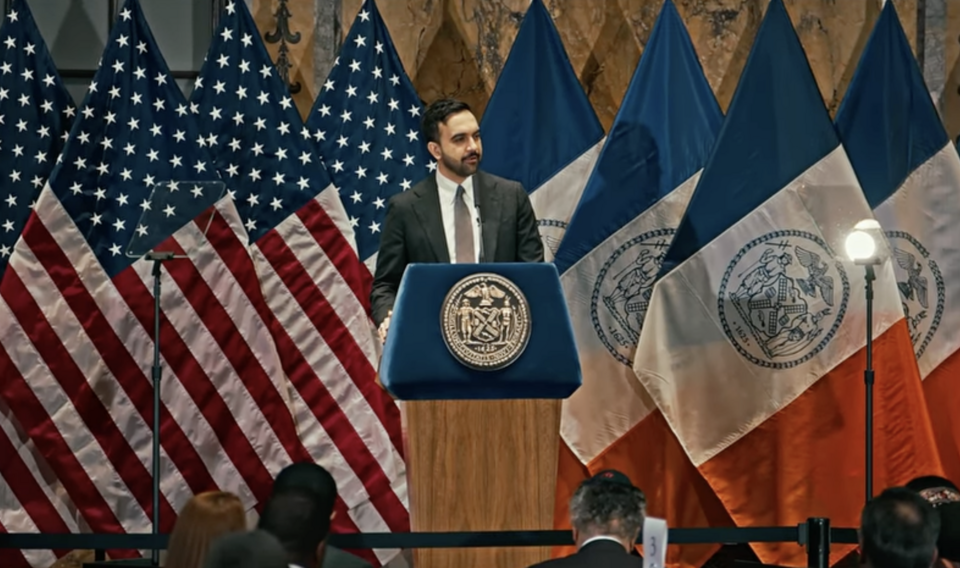
Here’s what happened.
New York City Mayor Zohran Mamdani is facing another political controversy after his decision to skip a major Polish-American celebration sparked criticism from community leaders who say their history and traditions are being overlooked.
The backlash comes after Mamdani declined to attend the annual Pulaski Day Parade, a longstanding New York City tradition honoring Polish heritage and the contributions of Polish immigrants to American history.
Adding to the frustration, his administration replaced a separate Polish heritage reception at Gracie Mansion with a broader Eastern European cultural celebration.
According to an October 17 report from the New York Post, the decisions have angered some Polish-American leaders and raised new questions about the mayor’s approach to recognizing New York’s diverse communities.
The controversy comes as the city continues to experience disagreements over cultural celebrations, public traditions, and the responsibilities of elected officials.
Polish Americans Speak Out Against Mayor’s Decision
The Pulaski Day Parade has been a cherished New York City tradition for nearly nine decades.
Each year, thousands of Polish Americans gather along Fifth Avenue to celebrate their ancestry, honor military heroes, and recognize the historic relationship between Poland and the United States.
However, Mayor Mamdani was noticeably absent from this year’s October 4 celebration.
The decision disappointed some community leaders, including Polish-American activist Grzegorz Fryc, who criticized the administration’s handling of the event.
The frustration was not limited to the mayor’s absence.
Community representatives also objected to the decision to replace a Polish-specific reception with a larger event recognizing Eastern European communities.
For many Polish Americans, the distinction matters because Poland has a unique national identity, culture, and history.
Polish community leaders have long emphasized their country’s Central European identity, particularly because of its difficult history under Soviet communist influence.
Critics believe that grouping Polish heritage into a broader regional celebration fails to recognize those important historical differences.
Gracie Mansion Tradition Becomes New Source Of Controversy
The disagreement also involves a cultural tradition established during the previous mayoral administration.
Former Mayor Eric Adams created a separate Polish heritage reception at Gracie Mansion, providing community representatives with an opportunity to celebrate their contributions to New York City.
The event was intended to recognize Polish Americans individually rather than including them exclusively in a broader regional gathering.
Under Mamdani’s administration, however, a new Eastern European cultural heritage reception was scheduled for October 22.
Although City Hall has expressed appreciation for the Polish-American community and welcomed Polish New Yorkers to the event, critics remain dissatisfied.
The dispute raises questions about whether combining multiple cultural celebrations is an inclusive approach or whether it risks overlooking the distinct histories of individual communities.
For residents who have spent decades preserving their family traditions, official recognition can carry considerable symbolic importance.
Another Heritage Parade Controversy For Mamdani
The Pulaski Day Parade dispute is not the first disagreement involving the mayor and a major cultural celebration.
Mamdani also declined to participate in New York City’s Columbus Day parade, prompting criticism from some Italian-American leaders.
The mayor has previously expressed opposition to honoring Christopher Columbus because of the explorer’s treatment of Indigenous peoples.
His position has contributed to disagreements over how public officials should recognize historic figures whose legacies remain controversial.
The mayor’s absence from the Israel Day Parade has also drawn attention.
Taken together, these controversies have led some critics to question whether the mayor is treating cultural traditions consistently.
Supporters of the mayor’s approach may argue that elected officials should have discretion over which ceremonies they attend and how they recognize different communities.
Critics contend that the mayor represents the entire city and should make a greater effort to participate in events that hold deep meaning for generations of residents.
Why The Pulaski Day Parade Is Important To America
The Pulaski Day Parade is more than an annual cultural gathering.
It honors General Casimir Pulaski, a Polish military leader who fought alongside American forces during the Revolutionary War.
Pulaski played an important role in developing American cavalry forces and is remembered for his service in the fight for independence.
His contributions symbolize the relationship between Polish patriots and the founding of the United States.
The 2026 parade also celebrated General Tadeusz Kościuszko, another Polish-born military leader who contributed to America’s Revolutionary War effort.
This year’s celebration carried additional significance because the United States is commemorating the 250th anniversary of American independence.
The parade’s organizers selected a theme celebrating the shared struggles for liberty in Poland and America.
For generations of Polish-American families, the annual gathering has offered an opportunity to teach children and grandchildren about patriotism, military service, cultural heritage, and the sacrifices of earlier generations.
That historical connection helps explain why the mayor’s absence generated such a strong response among some community representatives.
Critics Question Mayor’s Approach To New York Traditions
The latest controversy comes as Mamdani continues implementing his progressive political agenda in America’s largest city.
Although debates over political policy frequently divide New Yorkers, civic and cultural celebrations have traditionally provided opportunities for elected officials to connect with residents across political and ethnic lines.
For some critics, the mayor’s decision represents a missed opportunity to demonstrate respect for an important part of New York’s history.
Others argue that official cultural receptions and public statements are also legitimate ways for city leaders to recognize communities.
There is no requirement that the mayor attend every parade or heritage celebration.
Nevertheless, critics maintain that visible participation can help build goodwill and strengthen relationships between City Hall and the people it serves.
The debate highlights a broader question facing elected leaders: How should government officials balance personal beliefs, political priorities, and longstanding public traditions?
Will The Mayor Respond To The Growing Criticism?
Attention now turns to the administration’s planned October 22 Eastern European cultural heritage reception at Gracie Mansion.
The event may provide an opportunity for City Hall to strengthen relationships with Polish-American residents and address concerns about how their heritage is recognized.
However, the underlying disagreement over the cancellation of the separate Polish heritage reception remains unresolved.
For Mamdani, the controversy represents another challenge in governing a city where history, immigration, and cultural identity are deeply intertwined.
For Polish Americans who value the Pulaski Day Parade, the issue extends beyond a single missed appearance.
It concerns the preservation of traditions honoring the people who helped shape both New York City and the United States.
As criticism continues, the larger question is whether the mayor can rebuild trust with community leaders who believe their heritage deserves more individual recognition.