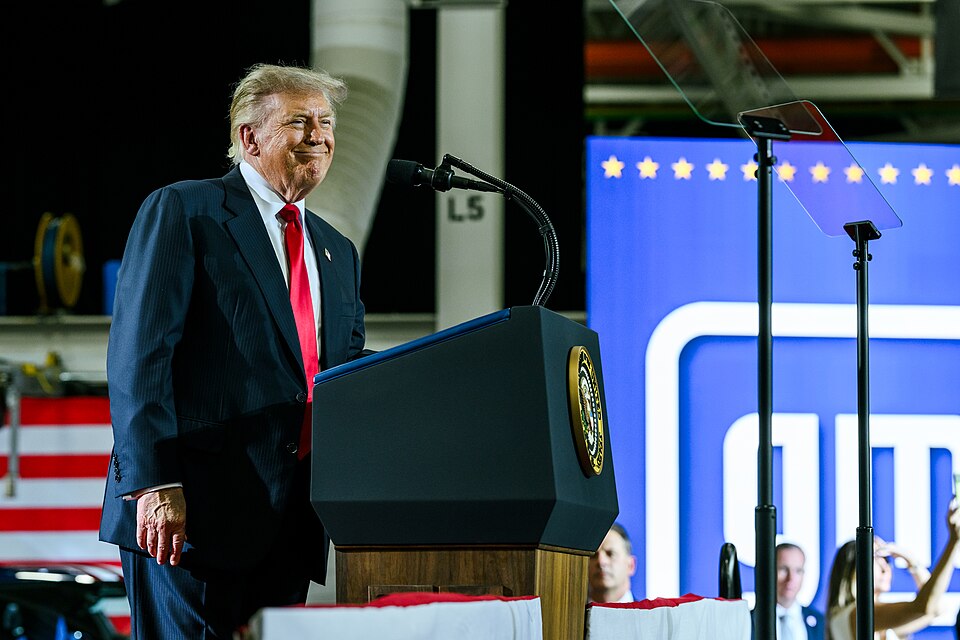
President Donald Trump has made a major political endorsement, but Vice President JD Vance is refusing to follow his lead.
The unexpected disagreement involves Israeli Prime Minister Benjamin Netanyahu, whose political future will soon be decided by voters in Israel.
Trump has publicly thrown his support behind Netanyahu. Vance, however, has made it clear that he has no intention of joining that endorsement.
The decision is drawing attention because it reveals a noticeable difference between the president and vice president on a major foreign political issue.
And Vance’s explanation is raising additional questions about where he stands.
Vance Refuses To Follow Trump’s Lead
During an October 19 interview with journalist Mark Halperin, Vance was asked whether he would endorse Netanyahu after Trump announced his support for the Israeli leader.
The vice president declined.
“I endorse American candidates,” Vance explained, emphasizing that his attention remains on the upcoming U.S. midterm elections.
He also made it clear that he does not intend to interfere in Israel’s election.
Vance stressed that his refusal should not be interpreted as opposition to Netanyahu.
Instead, he presented his decision as a matter of political priorities.
Nevertheless, the answer means Trump and Vance are taking different public positions on Netanyahu’s reelection campaign.
That difference comes at a significant moment for both American and Israeli politics.
Trump Gives Netanyahu His Full Support
President Trump announced his endorsement of Netanyahu on October 18, offering strong praise for the Israeli prime minister.
Trump described Netanyahu as a capable wartime leader and highlighted their cooperation in confronting Iran.
The president also expressed confidence in Netanyahu’s ability to continue leading Israel through a difficult period.
His endorsement arrives ahead of Israel’s October 27 parliamentary election, when voters will determine the balance of power in the country’s government.
Trump’s decision reflects his close political relationship with Netanyahu and his willingness to support foreign leaders he considers important American partners.
The president has previously weighed in on elections outside the United States.
Vance, however, appears reluctant to become involved in this particular contest.
Vance’s Previous Endorsement Raises Questions
One detail makes the vice president’s decision especially noteworthy.
Earlier this year, Vance traveled to Hungary to support Prime Minister Viktor Orbán during his reelection campaign.
Trump also backed Orbán, whose political party ultimately lost the election.
That earlier involvement creates an obvious question.
Why was Vance willing to support a foreign leader in Hungary but unwilling to endorse Netanyahu in Israel?
Vance has not publicly explained that distinction in detail.
His comments to Halperin focused instead on his desire to concentrate on American elections.
The difference does not necessarily indicate a disagreement over Israel’s importance as an American ally.
However, it demonstrates that Vance is willing to make his own decisions about which foreign political campaigns deserve his public involvement.
Are Trump And Vance Divided Over Israel?
The president and vice president have generally presented a united front on the administration’s major priorities.
Both have emphasized American national security and the importance of protecting U.S. interests.
However, questions about America’s involvement in overseas conflicts have become increasingly important within Republican political discussions.
Some Republicans place considerable emphasis on maintaining strong American support for Israel.
Others argue that the United States should exercise greater caution when becoming involved in foreign political disputes and military conflicts.
Vance has frequently emphasized the importance of evaluating international commitments through the lens of American interests.
His latest remarks are consistent with that emphasis, although he did not describe his decision as a rejection of Trump’s foreign policy.
There is also an important distinction between refusing to endorse Netanyahu and actively opposing him.
Vance has not endorsed Netanyahu’s opponents, criticized Trump’s decision, or announced any break with the administration’s Israel policy.
For now, the disagreement concerns political endorsements rather than an announced change in American policy.
Midterm Elections Become Vance’s Priority
While Trump is weighing in on Israel’s election, Vance says his attention is focused on the November midterms.
Republicans are preparing for important congressional contests that will determine which party controls the House and Senate.
The outcome could have major consequences for Trump’s remaining time in office.
Vance has been campaigning for Republican candidates, including North Carolina Senate nominee Michael Whatley.
The vice president’s involvement reflects the administration’s efforts to support its congressional allies before voters head to the polls.
With economic concerns, government spending, immigration, and national security remaining prominent political issues, Republican leaders face a demanding campaign schedule.
Vance’s explanation suggests he would rather devote his political influence to those races than become involved in Israel’s domestic election.
What Does This Mean For Trump And Vance?
The disagreement has generated attention, but there is currently no clear evidence that it represents a serious falling-out between the president and vice president.
Vance praised the influence of Trump’s political endorsements even as he declined to offer one of his own.
He also avoided criticizing Netanyahu.
Still, the episode highlights an interesting dynamic within the administration.
Trump has demonstrated that he is prepared to make international political endorsements when he believes a foreign leader deserves his backing.
Vance is drawing a different line, at least when it comes to Netanyahu’s reelection campaign.
With Israel’s election approaching on October 27 and America’s midterms following in November, both political contests are entering a decisive period.
For now, Trump is standing behind Netanyahu, while Vance is refusing to follow his endorsement.
Whether the disagreement remains an isolated political decision or leads to further questions about their foreign policy priorities will become clearer in the weeks ahead.