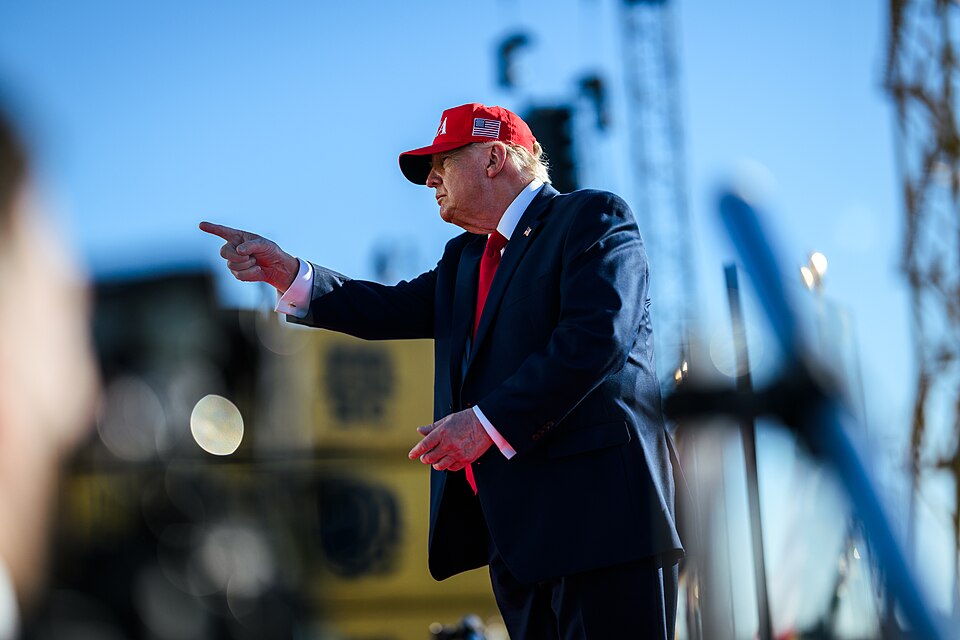
Here’s what President Trump and his administration just said.
President Donald Trump’s administration has launched an extraordinary legal challenge against Alaska, seeking to block certification of the state’s U.S. Senate election results under circumstances that could prevent a Democratic victory from being finalized.
The Justice Department filed the lawsuit Thursday, October 22, as Republicans work to protect their Senate majority ahead of the November 3 midterm elections.
The legal action centers on Republican Sen. Dan Sullivan, who is facing a competitive reelection battle against former Democratic Rep. Mary Peltola.
Federal officials argue that an unusual ballot controversy involving two candidates with nearly identical names could confuse voters and ultimately determine the election’s outcome.
But the administration’s decision to pursue legal intervention before voters even head to the polls has sparked a heated debate over election integrity, states’ rights, and federal authority.
Trump Administration Moves To Block Alaska Election Results
The Justice Department is asking a federal court to prevent Alaska from certifying its Senate election results if incumbent Republican Sen. Dan S. Sullivan loses by a smaller margin than the number of votes received by another candidate named Daniel J. Sullivan Jr.
The administration argues that the similar names could cause voters intending to support the incumbent senator to accidentally select the other candidate.
In a closely contested race, those votes could potentially make the difference between a Republican victory and a Democratic win.
President Trump has backed the lawsuit and said he directed the Justice Department to take action.
The legal challenge does not seek to cancel the November election outright. Instead, it attempts to establish conditions under which the state would be prevented from immediately certifying a particular election outcome.
That distinction could become extremely important if the Senate race is decided by a narrow margin.
Two Candidates Named Sullivan Create Election Controversy
At the center of the dispute is an unusual situation involving two men with remarkably similar names.
Republican incumbent Dan S. Sullivan is seeking another term in the Senate, while Daniel J. Sullivan Jr. is running as a separate candidate.
The Justice Department alleges that the second Sullivan’s candidacy could mislead voters and divert support away from the incumbent Republican.
However, those allegations have not been established as fact.
Alaska’s election officials previously attempted to remove the second Sullivan from the ballot, but the Alaska Supreme Court ruled in June that his candidacy could proceed.
The ballot distinguishes the candidates through their names and identifying information, but federal officials contend that confusion remains possible.
For voters, the controversy underscores the importance of reviewing candidate information carefully before submitting a ballot.
Alaska Senate Race Could Determine Control Of Congress
The dispute comes at a particularly important moment for Republicans.
Democrats are attempting to gain Senate seats in the November midterms, and Alaska has emerged as a closely watched battleground.
Mary Peltola, who previously represented Alaska in the U.S. House, is challenging Sullivan in a race with national implications.
Alaska has traditionally supported Republicans in presidential elections, but its statewide races can be competitive.
A Democratic victory could complicate Republican efforts to maintain their Senate majority.
The state’s ranked-choice voting system also makes the election different from traditional contests.
Under ranked-choice voting, residents can rank multiple candidates in order of preference. If no candidate receives a majority of first-choice votes, additional counting rounds help determine the winner.
The presence of two candidates sharing the Sullivan name has added another layer of controversy to an already closely watched election.
Critics Question Justice Department’s Authority
The administration’s lawsuit has drawn criticism from election law specialists who question whether the federal government has the authority to intervene in Alaska’s election certification process.
Critics argue that election results should be determined through votes cast under state law, rather than through a federal challenge based on hypothetical voter confusion.
The Justice Department maintains that the situation presents an election integrity concern requiring judicial attention.
The disagreement raises a broader constitutional question about the relationship between federal officials and states responsible for administering elections.
States traditionally oversee voting procedures and certification, although federal laws also govern certain aspects of congressional elections.
Whether those federal provisions authorize the intervention requested in Alaska will ultimately depend on the courts.
What Happens If Republican Dan Sullivan Loses?
The lawsuit could become especially significant if Peltola defeats the incumbent senator by a narrow margin.
The administration wants certification delayed if the margin of defeat is smaller than the votes received by the other Sullivan candidate.
Under that scenario, federal officials argue that further examination would be necessary to determine whether voter confusion influenced the results.
However, votes for one candidate cannot simply be assumed to have been intended for another.
Determining voter intent could present substantial legal and practical challenges, particularly because Americans cast secret ballots.
If the incumbent senator wins outright, the specific certification dispute raised by the administration might never become an issue.
Either way, the lawsuit has brought additional national attention to Alaska’s Senate election.
What Happens Next?
Alaska voters are scheduled to cast their ballots on November 3, while the legal fight over certification could continue in federal court.
The Justice Department has requested judicial intervention, but no court ruling granting that request had been established in the reporting available as of October 23.
For Republicans, the case raises questions about protecting voters from possible ballot confusion.
For critics, it raises equally serious concerns about whether federal intervention could interfere with the normal certification of election results.
The outcome could carry consequences beyond Alaska, particularly as Americans prepare to elect a new Congress.
For now, the central question remains whether a federal judge will allow the Trump administration to delay certification of an Alaska Senate election if the Republican incumbent narrowly loses.
With Election Day approaching, all eyes will be on Alaska as voters prepare to make their decision in one of the nation’s most closely watched Senate races.