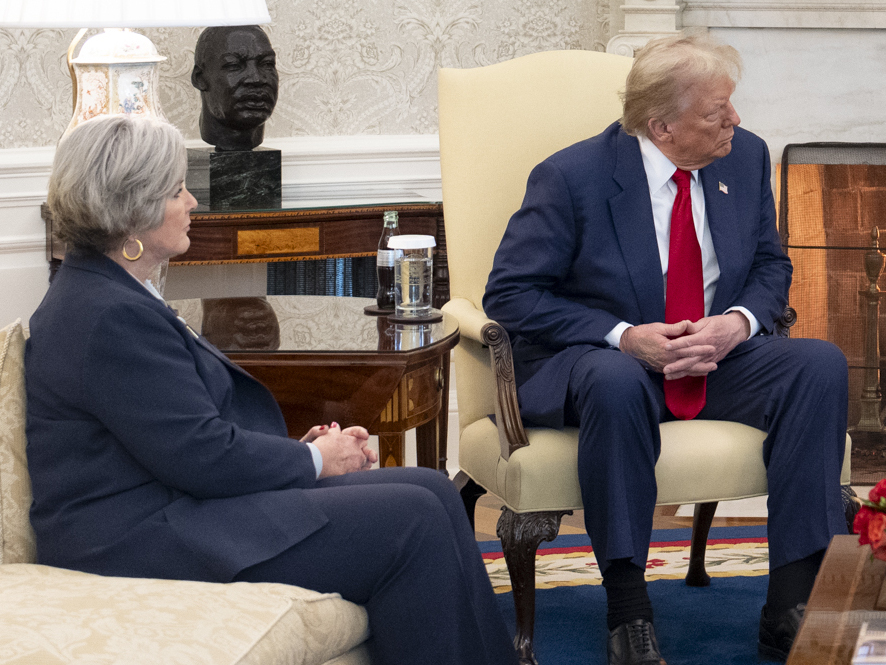
President Donald Trump may be facing an unexpected political challenge from someone who once stood among his closest and most trusted advisers.
Former White House Chief of Staff Susie Wiles has departed her powerful position following Republican losses in the 2026 midterm elections. Now, political author Michael Wolff is raising questions about whether she could eventually turn against the president.
Wolff believes Wiles may continue treating Trump respectfully in public while privately looking for opportunities to weaken his political influence.
The prediction has brought renewed attention to a major White House leadership shakeup, particularly as Trump prepares to work with a newly empowered Democratic Congress.
However, there is no confirmed evidence that Wiles is planning revenge or taking action against Trump.
Former Trump Insider Could Become Political Problem
Wiles was no ordinary White House employee.
As a central figure in Trump’s successful 2024 presidential campaign, she helped organize the political operation that returned him to the Oval Office.
She subsequently became the first woman to serve as White House chief of staff, assuming responsibility for managing senior advisers, coordinating administration priorities, and maintaining order within the president’s inner circle.
Her departure on November 6, 2026, marked one of the most significant personnel changes of Trump’s second administration.
During a November 10 episode of the podcast Inside Trump’s Head, Wolff discussed what might happen now that Wiles is no longer overseeing daily White House operations.
His prediction suggested that the relationship between Trump and his former chief of staff could become considerably more complicated.
Wolff argued that Wiles understands political power and knows how to protect her interests even after leaving a prominent government position.
Michael Wolff Raises Questions About Wiles’ Loyalty
According to Wolff, Wiles could maintain an appearance of loyalty while pursuing a different strategy behind the scenes.
He suggested that she might publicly avoid criticizing the president while privately supporting efforts that could diminish his influence.
Wolff characterized Wiles as an experienced political strategist with significant connections throughout Republican politics.
Those relationships could allow her to remain influential outside the White House, particularly as the Republican Party considers its future following disappointing election results.
The author also suggested that Wiles would be motivated by her personal and professional interests rather than any obligation to remain politically loyal to Trump.
His remarks have sparked questions about whether the president could eventually find himself at odds with a longtime ally.
Nevertheless, Wolff’s comments represent his personal assessment of the situation. They do not establish that Wiles has secretly organized an effort against Trump.
Questions Surround Wiles’ Daughter And Political Connections
Wolff also raised questions about the role Wiles’ family relationships could play in her political future.
He specifically mentioned her daughter, Katie Wiles, who has been involved in political consulting.
According to Wolff, Wiles has a strong interest in protecting her daughter’s professional opportunities.
He suggested that concerns about her daughter’s career and relationships within Republican political circles could influence the former chief of staff’s decisions.
The comments come amid broader scrutiny of political consulting relationships involving individuals connected to the administration.
However, Wolff’s assertions about Wiles’ motivations remain unproven, and there is no established evidence that she intends to use those relationships to undermine Trump.
For many Americans, the larger issue is whether influential Washington insiders can separate personal business interests from their political responsibilities.
Those questions extend far beyond any single administration.
Trump Replaces Wiles With Stephen Miller
While speculation surrounding Wiles continues, Trump has already moved forward with a major leadership change.
On November 6, the president announced that longtime adviser Stephen Miller would become his new White House chief of staff, beginning November 9.
Miller has played an important role in developing and advancing Trump’s immigration and border security policies.
He has also been among the president’s most recognizable political allies since the 2016 campaign.
The appointment places a committed supporter of Trump’s America First agenda in charge of coordinating the White House’s daily activities.
Trump praised Wiles’ service while announcing the transition, describing her work favorably and indicating that she would move into his political operation.
That announcement is particularly significant because it suggests Wiles may remain connected to Trump’s broader political activities rather than breaking away entirely.
Miller’s promotion also signals that the president intends to maintain a strong focus on his administration’s policy priorities despite the recent election setbacks.
Republican Election Losses Trigger White House Shakeup
The leadership change followed the November 2026 midterm elections, when Republicans lost control of both the House of Representatives and the Senate.
Those defeats created new political difficulties for Trump as he entered the final two years of his presidency.
According to reports from multiple news organizations, the president privately expressed frustration with the election results and questioned aspects of the Republican campaign strategy.
Wiles submitted her resignation shortly afterward.
Trump publicly maintained that he wanted to make a leadership change and praised his outgoing chief of staff.
The circumstances surrounding her departure have nevertheless encouraged political commentators to examine whether internal disagreements contributed to the decision.
For the administration, the consequences could extend beyond personnel changes.
A Democratic-controlled Congress will have greater opportunities to challenge Trump’s legislative priorities, examine executive actions, and conduct oversight of federal agencies.
That makes coordination among senior White House advisers especially important.
Could Wiles Turn Against Trump?
Despite the dramatic speculation, there are reasons to question whether Wiles is preparing to become an opponent of the president.
Following her departure, she publicly expressed appreciation for the opportunity to serve in the White House.
She also reaffirmed her commitment to Trump and his political mission.
Those statements stand in contrast to Wolff’s prediction that she might privately work against him.
Additionally, Trump’s announcement that Wiles would transition to his political operation suggests that an ongoing professional relationship remains possible.
Still, Washington relationships can change quickly, especially following unexpected election defeats and major leadership transitions.
Former administration officials often maintain substantial influence through political consulting, campaign organizations, and relationships with elected officials.
Wiles’ extensive experience could make her an important figure in Republican politics regardless of her formal position.
Whether she chooses to use that influence in support of Trump or eventually pursues a different political direction remains unknown.
What Happens Next For Trump And The Republican Party?
The immediate challenge for Trump is maintaining unity within his administration while preparing for a more difficult political environment in Congress.
Stephen Miller’s appointment represents an important change in how the White House will be managed.
At the same time, Wiles’ departure creates uncertainty about the future of one of Trump’s most successful political partnerships.
The president must also navigate disagreements over campaign strategy, government spending, immigration enforcement, and the Republican Party’s direction heading into the next presidential election.
For voters who supported Trump’s promises to strengthen border security, encourage economic growth, and reduce unnecessary government spending, the administration’s ability to deliver results remains a central concern.
Internal political disagreements could complicate those efforts if they distract senior officials from governing priorities.
However, there is currently no verified indication that Wiles intends to become part of such a conflict.
Is A New Trump Rivalry Really Developing?
Michael Wolff’s prediction has attracted attention because it involves a political strategist who helped engineer one of the most significant comebacks in modern American presidential politics.
Wiles knows Trump’s political operation, understands Republican campaign strategy, and has developed relationships with influential figures throughout the party.
Those connections could make her an important political player for years to come.
But possessing influence is not the same as planning revenge.
For now, the suggestion that Wiles could secretly move against Trump remains speculation from a political commentator rather than a demonstrated political plot.
The biggest question is whether Trump and Wiles will preserve their longtime partnership or whether their relationship will change as the administration faces new political challenges.
With Stephen Miller now leading White House operations and Wiles moving into a different role, the coming months could provide a clearer answer.