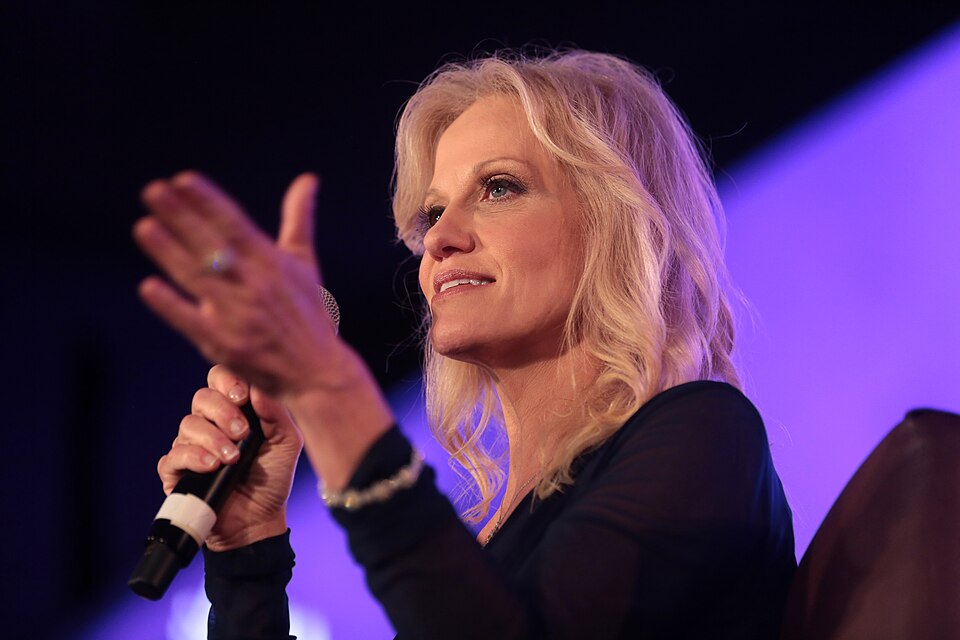
Here’s what was said.
Former White House adviser Kellyanne Conway is sounding the alarm over Republican campaign spending, arguing that billions of dollars were wasted on political advertisements that failed to deliver victories in the 2026 midterm elections.
Conway, one of President Donald Trump’s most recognizable political allies, expressed frustration with the Republican Party’s advertising strategy following major Democratic gains in the November 3 elections.
Her criticism centered on how Republican campaigns spent enormous amounts of money, the consultants who benefited financially, and whether party leaders failed to recognize changing voter habits.
The remarks have sparked fresh questions about how Republicans managed their considerable financial resources during one of the most consequential election cycles in recent years.
Conway Slams GOP Over Billions in Campaign Spending
Speaking Wednesday on Fox News’ The Ingraham Angle, Conway joined host Laura Ingraham in discussing what went wrong for Republicans.
Ingraham questioned why Republican campaigns spent so heavily on television commercials while failing to reach younger voters through streaming platforms, YouTube, and other digital outlets.
Conway agreed that the party’s spending decisions deserved serious scrutiny.
She argued that political campaigns now have access to more affordable communication tools than ever before, yet election spending continues to reach extraordinary levels.
According to Conway, Republican strategists failed to take full advantage of those opportunities.
Her criticism was especially sharp toward the political consulting industry, which she suggested continues to profit even when candidates lose.
The former Trump adviser summarized her frustration with the campaign spending by declaring that Republicans had effectively set billions of dollars on fire.
Republican Consultants Face Serious Questions
Conway’s comments highlighted an issue that has troubled political donors for years: the relationship between campaign spending and the compensation received by political consultants.
Campaigns frequently hire outside firms to produce advertisements, purchase television airtime, manage communications, and develop election strategies.
Those services can generate substantial fees, particularly during expensive congressional and statewide contests.
Conway argued that political consultants can continue making money regardless of the final election results.
She also suggested that some consultants collect significant percentages of campaign expenditures through legally permitted arrangements.
Her comments raised questions about whether campaign professionals have enough financial incentive to minimize unnecessary spending.
For Republican donors who contributed money expecting electoral success, the criticism highlights an important issue: whether campaign contributions were used in the most effective way possible.
However, Conway did not present evidence that Trump personally stole campaign funds or engaged in illegal financial activity.
Her criticism focused on spending priorities, campaign advertising, and the professionals managing Republican political operations.
Republicans Spent Heavily But Still Suffered Defeats
The scale of political spending during the 2026 elections helps explain Conway’s frustration.
According to the Wesleyan Media Project, advertising expenditures across House, Senate, and gubernatorial races had exceeded $7.1 billion by October 25, more than a week before Election Day.
That included approximately $3 billion in Senate advertising and another $2 billion in House races.
Traditional broadcast television accounted for more than half of campaign advertising expenditures during the election cycle.
Despite the enormous investment, Republicans suffered significant losses as Democrats captured control of both chambers of Congress.
The results demonstrated that financial advantages do not automatically produce electoral victories.
Republican candidates and organizations invested heavily in competitive races, but the party’s advertising efforts were not enough to overcome Democratic momentum.
The disappointing outcome has increased pressure on Republican officials to explain how campaign resources were allocated and whether different strategies might have produced better results.
Trump-Linked Political Groups Spent Hundreds of Millions
President Trump’s political operation was also a major source of campaign funding during the election.
According to an Associated Press report published October 21, Trump’s flagship super PAC, MAGA Inc., had reported spending nearly $277 million since the beginning of September.
That spending included substantial transfers to affiliated political organizations supporting Republican candidates.
The financial commitment demonstrated the importance Trump and his allies placed on protecting Republican control of Congress.
However, the president’s political allies were unable to prevent the Democratic victories that followed.
Conway’s criticism puts additional attention on whether Republican political organizations relied too heavily on expensive advertising rather than developing more effective outreach strategies.
Importantly, her remarks were not an allegation that Trump personally misappropriated the money.
Instead, they reflected broader frustration with how Republicans spent campaign contributions and whether consultants delivered sufficient results.
Conway Says Republicans Are Missing Voters
Another major concern raised during the Fox News discussion involved the Republican Party’s approach to reaching voters.
Ingraham argued that Republican campaigns failed to make sufficient use of streaming services, digital media, and platforms popular with younger Americans.
Conway emphasized that voters now consume information through multiple channels, including social media and online video.
She questioned the wisdom of repeatedly airing the same television advertisements when viewers may already be familiar with the message.
In her view, constantly repeating commercials can become irritating rather than persuasive.
That argument points to a growing challenge for both political parties.
Traditional television remains an important communication tool, particularly for audiences that continue to watch live news and local programming.
However, the expanding popularity of streaming services and online media has made campaign advertising more complicated.
Reaching voters effectively increasingly requires a combination of television, digital advertising, direct voter contact, and other communication methods.
Conway’s criticism suggests that Republican campaigns may need to reconsider how they divide their advertising budgets among these platforms.
What Does This Mean For Republican Donors?
The financial controversy raises broader questions about accountability within political fundraising organizations.
Republican campaigns rely on contributions from individual supporters, political action committees, and major donors to finance their election efforts.
Those contributions help pay for everything from television commercials and campaign staff to voter outreach programs and election operations.
When campaigns spend substantial amounts without achieving their desired results, donors may reasonably question whether their contributions were used efficiently.
Conway’s remarks highlight the importance of evaluating campaign expenditures based on measurable outcomes rather than simply the amount of money raised.
Political organizations must determine whether their advertising strategies successfully reach voters, communicate important messages, and encourage electoral participation.
Spending additional money on an ineffective strategy does not necessarily improve its chances of success.
GOP Faces Pressure To Change Its Strategy
Following the disappointing midterm results, Republicans face difficult decisions about their political future.
The party must evaluate its campaign messaging, fundraising priorities, advertising expenditures, and ability to reach voters across different age groups.
Conway’s criticism adds another dimension to that discussion by focusing on the financial incentives within the political consulting industry.
Her comments also underscore a larger reality of modern elections: money can help campaigns compete, but it cannot guarantee victory.
For Trump and other Republican leaders, rebuilding their congressional strength may require more than increasing fundraising totals.
It may also require greater oversight of campaign expenditures, more effective communication strategies, and closer scrutiny of the consultants responsible for managing political advertising.
What Happens Next?
Conway’s warning comes at a challenging time for Republicans as the party examines its election losses and prepares for future political contests.
Her comments reflect frustration over the vast sums spent during the midterms and the limited success those expenditures produced.
Although some may interpret her criticism as a challenge to Trump’s political operation, Conway directed much of her frustration toward Republican campaign consultants and advertising decisions rather than accusing the president of personal financial wrongdoing.
The broader debate is likely to continue as party leaders consider whether established campaign strategies remain effective.
For Republican supporters and donors, the fundamental question is straightforward: If billions of dollars in political advertising failed to produce the desired results, what should the party do differently next time?
The answer could shape Republican campaign strategies for years to come.