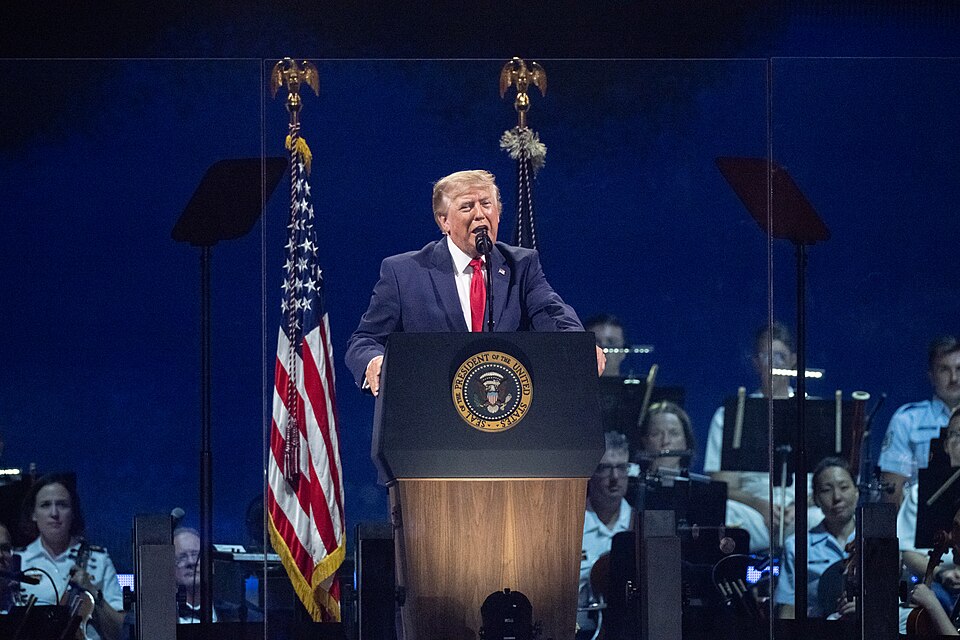
Trump was not happy.
President Donald Trump delivered one of his sharpest criticisms of NATO allies in recent memory on Tuesday, using the alliance’s annual summit to question whether several European nations are doing enough to support the United States.
Speaking after an elaborate welcome in Turkey, Trump praised Turkish President Recep Tayyip Erdoğan while taking aim at multiple NATO members over defense spending, military cooperation, and what he described as an unequal partnership that has placed too much of the burden on American taxpayers.
The president also revived his push for U.S. control of Greenland and warned that Europe faces serious long-term challenges if it fails to address immigration and energy policies.
Trump Receives Grand Welcome In Turkey
Trump’s visit began with an elaborate state reception in Ankara that stood in sharp contrast to his criticism of other NATO allies.
Erdoğan personally greeted the president upon his arrival before accompanying him to the presidential complex. Trump’s motorcade was escorted through the Turkish capital by ceremonial horseback riders carrying both American and Turkish flags, highlighting the close relationship both leaders sought to display.
The president also greeted members of Turkey’s honor guard with a brief phrase in Turkish before viewing historical military displays featuring uniforms, weapons, and traditions from the country’s long history.
The ceremony underscored Turkey’s effort to strengthen ties with Washington as discussions continue over defense cooperation and expanded military partnerships.
Trump Questions NATO’s Commitment
After arriving at the presidential compound, Trump wasted little time expressing frustration with the alliance.
The president said he was disappointed with NATO and suggested that Turkey’s leadership played a major role in his decision to attend this year’s summit.
Trump argued that the United States has spent decades defending its allies while receiving too little support in return when America faces its own security challenges.
His comments echoed a long-running position that many NATO members have relied too heavily on American military strength instead of investing adequately in their own defense capabilities.
European Allies Face Fresh Criticism
Trump singled out several major European countries, including Germany, France, Italy, and the United Kingdom, accusing them of refusing to provide greater assistance during recent tensions involving Iran.
According to the president, those decisions reinforced his belief that many NATO members expect American support without offering the same level of commitment when the United States requests assistance.
Trump argued that the imbalance raises important questions about the future of the alliance and whether America’s financial contributions remain justified.
For years, he has maintained that European governments should shoulder a greater share of collective defense costs rather than depending so heavily on U.S. taxpayers.
Defense Spending Remains Trump’s Top Priority
One of the central issues expected to dominate the NATO summit is defense spending.
Trump has consistently pushed alliance members to increase military funding, arguing that every country should contribute more toward its own national security.
Administration officials have indicated the president will continue pressing allies to support a goal requiring NATO members to spend at least 5% of their gross domestic product on defense.
Supporters argue that higher spending would strengthen the alliance and reduce America’s financial burden, while critics contend that reaching such a target would be difficult for many European governments.
Trump Revives Greenland Proposal
Trump also returned to another issue that has generated international attention in recent years: Greenland.
The president repeated his belief that the Arctic territory holds enormous strategic importance for the United States because of its location between North America and Europe and its growing significance amid increased Russian and Chinese activity in the region.
Trump argued that Denmark has failed to fully appreciate Greenland’s strategic value and said the territory would better serve American security interests under U.S. control.
The proposal has previously been rejected by Danish officials, but Trump made clear he still views Greenland as a vital national security priority.
Warning Over America’s Military Presence In Europe
While discussing relations with NATO, Trump suggested America’s military commitment to Europe should not be taken for granted.
He noted that the United States has maintained a significant military presence across the continent for decades but indicated future deployments could be reconsidered if allies continue falling short of American expectations.
The remarks reflected Trump’s broader “America First” approach, which emphasizes reducing overseas commitments unless partner nations contribute more equally to shared defense responsibilities.
Trump Issues Stark Warning About Europe’s Future
Beyond military issues, Trump warned that Europe faces growing internal challenges that could reshape the continent in the coming decades.
The president argued that immigration and energy policy remain two of the biggest threats confronting European governments today.
According to Trump, leaders who fail to address those issues risk undermining both their economies and national security.
His comments reflected themes that have become central to his foreign policy message, emphasizing stronger borders, increased energy independence, and national sovereignty.
NATO Summit Highlights Ongoing Debate
Trump’s remarks are expected to fuel continued debate over the future direction of NATO as member nations weigh increased defense spending, evolving security threats, and America’s role within the alliance.
Supporters of the president argue his tougher approach has pushed allies to contribute more to collective defense and has forced long-overdue conversations about burden-sharing. Critics, meanwhile, contend that his confrontational style risks straining relationships with longtime partners.
As the summit continues, defense spending, military readiness, regional security, and America’s leadership role within NATO are expected to remain among the gathering’s most closely watched issues.