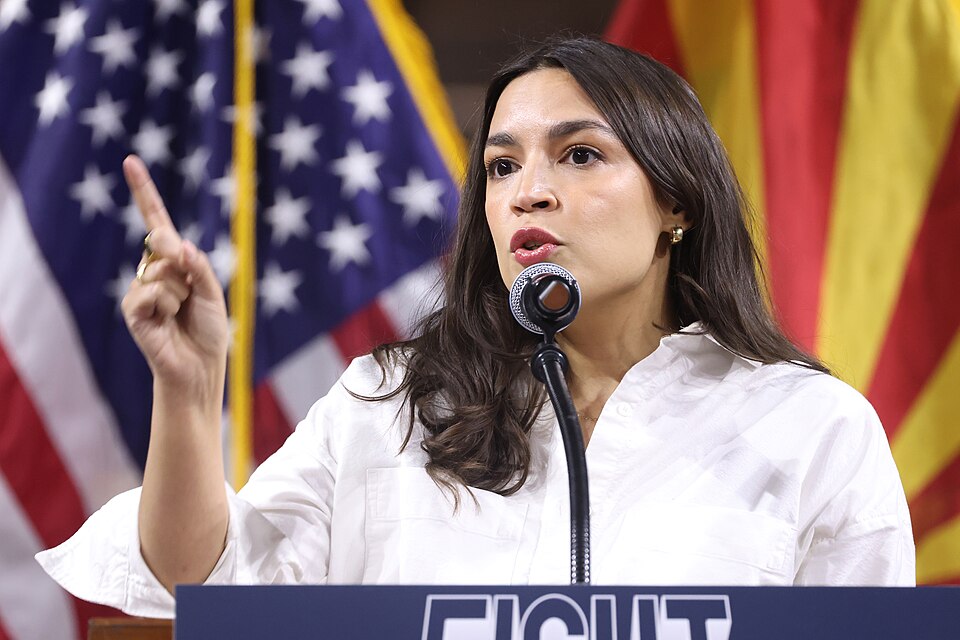
Here’s what AOC said.
A growing dispute between two Democratic lawmakers has erupted into a public confrontation, with Rep. Alexandria Ocasio-Cortez sharply criticizing Michigan Rep. Haley Stevens over her decision to support a Republican candidate in the 2026 Senate election.
The controversy has intensified following reports that Stevens has been spending time with Republican lawmakers on Capitol Hill, raising new questions about her relationship with the Democratic Party.
Ocasio-Cortez, one of the most recognizable progressive Democrats in Congress, has accused Stevens of abandoning her party after losing a contentious Senate primary.
The disagreement comes as Democrats continue dealing with divisions exposed during the midterm elections.
Ocasio-Cortez Calls Out Fellow Democrat
During an appearance on The Don Lemon Show, Ocasio-Cortez accused Stevens of increasingly associating with Republicans since returning to Washington.
According to the New York congresswoman, Stevens has been spending time on the Republican side of the House chamber.
The remarks followed reports that Stevens had been seen in areas of the Capitol normally used by Republican lawmakers.
Ocasio-Cortez also revealed details of a private telephone conversation she said took place before Stevens made her controversial endorsement.
She claimed Stevens had personally denied rumors that she was considering withdrawing her support for Democratic Senate nominee Abdul El-Sayed.
However, Stevens later announced that she would support Republican Mike Rogers instead.
Ocasio-Cortez described the reversal as an example of politicians allowing personal political interests to influence their decisions.
The criticism marked another chapter in an increasingly bitter disagreement between the two Democratic lawmakers.
Haley Stevens Makes Controversial Endorsement
The dispute originated during Michigan’s closely contested Democratic Senate primary.
Stevens had sought the Democratic nomination but narrowly lost to El-Sayed, a progressive candidate supported by Ocasio-Cortez and Sen. Bernie Sanders.
Following her defeat, Stevens initially endorsed El-Sayed for the general election.
That support eventually collapsed.
On November 1, just two days before the election, Stevens announced she was endorsing Rogers, a former Republican congressman backed by President Donald Trump.
The unexpected move immediately attracted national attention.
Stevens appeared alongside Rogers at a Detroit church service, presenting her decision as a matter of personal conviction rather than political allegiance.
Although she continued identifying herself as a Democrat, Stevens argued that supporting Rogers was the right decision for Michigan.
Her endorsement was unusual because it involved a sitting Democratic member of Congress publicly supporting a Republican nominee in a competitive Senate election.
Democratic Leaders React to Stevens’ Decision
Stevens’ endorsement triggered criticism from several prominent Democrats.
Senate Minority Leader Chuck Schumer condemned the decision, calling it a betrayal of the party’s Senate candidate.
Michigan Democratic officials also expressed frustration over Stevens’ decision to support Rogers.
Ocasio-Cortez went further, suggesting that the endorsement reflected a broader problem with politicians who put personal grievances ahead of their party’s electoral interests.
The New York congresswoman also criticized Stevens for announcing her support at a predominantly Black church in Detroit.
She argued that backing Rogers conflicted with Democratic positions on abortion rights and minimum-wage policy.
Those comments added another dimension to an already heated dispute involving party loyalty, campaign disagreements, and competing political priorities.
Stevens Defends Her Decision
Stevens has offered a different explanation for her controversial endorsement.
The Michigan congresswoman maintained that her decision was motivated by concerns about El-Sayed’s leadership and political associations.
Disagreements involving Israel and accusations of antisemitism had created tensions between Stevens and El-Sayed’s supporters during the campaign.
Stevens also criticized a political advertisement from an outside organization that connected U.S. financial assistance to Israel with economic problems facing American households.
El-Sayed distanced himself from the advertisement and said he disagreed with its contents.
Nevertheless, the disagreement continued.
Stevens later said she believed El-Sayed was not qualified to serve in the United States Senate.
She also argued that supporting a Republican candidate in one race did not mean abandoning her Democratic principles.
Rogers welcomed the endorsement and praised Stevens for putting what he described as the interests of Michigan ahead of partisan considerations.
Michigan Senate Race Exposes Democratic Divisions
The confrontation highlights tensions between the Democratic Party’s progressive and moderate factions.
Ocasio-Cortez has become a prominent advocate for progressive economic and social policies, while Stevens has generally represented a more moderate approach to Democratic politics.
Those differences became particularly visible during Michigan’s Senate primary.
El-Sayed’s victory over Stevens reflected the strength of progressive voters in the race, but it also left unresolved disagreements among some Democrats.
The subsequent endorsement of Rogers demonstrated how deeply those divisions had developed.
For Republicans, the unexpected support from a Democratic congresswoman provided an opportunity to highlight disagreements within the opposing party.
For Democratic leaders, the endorsement raised concerns about whether candidates could unite their supporters after competitive primary elections.
The controversy has continued even after the November election, with Ocasio-Cortez openly questioning Stevens’ political conduct.
What Does This Mean for the Democratic Party?
The dispute between Ocasio-Cortez and Stevens illustrates the challenges political parties face when lawmakers disagree over candidates and major policy issues.
Although Stevens has insisted that she remains a Democrat, her endorsement of Rogers created a public rift with party leaders.
Ocasio-Cortez’s latest criticism suggests that those disagreements have not been resolved.
The controversy also raises broader questions about how political parties handle dissent and whether elected officials should be expected to support their party’s nominees regardless of personal objections.
As Congress moves toward a new legislative session, the disagreement serves as another reminder that political divisions do not always fall neatly along Republican and Democratic lines.
For now, the conflict between Ocasio-Cortez and Stevens remains a prominent example of the internal disagreements that emerged during the 2026 election cycle.