A major decision now rests on Trump’s shoulders.
As tensions rise in the Middle East, President Donald Trump now faces one of the most serious foreign policy decisions of his presidency.
Iran walked away from nuclear negotiations in Geneva without agreeing to dismantle its atomic program — raising the possibility that U.S. military action could be imminent.
With a self-imposed deadline approaching, the White House has intensified preparations while leaving the door open for diplomacy.
For many Americans — particularly those who remember the instability of past Middle East conflicts — the situation feels both urgent and familiar.
Iran Nuclear Talks Fail To Produce Agreement
After more than six hours of discussions, U.S. and Iranian negotiators left Geneva without a finalized deal.
Follow-up technical talks are expected in Vienna, home of the International Atomic Energy Agency (IAEA). However, Iranian state media confirmed that Tehran rejected Washington’s primary demand: full dismantlement of its nuclear infrastructure and surrender of enriched uranium stockpiles.
Iranian officials also insist that U.S. sanctions must be lifted.
President Trump has made his position clear:
He prefers a negotiated solution — but he will not allow Iran to obtain a nuclear weapon.
“All options remain on the table,” he has repeatedly stated.
That includes military force.
Massive U.S. Military Buildup Signals Readiness
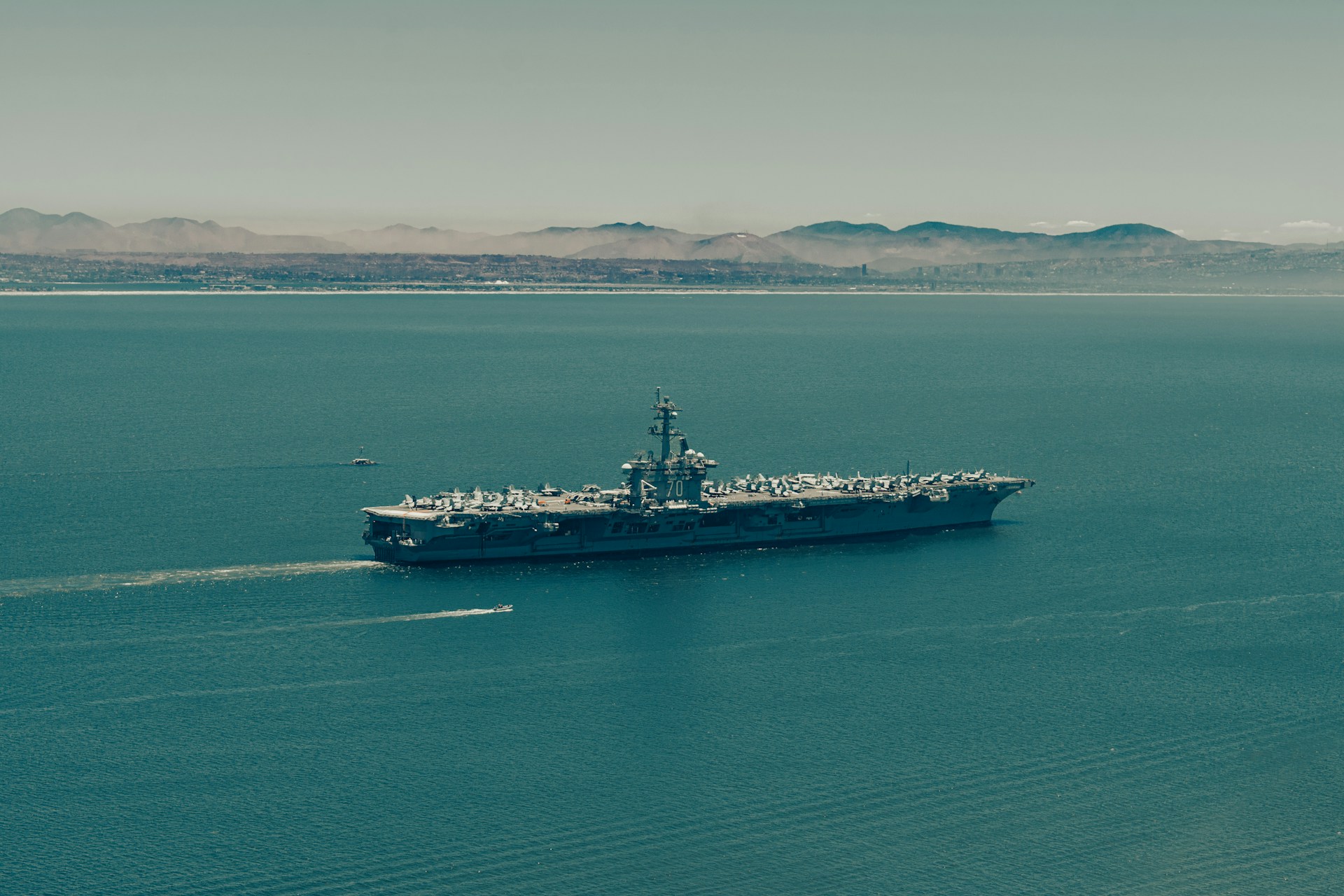
While diplomacy stalls, the Pentagon has moved significant assets into the region.
Currently deployed:
- USS Gerald R. Ford carrier strike group
- USS Abraham Lincoln carrier strike group
- Over 200 U.S. military aircraft
- Additional F-35 fighter jets repositioned to the region
Defense analysts say this is one of the largest American force concentrations in the Middle East since the early 2000s.
The positioning allows for rapid response — whether limited precision strikes or broader defensive operations to protect allies like Israel.
Historically, President Trump has favored decisive but targeted military actions rather than prolonged entanglements.
What The United States Is Demanding
U.S. negotiators have reportedly insisted on:
- Permanent dismantling of nuclear sites at Fordow, Natanz, and Isfahan
- Transfer of enriched uranium stockpiles
- No sunset clauses like those included in the 2015 Iran nuclear deal
- Broader restrictions on ballistic missile development
The goal: a permanent end to Iran’s ability to produce nuclear weapons.
Unlike the Obama-era agreement, this proposal would eliminate temporary loopholes and expiration timelines.
Secretary of State Marco Rubio has warned that Iran’s missile capabilities pose a serious long-term threat not only to Israel but potentially to U.S. interests.
Iran’s Internal Power Struggles Add Uncertainty
Political dynamics inside Tehran remain unclear.
Supreme Leader Ali Khamenei continues to hold ultimate authority, while reform-minded President Masoud Pezeshkian reportedly faces internal resistance.
Iranian officials described the Geneva discussions as “serious,” but fundamental differences remain.
U.S. intelligence assessments vary on how close Iran is to weapons-grade capability — but concerns have grown in recent weeks.
American Public Opinion Remains Divided
Polling suggests Americans are cautious.
Many voters — especially those over 50 who remember Iraq and Afghanistan — are wary of another major conflict.
However, support for preventing a nuclear-armed Iran remains strong across party lines.
President Trump previously criticized endless wars and costly foreign interventions. Now he faces a balancing act: enforce red lines without dragging the United States into a prolonged regional war.
Why This Moment Matters
A nuclear-armed Iran would dramatically shift the balance of power in the Middle East.
It could:
- Escalate tensions with Israel
- Strengthen extremist proxies
- Trigger regional arms races
- Increase threats to American forces and allies
At the same time, military action carries economic and geopolitical risks — including oil market volatility and global instability.
The coming days may determine whether diplomacy prevails — or whether the United States moves toward targeted military action.
Final Thoughts
President Trump has framed this as a clear national security decision: prevent nuclear proliferation or accept heightened global risk.
With aircraft carriers in position and negotiations uncertain, the window for a peaceful resolution appears narrow.
Americans are watching closely.
And the world is waiting.